Chinese marques in driving seat as high petrol prices accelerate EU shift to electric cars
Chinese carmakers have gained ground in Europe’s shift to electric cars, emerging as the biggest winners in plug-in hybrids despite moves by Brussels to curb their expansion. As petrol prices climbed across the EU, hitting a record high of more than €2.30 a litre (US$9.91 a US gallon) in Germany this month, the move to battery power gathered pace. Battery-electric registrations jumped 62.7 per…
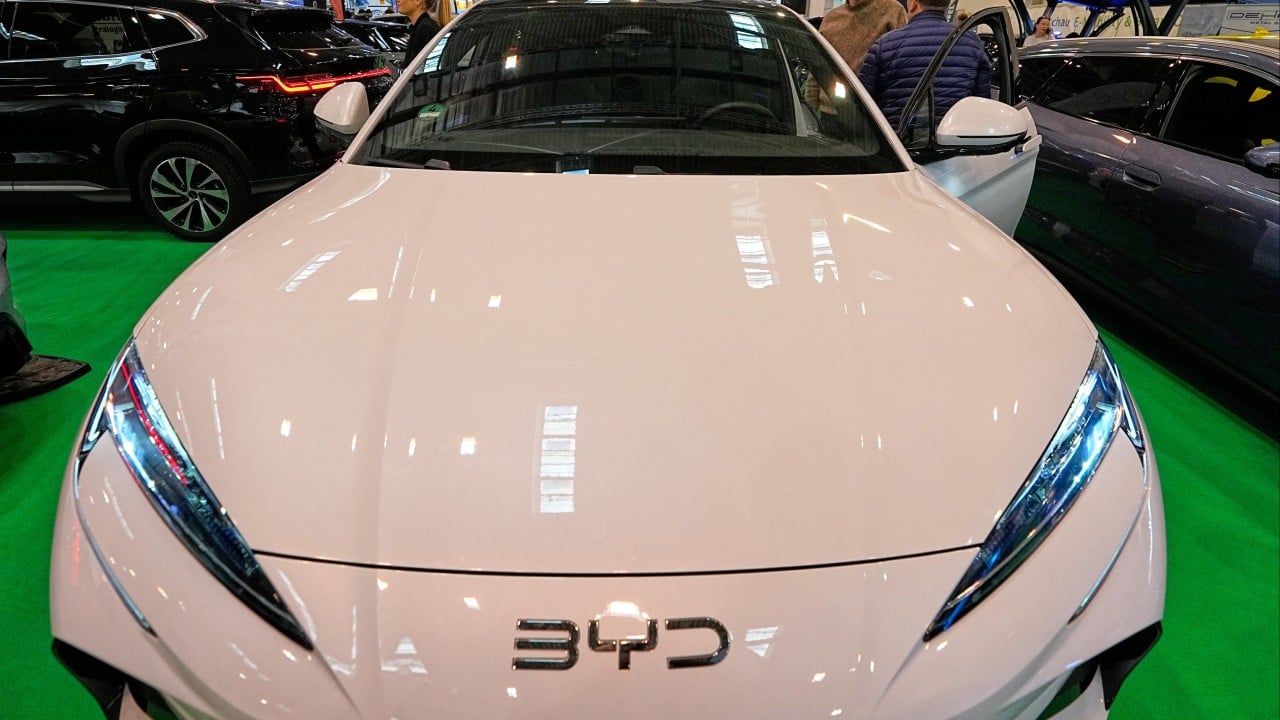
Chinese car manufacturers have emerged as the frontrunners in Europe's transition to electric vehicles, despite Brussels' efforts to limit their expansion. With petrol prices reaching a record high of over €2.30 per litre in Germany this month, the shift to battery power has accelerated. Battery-electric vehicle registrations increased by 62.7% year-on-year in August, accounting for 21.7% of new registrations in the first eight months of the year, according to the European Automobile Manufacturers’ Association (ACEA).
Chinese manufacturers dominated the market, accounting for about 92% of the net increase in August, with BYD, Chery, Leapmotor, and SAIC responsible for the majority of the growth. BYD's registrations more than doubled to 20,845, while Chery's tripled to approximately 14,000. Plug-in hybrid electric vehicles (PHEVs) saw a significant boost, with Chinese brands accounting for 35.3% of PHEV registrations in August, up from 20% in January.
The EU imposed anti-subsidy duties of up to 35.3% on Chinese-built battery-electric cars, while PHEVs face only a 10% tariff. Since October 2024, the EU has seen a surge in PHEV demand, with registrations up 77.6% in Italy, 33.9% in Spain, and 15.6% in Germany. However, established European manufacturers are losing ground, with the five largest European groups' combined market share falling to 64.6% in the first eight months of the year, down from 66.8% a year earlier.
Volkswagen Group, the largest European carmaker, experienced a 3.2% decline in August registrations and a 1.1% drop in market share. Premium brands Mercedes-Benz and BMW also saw relatively stable sales in the EU, but have faced challenges in mainland China. The pressure from Chinese competition is reshaping the German automotive industry's approach to trade, with the Association of the Automotive Industry now considering trade defense measures justified.
Analysts, however, doubt that tariffs can slow China's progress, as Chinese manufacturers are increasingly localizing production, creating an integrated ecosystem that includes batteries and supply chains.
Written by urgent.news from South China Morning Post's reporting — not their text. Machine-written — may contain errors; check the original before relying on it.
Also reported by 1 other outlet
- EU urges Britain to raise tariffs on Chinese cars gulf-times.com