Bundesrat: Zigaretten und Alkohol teurer? Länder melden Widerstand an
Die Bundesregierung hofft auf höhere Einnahmen, um Löcher im Haushalt zu stopfen. Der falsche Weg, finden einige Ministerpräsidenten. Im Gegenteil: Sie wollen mehr Entlastung an der Tankstelle.
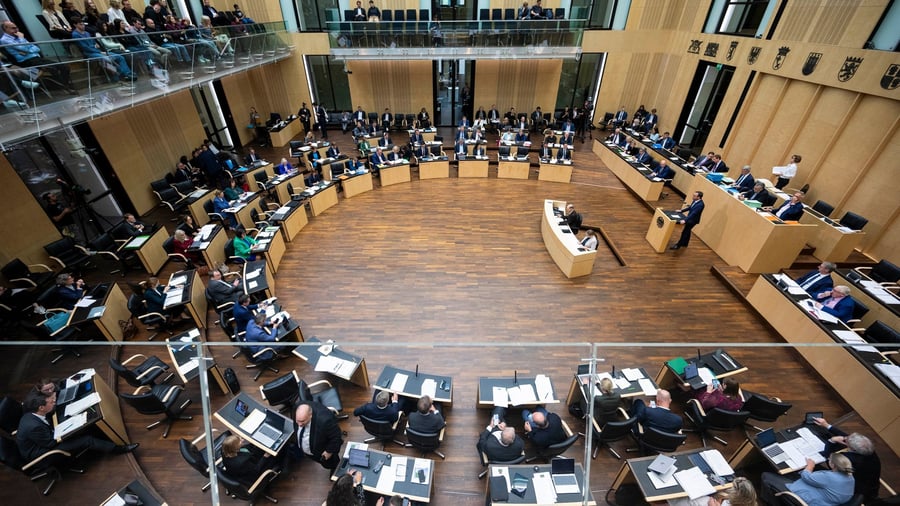
The planned hike in tobacco, alcohol and sparkling wine taxes met resistance in the Bundesrat. Several states demanded more relief at the gas pump and fuel prices below two euros. Mecklenburg-Vorpommern's government chief Manuela Schwesig urged Chancellor Friedrich Merz to involve the states in reforms. In a survey, two-thirds of citizens doubted Merz's ability to see his reform course through.
The debate in the Bundesrat came as the first look at the 2027 federal budget, with a budget of 555.4 billion euros, including 118.7 billion euros in debt for core spending. Additional debt was planned for infrastructure, climate neutrality and the Bundeswehr. The tax hikes were meant to plug budget gaps. New plastic tax, higher tobacco, alcohol and sparkling wine taxes, and a sugar tax were also in the works.
However, details were still open. Hessian Prime Minister Boris Rhein protested, stating that a wine tax would particularly burden Hessen as a wine-producing state. Rhein also opposed a sugar tax as "a burden for mid-sized beverage manufacturers". CDU politician Mario Voigt said, "I don't like tax hikes in these times." In the "Handelsblatt", Voigt specified that primarily food items should not be further burdened.
Rhein had earlier last week tied the planned tax hikes to a discount at the gas pump: "What the state gives back at the pump, it must not repeat elsewhere," said Rhein. Several states actually want more relief for drivers, even if it means higher costs. SPD politician Schwesig said, "The new 17 cent per liter discount at the gas pump is important for people.
But it will not be enough. Fuel must be below two euros again." Voigt also pointed out in the Bundesrat: "Energy policy is the social issue in this time." Bremen's Mayor Andreas Bovenschulte (SPD) noted, "We cannot spend billions every time there is an oil price shock to lower gasoline and diesel prices uniformly. We need more targeted relief."
Bavarian Prime Minister Markus Söder (CSU) called for a fundamental approach to lower energy prices: "We have to talk about CO2 pricing and all pricing rules that make energy more expensive in Germany." "Merz should invite the ministers", Schwesig urged Chancellor Merz to involve the states. "I expect the chancellor to invite the ministers now and talk about social reforms", said the SPD politician in the ARD.
These were important for social stability in the state. Schwesig pleaded for looking for savings in the system. CDU politician Voigt wanted co-decision, this time at the party level: "We as ministers will clearly state what the Union must focus on in the Berlin government dealings." Voigt called for a "programmatic restart". The CDU leadership plans to discuss it at a plenary meeting in Berlin on October 11th.
Written by urgent.news from Handelsblatt's reporting — not their text. Machine-written — may contain errors; check the original before relying on it.