Astronomer watches Starlink satellites sinking to build a ‘planetary barometer’
The atmosphere expands and contracts; watching objects in orbit reveals the extent
Dr. Tony Phillips, an astronomer and author, has discovered a novel way to utilize SpaceX's Starlink satellite constellation as a planetary barometer. In a recent article on spaceweather.com, Phillips highlights the downsides of the megaconstellation, including interference with astronomy and atmospheric pollution. However, he points out that this very phenomenon can be harnessed for monitoring Earth's atmosphere.
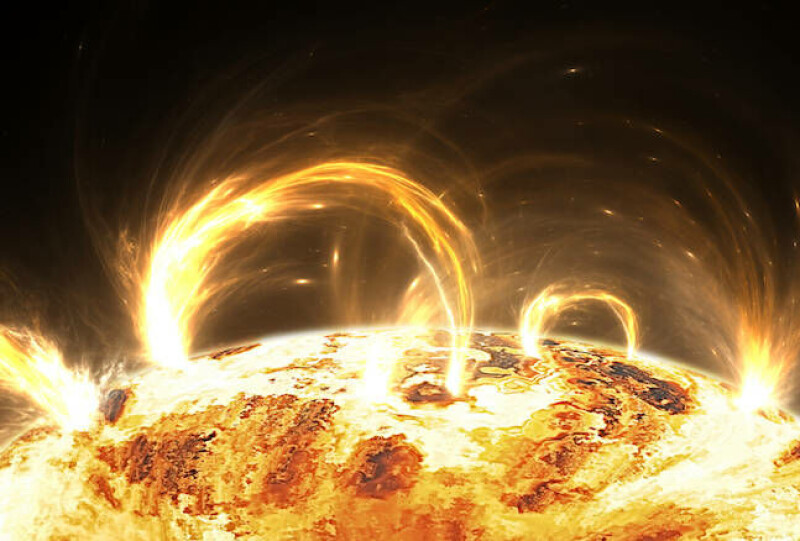
Phillips explains that Earth's atmosphere expands when it heats, often due to increased radiation. Most satellites lose a few meters of altitude daily, but when the atmosphere expands, the rate at which their orbits decay can accelerate. To measure this, Phillips focuses on the US Space Force's tracking data, which includes "TLEs" containing a drag term called B* (B-star). The B* value indicates how much the real atmosphere affects the satellite's orbit.
To gather this data, Phillips analyzed TLEs for 1,000 Starlink satellites, 107 Planet Labs SuperDoves, 391 Amazon Kuiper satellites, and 651 Eutelsat OneWeb birds. All of these constellations orbit at different altitudes but move in response to the same solar events. By studying this data stream, Phillips has effectively created a "planetary barometer" that tracks the sun's 10.7 cm radio flux with a two-day lag, as the upper atmosphere takes about two days to respond to changes in the sun.
Phillips acknowledges that other scientists have previously used Starlink satellites for similar studies, particularly after the 2022 geomagnetic storm that caused some Starlink satellites to fail. However, what sets his work apart is the collection of a daily index using three independent constellations as sensors, all derived from public tracking data.
Written by urgent.news from The Register Science's reporting — not their text. Machine-written — may contain errors; check the original before relying on it.