APOD: 2026 September 25 – Globular Star Cluster Omega Centauri
APOD Science APOD APOD: 2026 September 25 –… Today’s APOD Archive Submissions Index Search Calendar RSS Education About Discuss APOD Astronomy Picture of the Day Discover the cosmos! Each day a different image or photograph of our fascinating universe is featured, along with a brief explanation written by a professional astronomer. Globular Cluster Omega […]
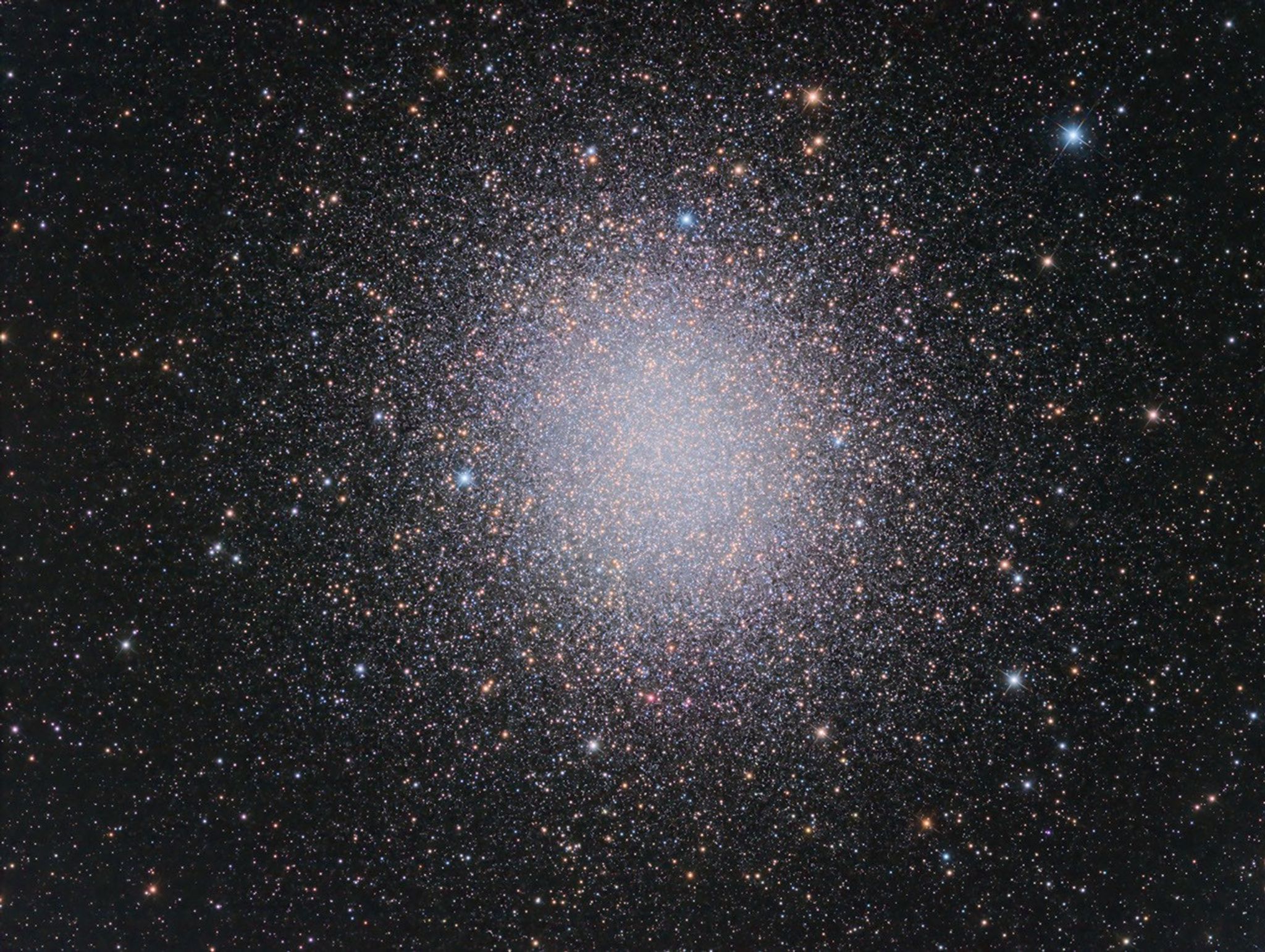
Today's Astronomy Picture of the Day, dated September 25, 2026, showcases the globular star cluster known as Omega Centauri. This cluster is home to approximately 10 million stars that are significantly older than our Sun, all packed into a space about 150 light-years in diameter.
Also referred to as NGC 5139, Omega Centauri is located 15,000 light-years away and stands as the largest and brightest among the roughly 200 known globular clusters that orbit our Milky Way galaxy. Unlike most star clusters that contain stars of the same age and composition, Omega Centauri presents a diverse mix of stellar populations with varying ages and chemical abundances.
Such complexity has led astronomers to speculate that Omega Centauri might be the remnant core of a small galaxy that merged with the Milky Way. The cluster's yellowish glow is accentuated by the vivid red giant stars, which are readily discernible in the sharp image captured by a telescope.
Over a span of two decades, the Hubble Space Telescope has been meticulously exploring the dense composition of Omega Centauri. This exhaustive investigation has furnished compelling evidence for the presence of a massive black hole at the heart of this enigmatic cluster.
Written by urgent.news from NASA Science's reporting — not their text. Machine-written — may contain errors; check the original before relying on it.
This story
This is one outlet's version. Read the fullest account.
- APOD: 2026 September 25 – Globular Star Cluster Omega Centauri science.nasa.gov