Amazon, Apple, AMD, Google, Tesla, Microsoft, Nvidia, and Qualcomm are all reportedly evaluating Intel's 14A process
Intel has spent years trying to turn its manufacturing arm into a serious alternative to TSMC. Its 14A process is now the key test. Piper Sandler said Intel needs to sign an anchor customer in late 2026 or early 2027 before a planned 2028 production ramp. Read Entire Article
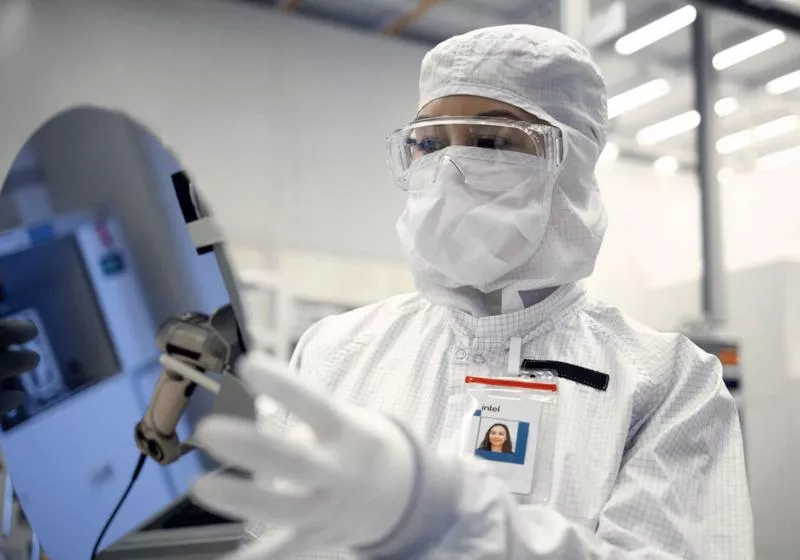
Intel's 14A chipmaking process is reportedly being evaluated by a group of major tech companies, including Amazon, Apple, AMD, Google, Tesla, Microsoft, Nvidia, and Qualcomm, according to a Piper Sandler research note. If they decide to move forward with production contracts, Intel could secure the essential customers needed to bolster its foundry business.
The interest from these companies presents Intel's strongest opportunity yet to become a reliable supplier of cutting-edge chips. However, no customer has yet confirmed a commitment.
Intel has been striving to transform its manufacturing division into a major competitor to Taiwan Semiconductor Manufacturing Company (TSMC) for several years. The success of its 14A process is seen as a crucial test. Piper Sandler stated that Intel needs to secure an anchor customer by late 2026 or early 2027 before a planned 2028 production ramp.
The firm noted that major US chipmakers are assessing the process due to Intel's improving technical results, TSMC's tight capacity, and customers' desire for additional manufacturing and packaging options outside of Taiwan.
TSMC continues to be the leading contract manufacturer for advanced chips, with its capacity fully booked until 2028, leaving room for another supplier. Although evaluating a process is different from committing to a major product line, the reported customer list indicates that Intel is currently in discussions with the companies it needs to reach.
The push to expand chip production in the United States is evident, as large technology companies are scrutinizing their supply chains and Washington has encouraged domestic manufacturing capacity growth.
Intel already possesses US fabs and is expanding its capacity further, but it will need significant customer commitments to justify additional spending. Piper Sandler connected Intel's recent $20 billion share offering to this endeavor, estimating that the funds could help finance equipment for a 14A fab capable of handling 20,000 wafer starts per month.
The company's tooling for such a facility is estimated to cost around $10 billion. Intel's Fab 62 is nearly finished, but it still requires the specialized tools necessary for lithography, deposition, etching, inspection, and other manufacturing steps.
Intel's CEO, Lip-Bu Tan, has expressed that the company will not proceed with expanding leading-edge manufacturing without solid evidence of customer demand. In July, he mentioned that Intel could potentially halt 14A and later process technologies if they fail to secure a significant external customer or meet essential customer milestones.
Tan stated that without a significant external customer and meeting key customer milestones for Intel 14A, the company may find it uneconomical to develop and manufacture Intel 14A and subsequent leading-edge nodes beyond 2028. Intel has confirmed that 14A is on track for early risk production in 2028, which involves the initial production of chips to validate the process before scaling up to volume manufacturing.
Tan mentioned that Intel believes its timeline could place 14A in contention with TSMC's advanced-node offerings, such as its N2 process or newer A16 technology, when it becomes available.
Written by urgent.news from TechSpot's reporting — not their text. Machine-written — may contain errors; check the original before relying on it.