2026-2027 DWU: High School Engineering Challenge
2026-2027 DWU: High School Engineering Challenge Challenge Materials Overview The 2026-2027 challenge theme is, “Fueling Flight Design Challenge: New Energy Systems.” As more and more aircraft are a part of the US’ National Airspace System (NAS), NASA and partners at the FAA, at universities, and in the aviation industry are searching for ways to increase safety, […]
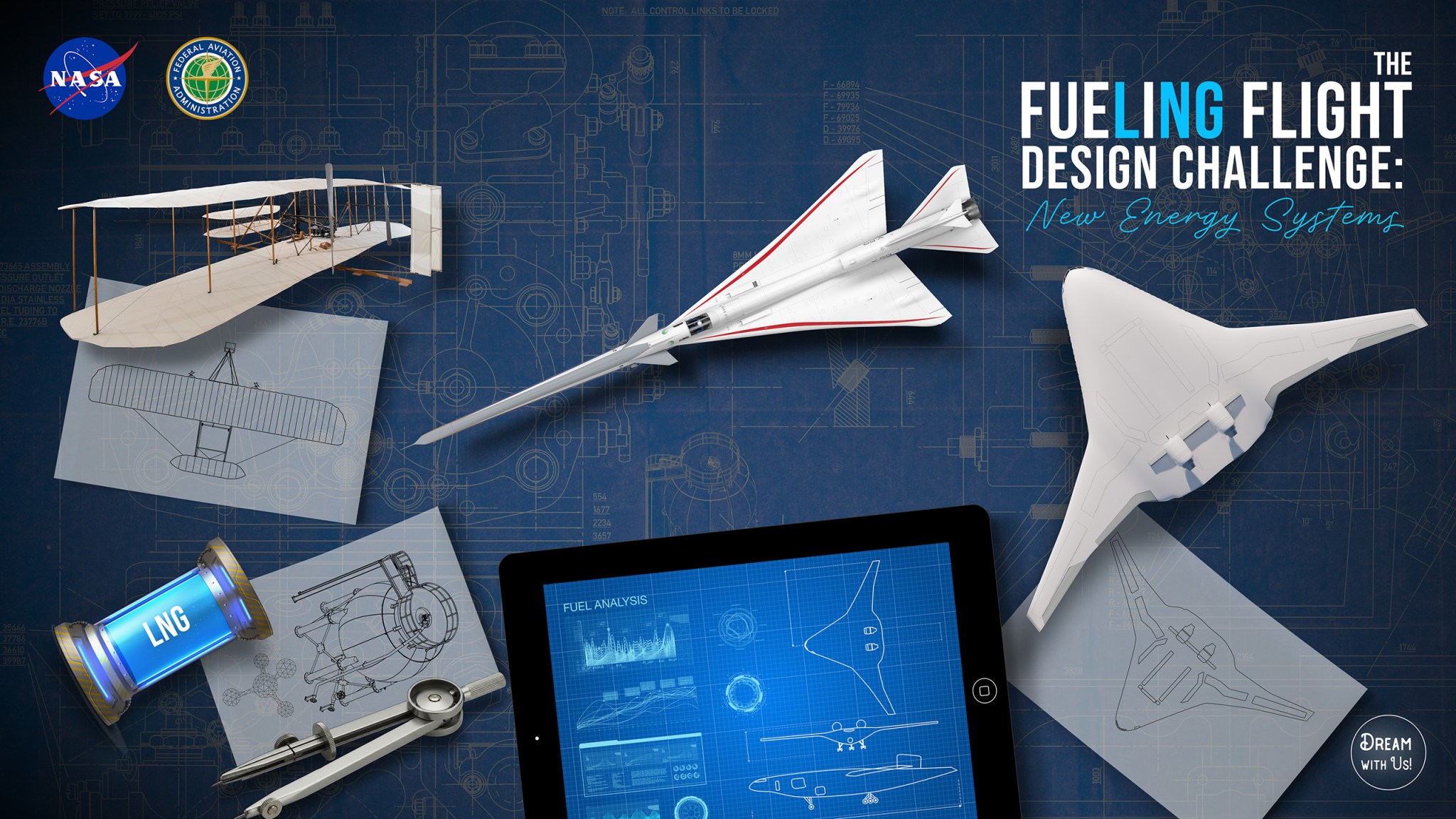
The 2026-2027 DWU High School Engineering Challenge is centered around the theme "Fueling Flight: Design Challenge: New Energy Systems." NASA, in collaboration with the FAA, universities, and the aviation industry, is working on ways to enhance safety, affordability, and sustainability in aviation. The focus of this year's challenge is to explore new aircraft fuels, specifically liquefied natural gas (LNG), and its impact on aircraft and airports.
Middle and high school students are invited to participate in this challenge. Middle school teams will have a different task compared to high school teams. Both categories will focus on the addition of LNG in aviation, which requires understanding LNG, its potential use in aviation, benefits, and necessary changes to aircraft and airports. The challenge encourages students to think about the "tube-and-wing" design limitations and the need for new designs, new materials, and new fuels as the aviation industry evolves.
The challenge is open to middle and high school students in the United States, including those from public, private, parochial, and home schools. Entries must be submitted through the Dream with Us Design Challenge webpage and include signed permission forms from parents or legal guardians. Teams cannot use artificial intelligence tools for this challenge.
Written by urgent.news from NASA's reporting — not their text. Machine-written — may contain errors; check the original before relying on it.