Xi Jinping has made China’s hard-tech rise core to his policy—and U.S. containment is only fueling those plans
The U.S. once saw China as a “fast follower” in tech. It now confronts a country that’s also on the frontier—ironically, in part due to U.S. action.
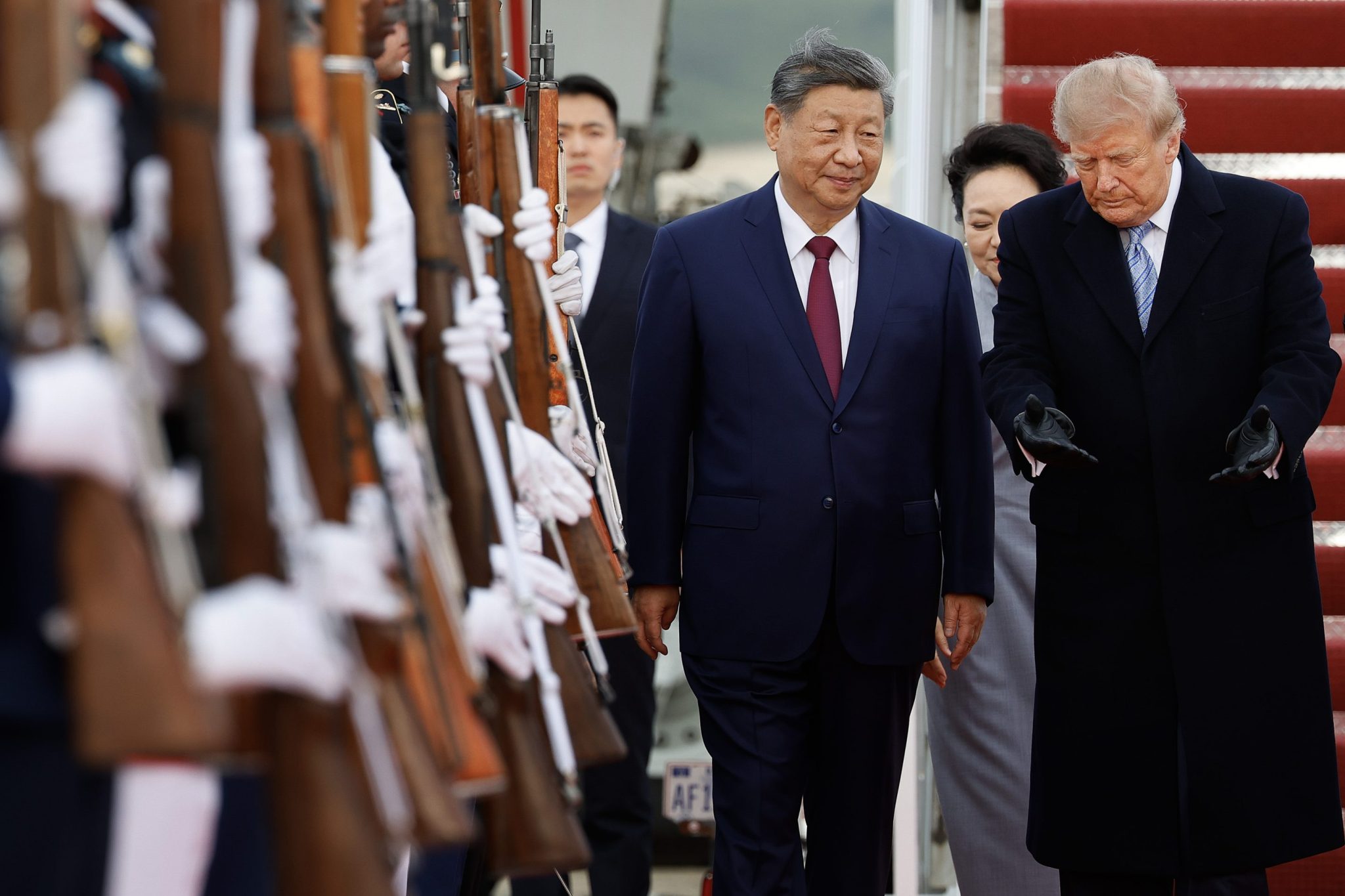
As President Xi Jinping prepares to visit Washington, artificial intelligence has emerged as a focal point of discussion. The United States now perceives China as a player at the forefront of technology, largely due to the impact of American containment measures. These sanctions, which have blocked China's access to certain technologies, have surprisingly stimulated the nation's hard-tech growth.
Instead of isolating China, these pressures have mobilized resources, talent, and global partnerships to fuel China's technological advancements.
China's 15th Five-Year Plan serves as both a roadmap for its pursuit of technological supremacy and a challenge to implement this vision. A series of decisive actions from Chinese leadership underscores this shift. President Xi Jinping personally visited Shanghai to prioritize basic research, and attended a national science conference to direct financial investments towards hard technology sectors such as semiconductors, robotics, and advanced manufacturing.
At the World Artificial Intelligence Conference in Shanghai, Xi cautioned against the creation of "new historical injustices" in the age of AI.
In response to U.S. efforts to limit China's technological progress, Washington has imposed entity-list sanctions and launched the "Pax Silica" initiative to secure key AI, semiconductor, and mineral supply chains among trusted allies. Additionally, the U.S. is attempting to isolate China from global digital frameworks, warning countries that they will be excluded from the U.S.-led AI coalition if they also cooperate with Beijing.
However, history shows that these technology blockades have often accelerated China's efforts to achieve self-reliance. For instance, after the Soviet Union withdrew technical experts in the 1960s, China accelerated its development of nuclear and ballistic capabilities. Similarly, China constructed its Beidou navigation system and its own space station, Tiangong, in defiance of U.S. restrictions.
China's strategy to bolster its technological advantage is threefold. Firstly, capital is being strategically deployed. A surge in technology-focused investments, combined with the rise of the scientist-entrepreneur, is driving capital into hard tech. China's research spending reached 3.9 trillion yuan in 2025, with basic research funding accounting for nearly 7% of the total.
A national venture capital fund has been established to invest 1 trillion yuan in early-stage, long-term hard-tech firms. Secondly, China is attracting top talent, with over 85 world-class researchers moving to China between early 2024 and late 2025. Prominent scientists, including Nobel laureates in Chemistry Hartmut Michel, Physics Ferenc Krausz and Andre Geim, and Fields Medalist Ngô Bảo Châu, have joined Chinese institutions.
Lastly, China is fostering international academic cooperation, approving 86 joint institutions and programs across 174 universities in 2026, spanning fields such as brain-computer interfaces, big data, and foundational science.
Beijing's dual-track strategy involves building domestic technological sovereignty while expanding its influence abroad. The nation's investment in robots, chips, and AI-driven vehicles not only generates commercial revenue but also supplies vast real-world training data to Chinese AI models, which U.S. firms cannot replicate. However, this ambitious plan comes with significant costs. Heavy investment in research and development has strained China's financial resources.
Written by urgent.news from Fortune's reporting — not their text. Machine-written — may contain errors; check the original before relying on it.