X-planes: Are they needed in the new era of drones?
Where do America's X-plane projects fit in an era of cheap drones?
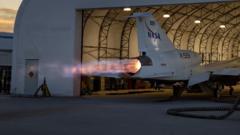
The X-59, an unconventional aircraft developed by NASA, is sparking debate over its relevance in an era of rapidly advancing drone technology. Its distinctive design, featuring a nose resembling an anteater and a cockpit positioned far back, aims to mitigate the effects of sonic booms when flying at supersonic speeds. By flattening these sonic booms into tolerable background noise, the X-59 could revolutionize air travel by enabling supersonic flights over land, a feat previously restricted by the disruptive nature of sonic booms.
The X-59's lineage traces back to NASA's long-standing tradition of experimental aircraft, dating back to 1947 with the pioneering Bell X-1, the first plane to break the sound barrier. This tradition of pushing boundaries and testing new aviation concepts has yielded significant advancements, from the X-1's flight through the sound barrier to the X-15's record-setting speed and altitude, which paved the way for the Space Shuttle.
However, with the rise of relatively affordable drones, some question the necessity of X-plane projects. While drones offer cost-effective solutions for various applications, including those in conflict zones like Ukraine, they may not always be the most efficient option. Certifying a drone to fly supersonic over urban areas would incur additional costs and complexity.
Moreover, the X-59's design, resembling an airliner, allows for the inclusion of a cockpit and other features essential for transporting passengers, a capability drones currently lack.
Critics argue that the human element remains crucial in aviation testing. Test pilots provide invaluable feedback that cannot be replicated by computers or drones. The experience and intuition of a trained pilot can identify critical issues that might be overlooked otherwise. Additionally, the presence of a human crew can make testing more cost-effective, as it reduces the number of personnel required on the ground to monitor and control the aircraft.
Despite these concerns, supporters of X-planes maintain that they remain essential for advancing aviation technology. The BAE Systems' new technology demonstrator, described as the "X-plane of our generation," is set to test cutting-edge concepts for future fighter aircraft, emphasizing the enduring importance of human expertise in aviation research.
This commitment to human-centered testing underscores the aerospace industry's belief that, even in an age of rapid technological innovation, the insights and capabilities of trained pilots remain irreplaceable.
Written by urgent.news from BBC Business's reporting — not their text. Machine-written — may contain errors; check the original before relying on it.
This story
This is one outlet's version. Read the fullest account.