Why Chefs Love Cooking on Stainless Steel
Stainless steel cookware is experiencing a cultural renaissance. This isn’t to say that the genre of cookware ever disappeared, but, once upon a lockdown, it felt like an ad from a nonstick cookware brand was always a scroll away. Now that the dust has settled from the post-pandemic online shopping boom, the tides are shifting, and […]
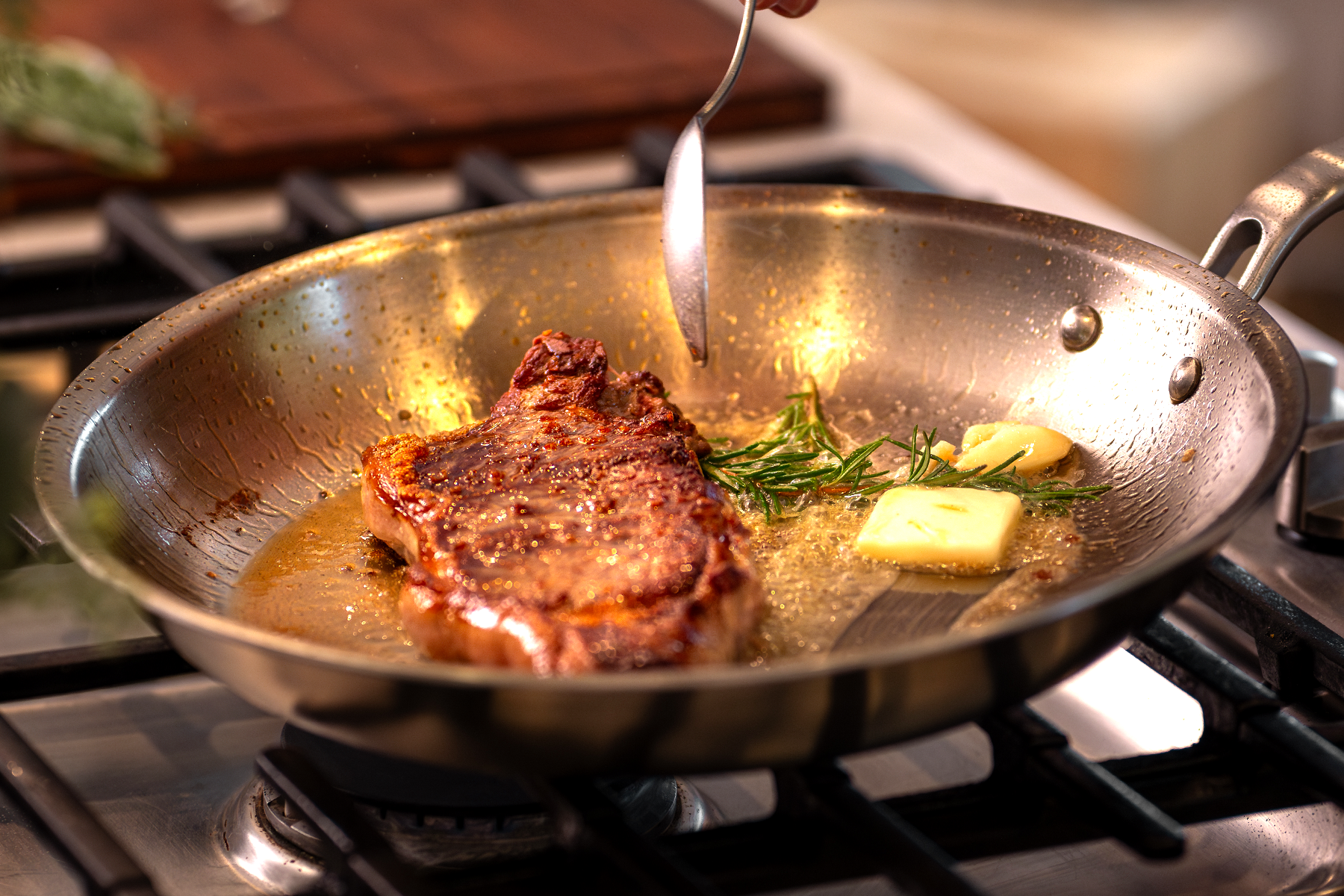
Stainless steel cookware is enjoying a resurgence in popularity. Once relegated to a commercial cooking niche, this type of cookware has recently regained mainstream attention. The shift is likely due to a combination of factors: practicality, aesthetics, and longevity.
One key advantage of stainless steel is its ability to distribute heat evenly, allowing chefs to achieve a perfect sear on meats and vegetables. This is particularly valuable in high-pressure restaurant environments where consistent results are essential. Another misconception about stainless steel is its nonstick properties. Contrary to belief, stainless steel can be made nonstick when heated to the right temperature (around 400 degrees Fahrenheit) and a thin layer of oil is applied.
This phenomenon, known as the Leidenfrost effect, creates a barrier between the food and the pan, preventing sticking.
Maintaining stainless steel cookware is relatively simple. After use, it should be allowed to cool before being washed with a microfiber cloth to prevent water spots. For commercial kitchens, it is recommended to use at least 3-ply stainless steel, with 5-ply being ideal for oven use and high heat. The material is nonporous, meaning it won't react with acidic ingredients like tomatoes or wine, ensuring the longevity of the cookware.
Stainless steel is also highly durable, able to withstand the wear and tear of frequent use in professional kitchens. Chefs are often quick to point out that the material requires proper care and attention, but it is well worth the effort. Not only does it look great, but it has the potential to last for decades with the right maintenance. As the cost of living continues to rise, the long-term value of stainless steel cookware becomes increasingly appealing.
Written by urgent.news from Eater's reporting — not their text. Machine-written — may contain errors; check the original before relying on it.