What the World Owes the Marshall Islands
We cannot completely hold back the rising seas. But we can do a lot more to limit that rise and to choose how we meet it, writes Hilda C. Heine.
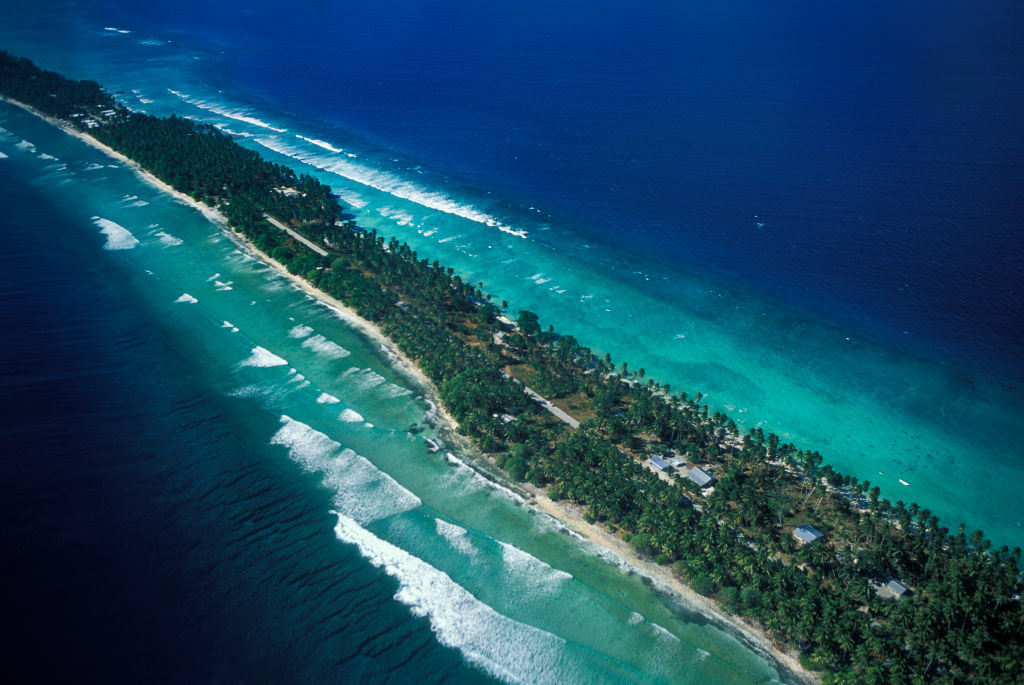
The United Nations General Assembly recently declared that the rise in sea levels is a reality that cannot be ignored, affecting even the Republic of the Marshall Islands, a small island nation located in the central Pacific Ocean. The Marshall Islands are composed of 29 low-lying coral atolls, making them particularly vulnerable to the effects of climate change.
With no higher ground available for relocation, the Marshallese people must find ways to adapt to the encroaching waters. The UN General Assembly is set to adopt the first Sea-Level Rise Declaration by consensus, celebrating a historic diplomatic achievement in an era of fractured diplomacy. Despite the fact that sea level rise will not change the legal status, rights, or maritime zones of any state, the Marshallese people recognize that their physical safety is at risk.
The world must respond to the impact of sea level rise on coastal communities, heritage, and cultures, as well as the lands that have nourished their ancestors for generations. The Alliance of Small Island States, the High Ambition Coalition, and other progressive forces have been advocating for climate action for years. The International Court of Justice recently affirmed that every country's emissions reductions must align with the 1.5°C temperature limit of the Paris Agreement.
However, recent reports indicate that an overshoot of 1.5°C is almost certain, emphasizing the urgency of limiting that rise and choosing how to meet it. Fossil fuel dependency not only harms the planet but also the health, security, and economies of island nations. The Marshall Islands has mapped its atolls to determine which land to raise or whose drinking water can survive droughts from inaccurate data.
Funding this technical challenge is not easy, as effective adaptation costs $310 billion to $365 billion per year. Nevertheless, the Marshall Islands remain committed to advocating for climate finance that actually reaches people on the ground, and they have launched the Rising Nations Institute to translate their principles into practical solutions for communities confronting rising seas.
Written by urgent.news from Time's reporting — not their text. Machine-written — may contain errors; check the original before relying on it.