Vietnam’s grey economic zone uncovered for better policy planning
Accurately identifying Vietnam's non-observed economy provides highly reliable statistical data, ultimately helping state agencies formulate realistic macroeconomic policies while preventing dangerous distortions during national fiscal planning.
Accurately identifying Vietnam's non-observed economy is essential for producing reliable statistical data. This allows government agencies to create realistic macroeconomic policies and prevent distortions during fiscal planning. Vietnam launched the Statistical Scheme for the non-observed economy (NOE) in 2019, following Decision No.146/QD-TTg. However, the main challenge remains developing a solid methodology to fully identify and estimate these omitted data points.
General Director Nguyen Thi Huong of the General Statistics Office stresses that the core issue is methodology. She clarifies that the goal is not to inflate GDP or legitimize illicit economic activities. Instead, the aim is to accurately reflect the economy's scale, structure, and dynamic changes, which enhances the quality of national account indicators for better management and policy formulation.
No single country can claim to observe every aspect of its economic activities. The primary issue lies in the statistical system's coverage and its ability to adapt methodologies and data sources as the economy evolves rapidly. Incomplete data collection is not a vacuum within the economy, but rather a significant gap in observational capabilities.
For example, a business might sell 100 products but only declare 80. To get an accurate picture, those missing 20 products must be identified and estimated using proper statistical methods. The underground economy, distinct from the illegal economy, also poses challenges. Both kinds of activities can negatively impact the economy, so every nation seeks to minimize them rather than including them directly in GDP calculations.
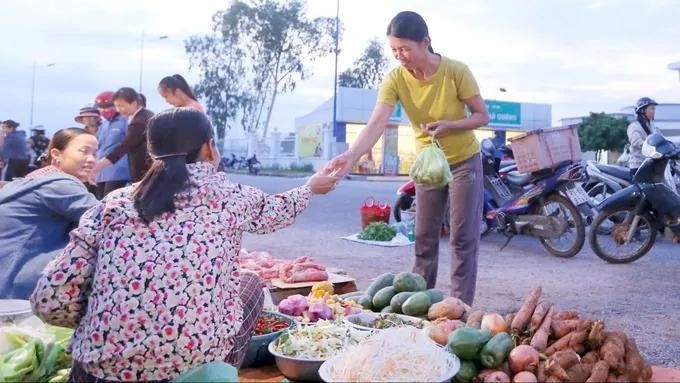
The informal sector, which includes small businesses and self-produced activities, is another critical area. In 2024, approximately 4 million informal establishments in Vietnam employed around 6.5 million workers, contributing about VND579 trillion (US$22.3 billion) to the economy, or 4.6 percent of GDP. Over the years, the proportion of rural households' self-produced activities in GDP has decreased from 0.8 percent in 2010 to 0.6 percent in 2024. This indicator reflects the shift in agricultural practices towards market-oriented production.
The quality of the NOE sector's estimation is vital. It helps correct the economy's scale and structure, improves fiscal and monetary policy accuracy by ensuring all cash flows are accounted for, and strengthens forecasting models and inter-industry balance sheets. Following the upcoming 2026 Economic Census, these NOE statistics will be scrutinized further.
Omitting or inadequately estimating the NOE sector can lead to several problems: distorting the economy's actual size and structure, reducing the precision of fiscal and monetary policies due to hidden cash flow, and compromising the reliability of forecasting models and inter-industry balance sheets. Deputy Director General Le Trung Hieu emphasizes that the true value of NOE statistics lies in improving the overall quality of the national statistical system, not just in GDP figures.
Vietnam's NOE approach aligns well with international recommendations. The IMF Office in Vietnam views this strategy positively, noting that perfecting the system will bolster evidence-based analysis, forecasting, and policy formulation. However, the IMF expert highlights the need for better coordination and data sharing among various ministries to comprehensively track the NOE sector.
By improving the map of economic activities, growth, productivity, and policy effectiveness indicators will better reflect the real economy, creating a more reliable data foundation.
Written by urgent.news from SGGP English Edition Business's reporting — not their text. Machine-written — may contain errors; check the original before relying on it.