US Senate rejects Democratic-led resolution to curb Trump's Iran war powers
The US Senate on Thursday narrowly rejected a resolution demanding President Donald Trump end the war in Iran or seek congressional authorisation, as Democrats sought to put Republicans on the defensive over the unpopular conflict before November's midterm elections. With polls showing Mr Trump's Republicans struggling to keep their slim congressional majorities on November 3, more of them have…
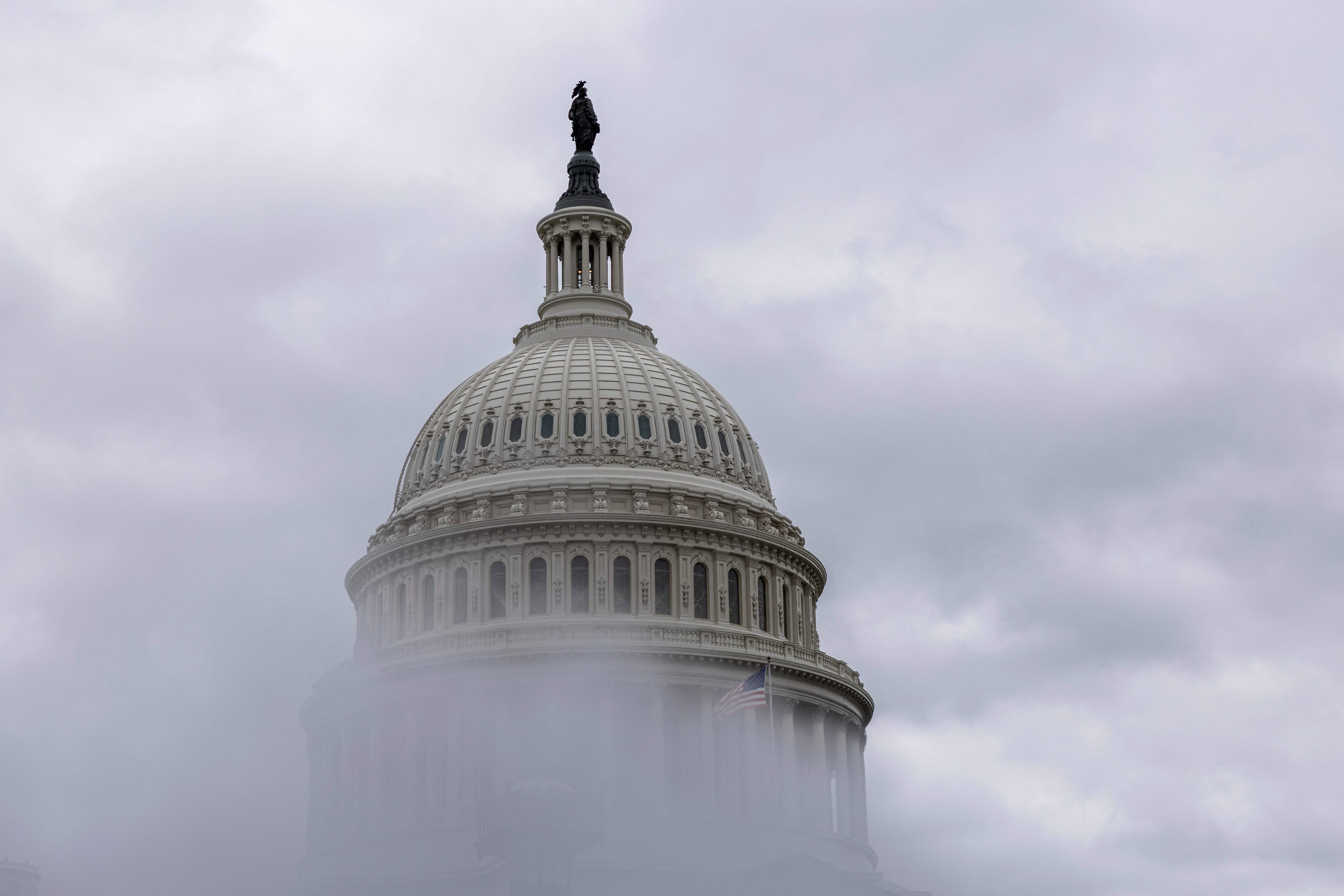
On Thursday, the US Senate narrowly rejected a Democratic-led resolution aimed at compelling President Donald Trump to cease military actions in Iran or seek congressional approval. The vote, 50-49, was a partisan affair, with four Republicans joining Democrats in opposition. The resolution, which passed the House of Representatives in July, was seen as an attempt by Democrats to hold Republicans accountable for the unpopular war before the November midterm elections.
As polls indicate that Trump's Republicans are struggling to maintain their slim congressional majority, some have begun distancing themselves from the conflict, which has contributed to rising food and fuel prices. However, only one Republican senator voted in favor of the resolution for the first time – North Carolina's Thom Tillis, who is set to leave the Senate in January.
The majority of Republicans, including those in competitive races such as Ohio's Jon Husted, Alaska's Dan Sullivan, Kansas' Roger Marshall, Nebraska's Pete Ricketts, and South Carolina's Darline Graham, sided with Trump. A single Democrat, Pennsylvania's John Fetterman, voted against the resolution. Despite the symbolic nature of the vote, Democrats hope it will force Republicans to take a stance on a conflict that has become increasingly unpopular among voters.
A recent Reuters/Ipsos poll found that only 34% of respondents approved of the strikes on Iran. The Senate has voted on Iran war powers resolutions 14 times since February 28, with approval granted only twice. The House has held six votes, with three supporting the resolution's passage. Historically, only one resolution has passed both chambers, and the White House has consistently ignored the outcome.
The US Constitution grants Congress, not the President, the power to declare war. Democrats argue that Trump may have inadvertently dragged the nation into a prolonged conflict by failing to articulate a clear strategy, while Republicans maintain that his actions are within the President's constitutional authority as Commander-in-Chief.
Written by urgent.news from The National UAE's reporting — not their text. Machine-written — may contain errors; check the original before relying on it.
This story
This is one outlet's version. Read the fullest account.
- US Senate rejects Democratic-led resolution to curb Trump's Iran war powers thenationalnews.com
- US Senate rejects resolution curbing Trump's Iran war powers al-monitor.com
- Senate Republicans block Democratic effort to end US war with Iran theguardian.com
- Senate GOP defeats resolution directing Trump to end Iran war as more Republicans sour on conflict thehill.com
- In one of their last votes before November, Senate GOP blocks effort to end Iran war npr.org
- Senate again fails to adopt Iran War Powers Resolution despite growing criticism abcnews.com
- Iran war powers measure falls short in Senate, despite new GOP support cbsnews.com
- Senate narrowly votes down resolution calling for end to Iran war cnbc.com