The many categories of SIR’s logical discrepancy list keep voters on toes
Up to 11 distinct categories of logical discrepancies have been identified and applied across various States and Union Territories in the third phase of the SIR, expanding from the original four categories initially used when the concept was introduced in West Bengal
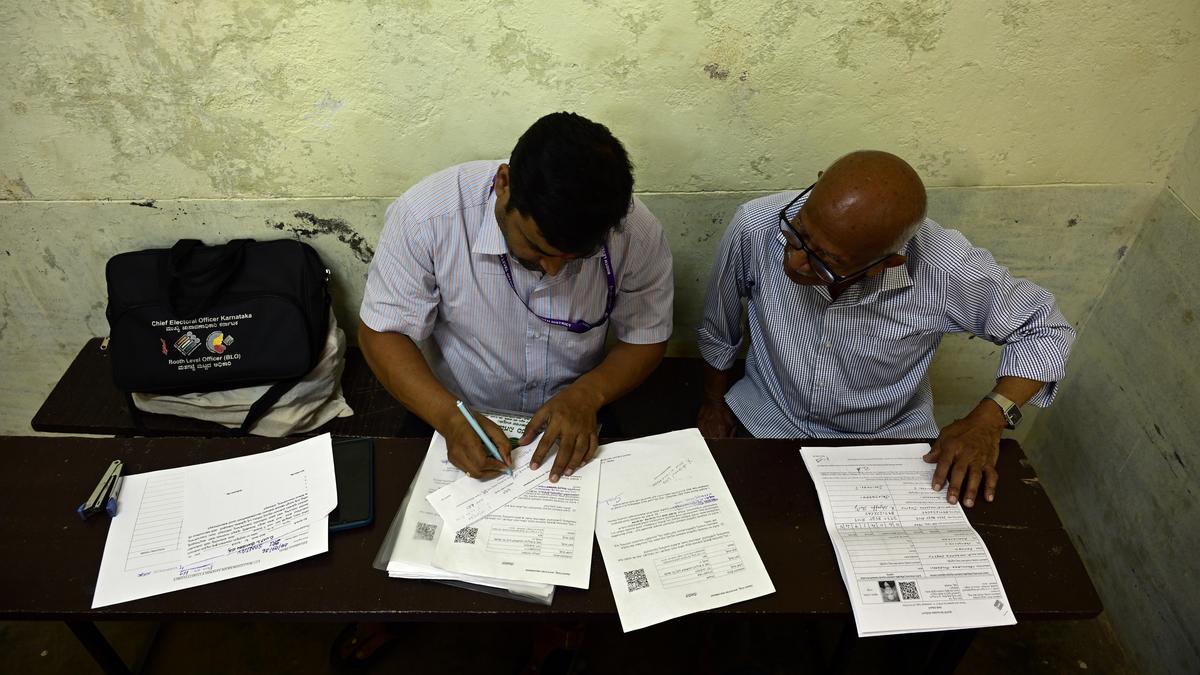
As Rajiv Chopra, a resident of Vaishali Colony in North West Delhi’s Pitampura, was preparing to travel abroad, he received news that his children had been placed on the Election Commission’s logical discrepancy list. Upon contacting a Booth Level Officer (BLO), he learned that his children were flagged despite being on the draft list due to their age gap being less than nine months.
This situation exemplifies one of the 11 logical discrepancies that voters must navigate during the Special Intensive Revision (SIR) process. The SIR exercise has identified up to 11 categories of discrepancies, expanding from the original four categories initially introduced during West Bengal’s SIR. These categories include discrepancies such as an age gap of less than 15 years between a voter and their parent, an age gap of less than 40 years between a voter and their grandparent, and more than six siblings linked with a single parent.
Additionally, discrepancies in parent names, relative mapping, marital mapping, and age progression are also considered. The discrepancies are flagged through a centralised AI system called ERONet, which operates under the Electoral Roll Officers’ Network. The software attempts "progeny-mapping," linking voters to their parents’ entries and flagging inconsistencies.
The concept of logical discrepancies first emerged during West Bengal’s SIR, affecting approximately 1.36 crore voters. Currently, in Delhi, where the SIR is ongoing, 19.33 lakh electors have received discrepancy notices, while 20.35 lakh have received notices in Karnataka. The issue lies in the lack of clear definitions for "logical discrepancies" in official communications, as well as concerns regarding the centralisation of the ERONet software.
Two Election Commissioners have criticized the software for becoming increasingly centralized, leading to EROs complaining about access issues. The Election Commission has also faced criticism for allegedly keeping the software details as a "trade secret," claiming it affects commercial confidence.
Written by urgent.news from The Hindu's reporting — not their text. Machine-written — may contain errors; check the original before relying on it.