Stanford Engineers Teach Spacecraft to "Dream" Their Way to the Space Station
Docking with the ISS may seem simple. However, actually doing so is a showcase in how difficult orbital mechanics can be. It’s equivalent to traveling down a highway at 28,000 km/hr and parallel parking into an open garage on a multi-billion dollar laboratory traveling at the same speed. If you try to accelerate forward you actually drift up, and there’s no air friction to naturally slow you…
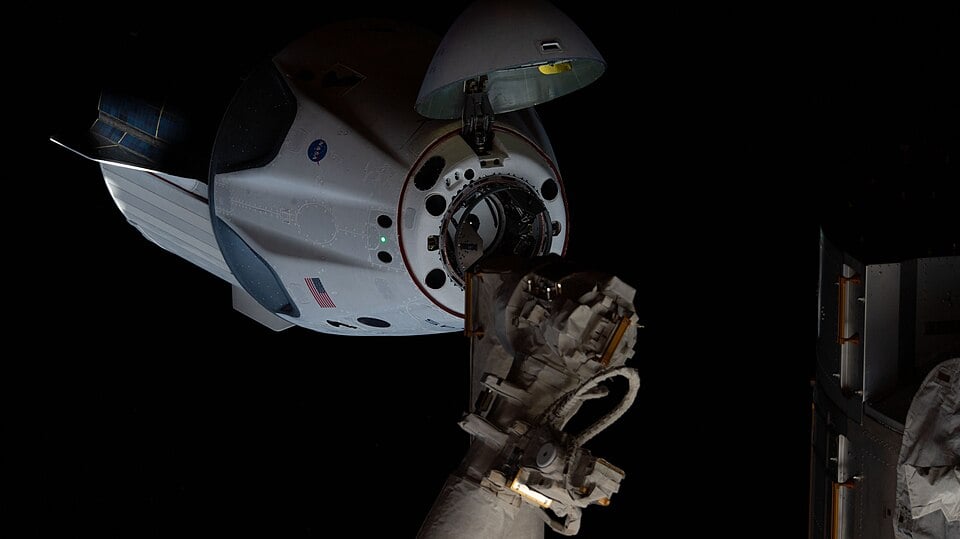
Docking with the International Space Station is a complex task, akin to parallel parking a multi-billion dollar laboratory at the same speed as a vehicle moving at 28,000 km/hr. The challenge lies in the fact that orbital mechanics are intricate, with no air friction to naturally decelerate the spacecraft. A collision between the spacecraft and the lab would have catastrophic consequences, endangering all onboard and creating debris that could damage satellites and even harm people on the ground.
Traditionally, aerospace engineers have relied on pre-programmed physics equations and human pilots for docking procedures. However, researchers at Stanford have proposed an innovative approach, using artificial intelligence (AI) to simulate various scenarios and potentially revolutionize future spacecraft interactions in space.
Written by urgent.news from Universe Today's reporting — not their text. Machine-written — may contain errors; check the original before relying on it.