Stalled reconstruction forces Gazans into buildings on brink of collapse
DESPERATE FOR SHELTER
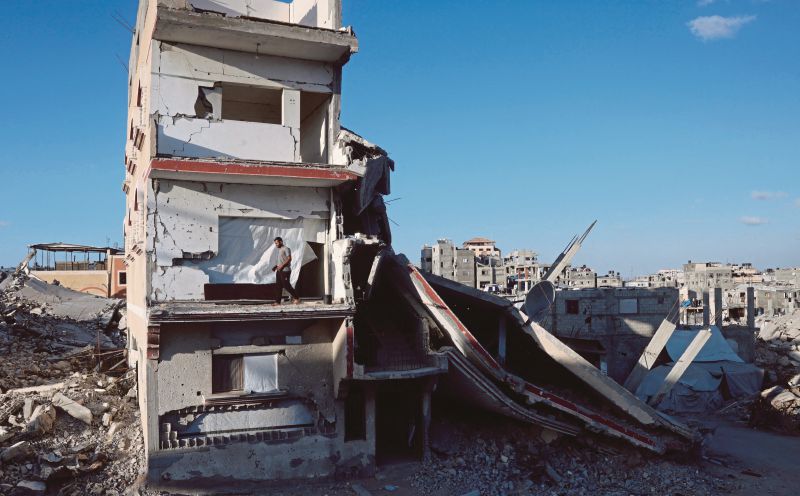
Gaza residents face the perilous choice of living in damaged buildings on the brink of collapse, according to a recent report. Heba Arafat, a 47-year-old woman living in Gaza City, recounted how her apartment's foundations collapsed following Israeli airstrikes, forcing her and her six daughters to make the dangerous decision to remain in the unstable structure.
Arafat described the building's tilted foundation, which threatened to send a water bottle rolling away when left at an angle. She expressed her fear for her family's safety, stating, "We have been terrified ever since we heard about houses collapsing."
The United Nations reported that 84 percent of all structures in Gaza had been damaged or destroyed by last October. Additionally, Gaza's civil defense warned that 2,000 buildings across the territory are at risk of collapse. Earlier this week, a six-story building in Gaza City collapsed, killing 21 people, including 12 children. The building had reportedly been struck by multiple Israeli airstrikes.
Arafat and her family had previously left their old apartment building during the war's height in October 2023 but returned after a ceasefire was declared last October. Their current building, a four-story structure housing 30 people, collapsed inward at the ground floor due to an Israeli ground operation in the area. The windows of most buildings in Gaza City had been destroyed by airstrikes, leaving residents with makeshift bedsheets for privacy.
While no single estimate exists for the number of displaced people living in unsafe shelters, UN humanitarian coordinator Ramiz Alakbarov stated that many across Gaza are residing in hundreds of damaged and unsafe buildings. Gaza City municipal staff patrol the streets, identifying and marking buildings at risk of collapse with stencils. However, officials acknowledge that many displaced people will continue to live in these unstable structures due to the lack of better options.
Gaza's economy is in ruins, and residents often rely on aid for survival. Israel has allowed limited aid into Gaza since the US-brokered ceasefire in October, but has also restricted the entry of equipment needed for Gaza's extensive reconstruction efforts. These equipment restrictions have hindered the progress of reconstruction plans, which the UN, World Bank, and European Union estimated would require $71.4 billion over the next decade.
Written by urgent.news from New Straits Times's reporting — not their text. Machine-written — may contain errors; check the original before relying on it.