Softbank: Tech-Investor Son wettet mit Rekord-Anleihe auf die Künstliche Superintelligenz
Der Softbank-Gründer sammelt elf Milliarden Dollar ein und zahlt dafür bis zu zehn Prozent Zinsen. Profiteur ist vor allem der KI-Anbieter OpenAI. Die Börse reagiert gespalten.
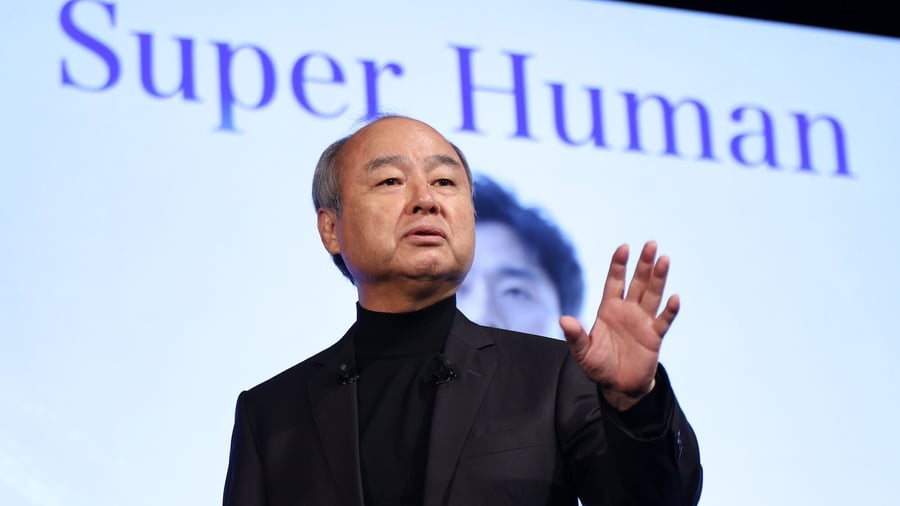
Softbank's founder, Masayoshi Son, has emphasized his bet on Artificial Intelligence (AI) with a record-breaking bond. According to media reports, he raised approximately $11 billion across dollar and euro tranches. Bloomberg's financial news agency stated that Softbank is now the largest emitter of junk bonds globally. Son offered investors the highest returns, up to 10%, which is the highest ever paid by his corporation.
This fresh capital is intended to partially fund OpenAI's capital increase, one of the world's leading AI providers. Softbank aims to increase its stake in OpenAI to $65 billion by October. Additionally, Son plans to invest more in other AI companies. Son made it clear at the June shareholders' meeting that he will pursue Artificial Super Intelligence (ASI) without holding back, meaning a superintelligence superior to humans in almost every domain.
The bond issuance was seen as a barometer for overall confidence in the AI boom. Reactions on the Tokyo stock market to the US news reflected two interpretations of Softbank's capital quest. Initially, Softbank's shares surged by 11% in the first minutes of trading, but by the end of trading, they only rose 0.6% above the previous day's close.
The positive interpretation is that the AI boom still has supporters. The issuance was more than tripled, and the market apparently trusts Son's corporation's ability to fund its high obligations with enough assets and access to the capital market. As of late June, Softbank's net debt stood at ¥11 trillion, which is roughly $61 billion.
The negative interpretation is that given his high AI bets, Son must buy this confidence at a high cost. Softbank's credit rating from Standard & Poor's and Fitch is BB+, one step below the so-called investment grade, which indicates relatively stable debtors. Junk bonds, or high-yield bonds, are considered speculative as credit agencies see an increased risk that the borrower may not fully meet its obligations.
Bloomberg reports that Softbank divided the issuance into three dollar and two euro tranches. In dollars, the company placed $1 billion with a 3.5-year maturity and an 8.625% yield, $4.5 billion with a 5.5-year maturity at 9.25%, and another $4.5 billion with a 7.5-year maturity at an even higher 9.75%. Two euro tranches totaling €1 billion with maturities of four and six years also came with 8% interest.
The longer maturity had an 8% yield. Softbank's strategy for high yields is its investment approach. Berkshire Hathaway, the long-favored investment group of investor legend Warren Buffett, operates conservatively with significantly more assets than debt. Son, on the other hand, encourages larger investments on pump, financing them more than he could on his own.
Also, Son is currently betting heavily on Artificial Intelligence. His wealth largely depends on the value of one company: the British chip designer Arm. A decline in chip and AI values, or the feared bursting of the AI bubble, would therefore hit Softbank hard. However, Son assured during a June interview that the AI revolution had just begun: "A sector still in such an early stage to call it a bubble is an insult."
Written by urgent.news from Handelsblatt's reporting — not their text. Machine-written — may contain errors; check the original before relying on it.