Scientists Detect Radio Signals from an Exoplanet for the First Time in History
No, it’s not aliens, but a phenomenon caused by magnetic activity that astronomers have never before been able to pin on a specific planet.
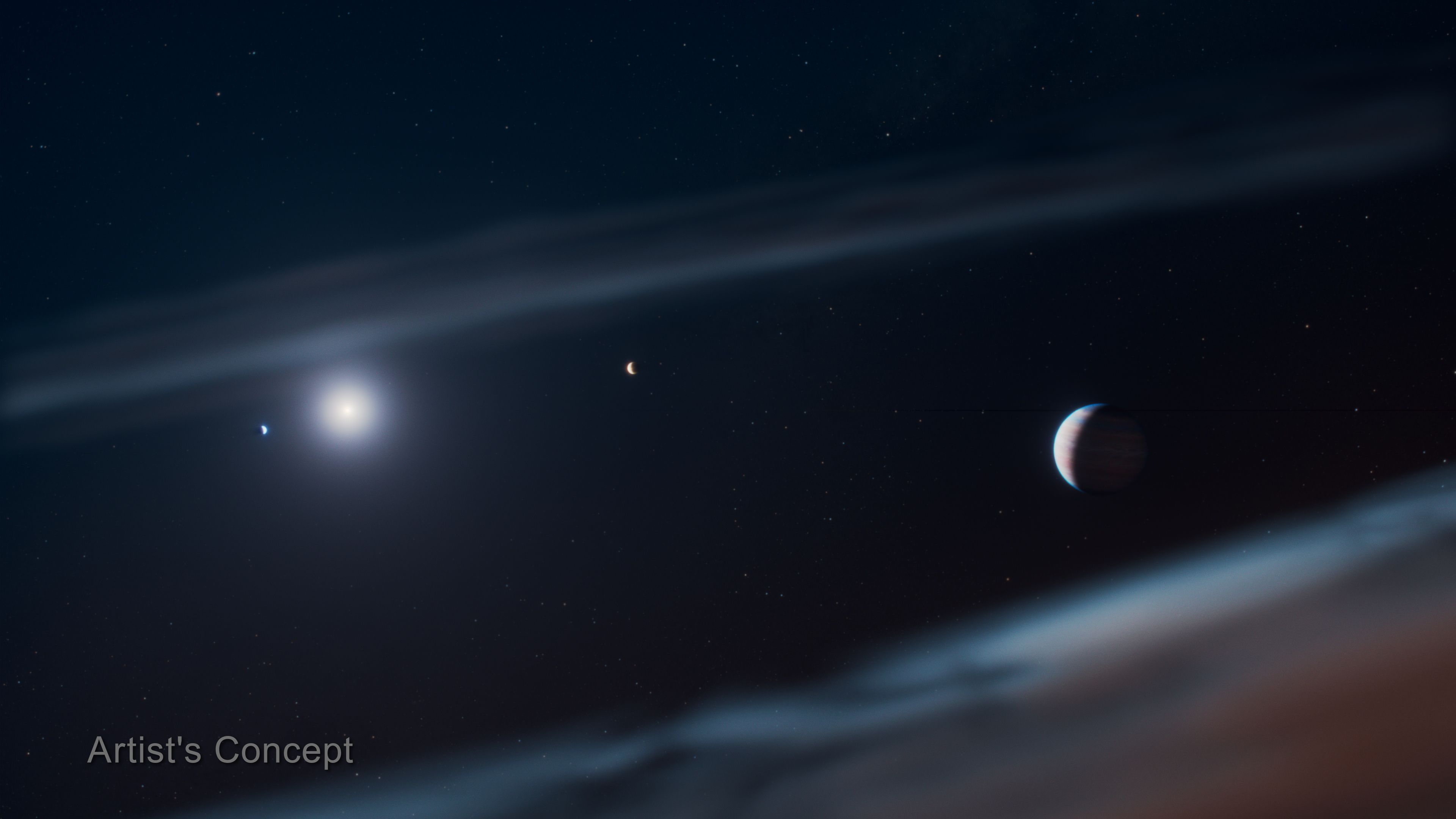
Scientists have detected radio signals emanating from a distant exoplanet for the very first time in history. The planet, called Beta Pictoris b, is a massive gas giant orbiting a star named Beta Pictoris. Located around 63 light-years away from Earth, it is approximately the same distance from its star as Saturn is from our own Sun. This proximity enables scientists to distinguish the planet from its star using powerful telescopes.
Beta Pictoris b is particularly noteworthy because it is relatively young, estimated to be only a few tens of millions of years old. Being a gas giant, it lacks a solid surface and is still considered a newborn planet in astronomical terms. The planet's hot and bright nature has made it a focal point of numerous direct observations, with researchers at Harvard and the University of Oregon claiming to have detected radio emissions from it.
The signal was recorded by the MeerKAT radio telescope in South Africa. The authors of the study, which has not yet been peer-reviewed, confidently assert that the emissions are of natural origin, dismissing the possibility of extraterrestrial activity. The characteristics of the radio waves align with theoretical predictions for magnetic fields generated by young, massive planets. Charged particles in the planet's magnetic field become trapped, accelerating and releasing energy as radio waves when the planet rotates.
This phenomenon, known as auroral radio emissions, effectively serves as the planet's "voice" projecting into space. The research team successfully pinpointed the origin of these emissions to the exoplanet, marking a significant milestone in the field of astronomy. However, previous attempts to detect such radio signals in other exoplanets, such as the YZ Ceti system in 2023, yielded ambiguous results due to potential interference from the star's magnetic activity.
The Beta Pictoris system has historical significance, having been the first star with a dust and debris disk directly photographed in 1984, suggesting the possibility of planet formation in the vicinity.
Written by urgent.news from Wired's reporting — not their text. Machine-written — may contain errors; check the original before relying on it.
This story
This is one outlet's version. Read the fullest account.