Santander reclama a la UE acabar con la discriminación a los bancos globales
Propone cambios que impulsarían sus negocios en emergentes. El banco señala que la internacionalización es "un activo estratégico" penalizado por la regulación europea Leer
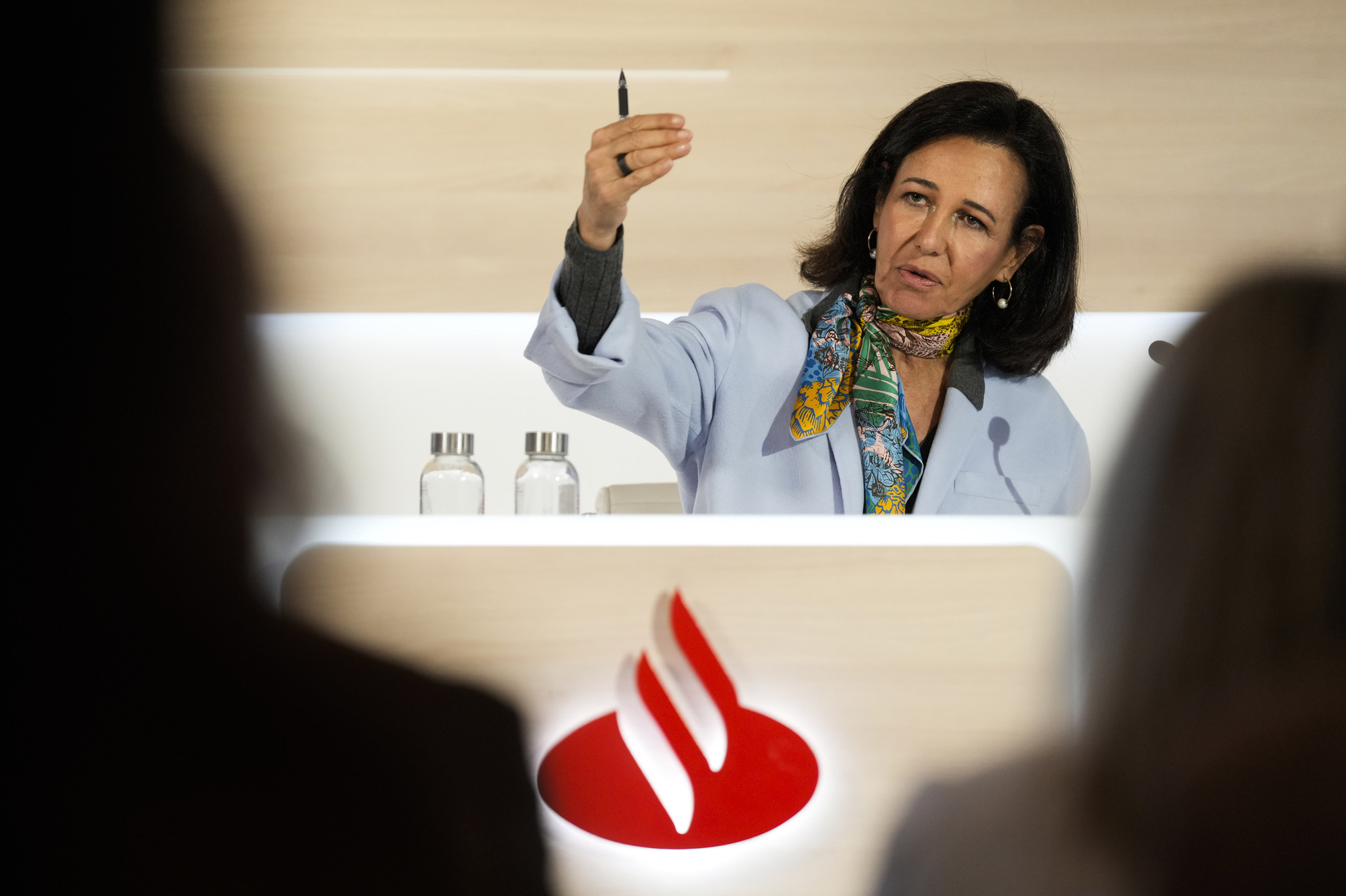
Santander, a Spanish bank, has called on the EU to end discrimination against global banks. The company argues that internationalization is a strategic asset that is penalized by European regulation. Santander believes that the EU should consider the international presence of European banks as an asset rather than a reason for the automatic imposition of prudential sanctions.
The bank is critical of the European Central Bank (BCE) for not allowing it to count tax credits granted by Brazil as an asset, which it accepts when the credit is from a EU member state. This places Santander at a disadvantage compared to local banks. The company also questions the supervisors' failure to adjust their requirements on non-performing assets to economies with much higher interest rates, which generates a greater volume of defaults.
Santander is racing to absorb capital charges due to the higher volume of doubtful credits that its presence in emerging markets generates and is facing excessive risk treatment in Europe, which does not correspond to the reality of that economy. The bank proposes that the Capital Requirements Regulation include a provision that allows it to recognize prudential, regulatory, and supervisory measures adopted in third countries when the corresponding regimes are equivalent or comparable to those applied in the Union.
Santander argues that if a region complies with international Basel standards, accepting local regulation and supervision would not lower prudence levels but would prevent duplicities, unjustified capital charges, and extraterritorial effects that limit the capacity of European banks to operate internationally and compete on equal terms with third-country counterparts.
Santander considers that the EU's treatment of its activities in emerging markets is a significant hindrance due to the weight these businesses have in the group's total global profit. The markets considered traditional emerging economies, mainly Brazil, Mexico, and Argentina, represent approximately 35% to 40% of Santander's total global ordinary profit.
The company believes that the European Commission should change the rules to stop penalizing global banking activities and to value them positively, offering favorable regulatory treatment to business diversification. Historically, slowdown phases or low interest rates in Europe have been compensated by the dynamism and profitability of these emerging markets, while the developed country business is the one that withstands when developing economies suffer.
Santander believes that this is evident in stress tests: more diversified banks show lower capital destruction in the same extreme shocks simulated. The Spanish entity considers that this resilience is an advantage for financial stability that should be rewarded with capital discounts or similar measures. The bank's experts suggest that one way to articulate this favorable treatment would be to link bonuses to the robustness shown in the European Banking Authority's stress tests conducted every two years.
Santander also highlights that in a more fragmented geopolitical environment, European banks with global activities also contribute to projecting European standards, attracting capital, and expanding the options of companies and individuals in Europe. This has become especially important for Santander and BBVA since the EU has tightened its relations with emerging American economies through the Mercosur trade agreement and the update of the pact with Mexico.
Written by urgent.news from Expansion ES's reporting — not their text. Machine-written — may contain errors; check the original before relying on it.