Rare armored dinosaur found in Japan may have ancestors that migrated across a land bridge 100 million years ago
The newly described dinosaur is only the third nodosaurid fossil found in Asia. Researchers say its ancestors may have migrated from North America.
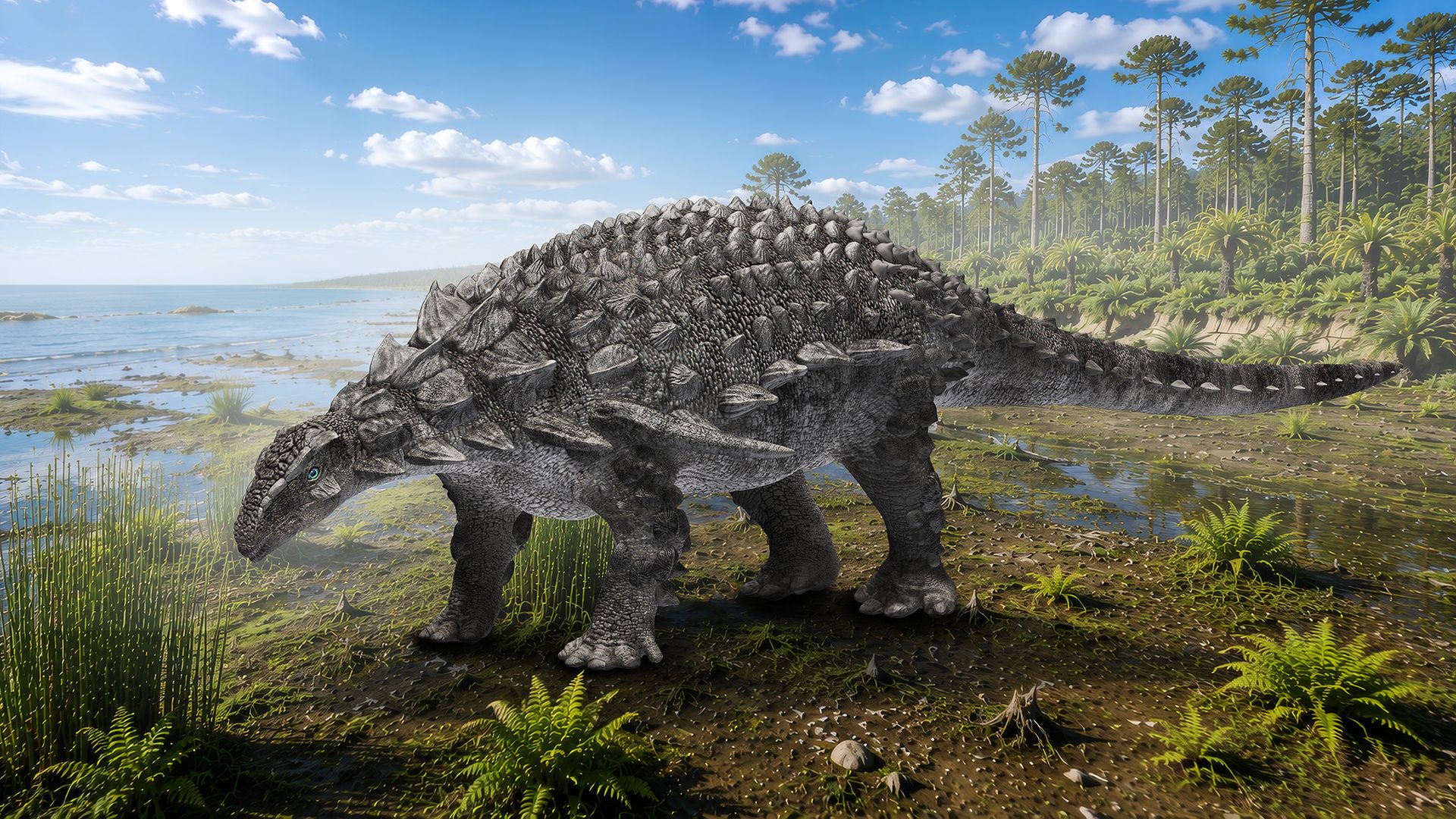
In a recent study, Japanese fossils believed to belong to a previously unknown armored dinosaur species have been reexamined, revealing potential origins in a land bridge migration. The newly named Nipponopelta yezoensis is one of only three nodosaurid species found in Asia. Nodosaurids, identifiable by their bony plates, are closely related to ankylosaurids but lack the heavy tail clubs used for defense.
Researchers from Hokkaido University and the University of Calgary reanalyzed a 93-million-year-old fossil discovered on Japan's Hokkaido island in 1995. Using CT scans and an anatomical analysis, they determined the specimen represented a new nodosaurid species. The fossils originated from marine sediments, suggesting the dinosaur might have been carried out to sea by a river or estuary before sinking.
Coastal environments are where nodosaurids are typically found, but Mallon, a paleontologist not involved in the study, notes that upland regions also produce few fossils due to erosion. The scarcity of nodosaurid fossils in Asia compared to North America may stem from various factors, including rock formation or the dinosaurs' inability to diversify as much in Asia.
Written by urgent.news from Live Science's reporting — not their text. Machine-written — may contain errors; check the original before relying on it.