Opera’s free built-in VPN can now turn on automatically when using public Wi-Fi
Opera announced today that its free, built-in VPN for desktop can now automatically activate when users connect to public or unsecured Wi-Fi networks. Here are the details. more…
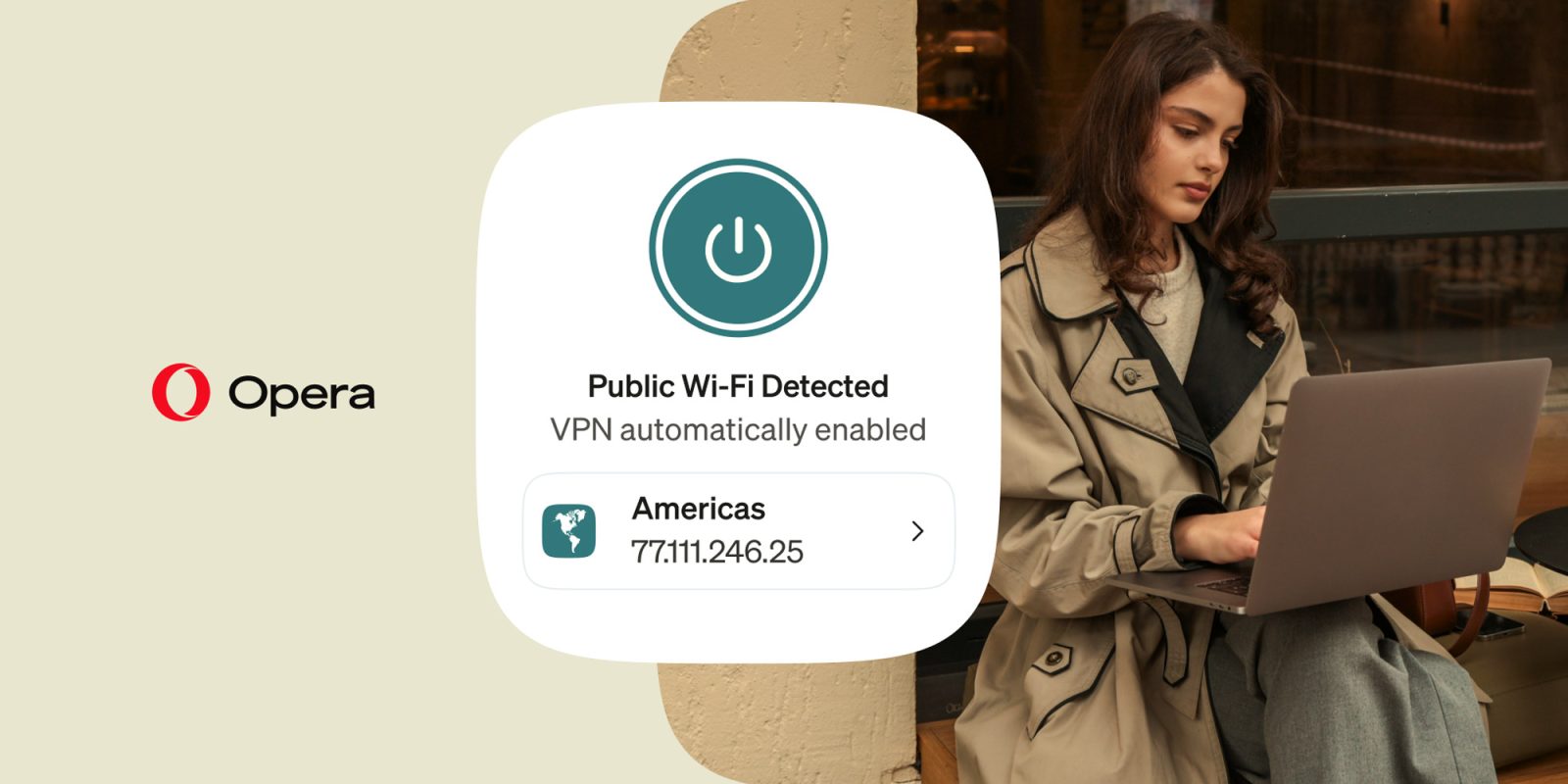
Opera has introduced a feature to its free, built-in VPN for desktop that automatically activates when users connect to public or unsecured Wi-Fi networks. This enhancement aligns with the company's commitment to making online privacy accessible to all. While VPN usage has gained popularity, only 23% of internet users aged 16 and above employ a VPN for their online activities, as reported by We Are Social's Digital 2026 Mid-Year Global Update Report.
Public Wi-Fi networks are particularly susceptible to snooping and data interception, making automatic VPN activation a crucial safety measure for users who frequently rely on these networks for work or travel. Opera's browser VPN now allows users in the US and France to opt for automatic activation upon detecting public or unsecured Wi-Fi networks, minimizing the need for manual intervention.
The feature remains opt-in to respect user agency and can be easily adjusted within the browser settings. This functionality is now available to Opera users in the US and France. It is important to note that Opera's free VPN adheres to strict GDPR regulations and has been independently audited by Deloitte. Additionally, Opera's VPN is part of a suite of built-in privacy tools, which also includes a native Ad Blocker and Tracker Blocker.
Written by urgent.news from 9to5Mac's reporting — not their text. Machine-written — may contain errors; check the original before relying on it.