Obscura VPN finally arrives on Linux — with a GUI, a CLI, and a new open-source license
Obscura VPN has launched a native Linux app with official packages for Debian, Ubuntu, Fedora, and Arch, plus a GPLv3 re-license and a launch discount.
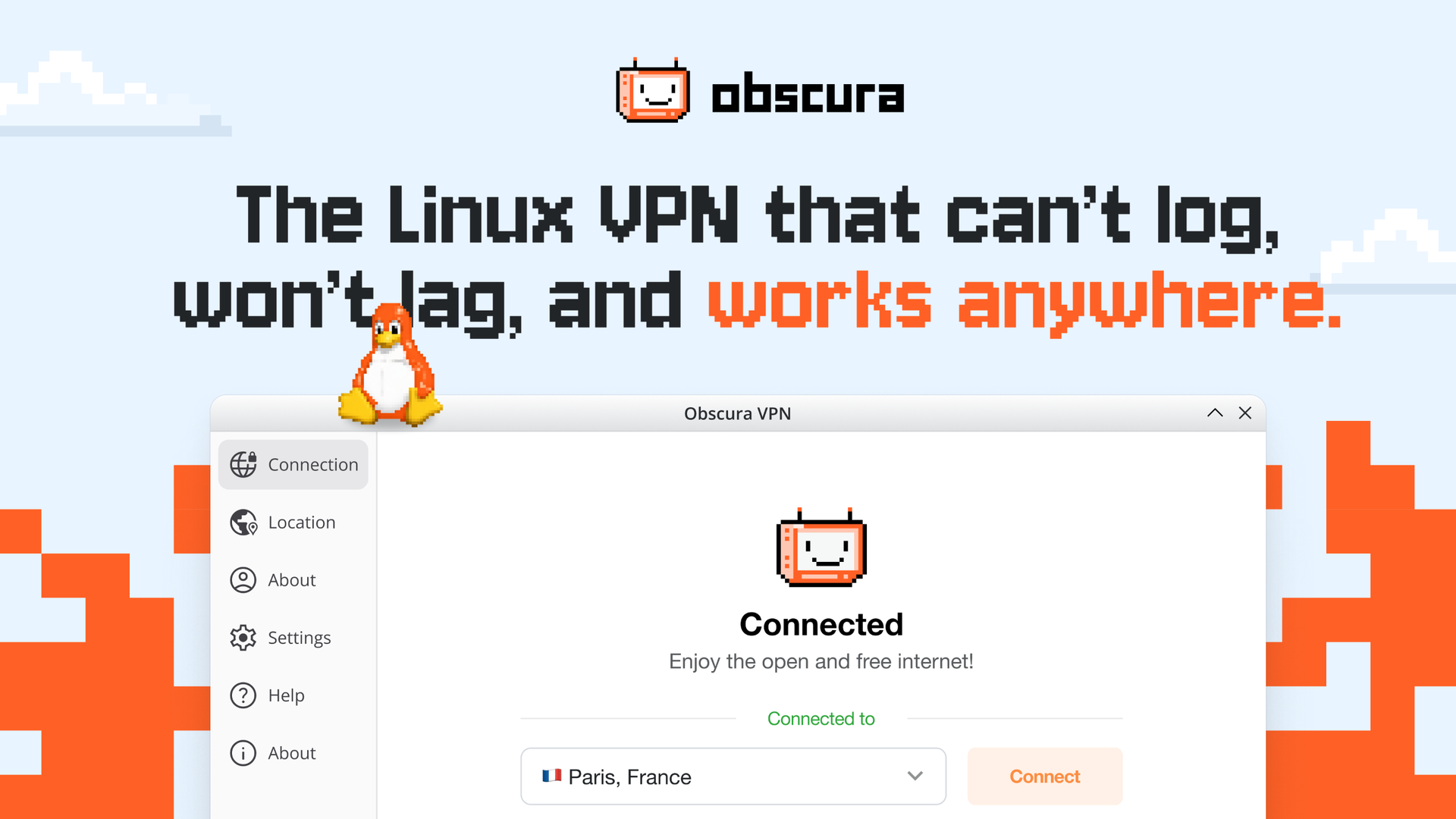
Obscura VPN has finally launched its native desktop application for Linux users. This marks a significant milestone for the privacy-focused VPN provider, which previously required users to manually set up the service via a WireGuard configuration. The new Linux app offers both a graphical user interface (GUI) and an experimental command-line interface (CLI), making it more accessible to a broader range of users.
The desktop app is available for several Linux distributions, including Debian, Ubuntu, Fedora (and Atomic Desktops), Arch, and various derivatives such as Linux Mint, RHEL, Silverblue, CachyOS, and Omarchy. Users must ensure their systems meet the minimum requirements, such as Ubuntu 24.04, Debian 13, Fedora 44, and RHEL 10.
A notable feature of the new Linux client is its support for Obscura's QUIC-based stealth protocol, which disguises VPN traffic as ordinary HTTP/3 web browsing. This capability can help users bypass networks that block VPNs. Additionally, the Linux app incorporates Obscura's two-party relay design, wherein the company acts as the entry node and stores users' real IP addresses, while Mullvad VPN handles the exit node and sees the websites users visit.
This arrangement ensures that no single provider has complete knowledge of a user's identity and online activities.
In a move to align with the open-source community, Obscura has also relicensed its code under the GNU General Public License v3.0 (GPLv3), building upon its previous use of the PolyForm Noncommercial License 1.0.0. This switch to GPLv3, a widely adopted open-source license, allows the community greater freedom to inspect, modify, and share the software.
It is the same license utilized by Mullvad VPN for its own applications. To mark the launch of the Linux app, Obscura is offering a 25% discount for a limited time using the promo code LINUX26. The service costs around $8 per month, with no free tier.
Written by urgent.news from TechRadar's reporting — not their text. Machine-written — may contain errors; check the original before relying on it.