NST Leader: Highland Towers lessons - Better slope risk detection needed
TEN days before Dec 11, 1993, 175.5mm of rainfall poured over Ulu Kelang, with high-volume water coursing intensely down a hilly slope that housed three apartment buildings — Blocks 1, 2 and 3.
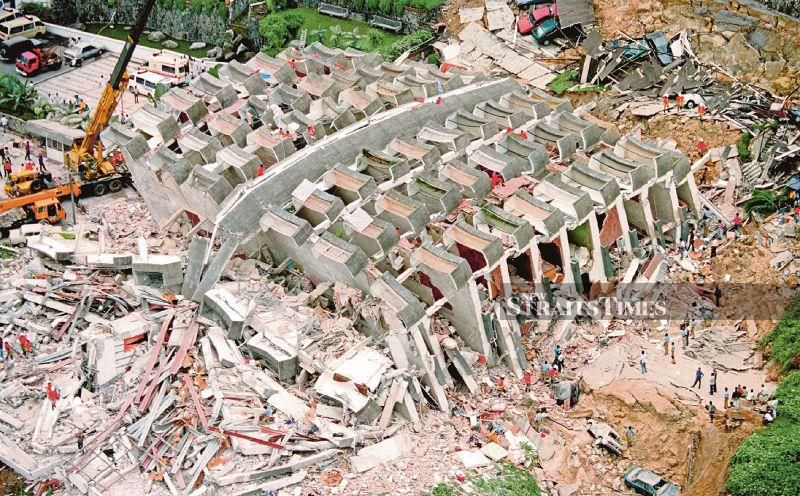
On December 11, 1993, heavy rainfall over a hilly area in Ulu Kelang led to a landslide that destroyed three apartment blocks, including Highland Towers. Block 1 of Highland Towers collapsed within five minutes, causing the deaths of 48 residents. The disaster was a result of poor slope risk detection, inadequate drainage, a saturated and unstable slope, and a progressive landslide that exerted immense lateral pressure on the foundation piles.
Meanwhile, in Cheras, a landslide was detected only after heavy rain on September 22, 2026, thanks to an emergency call from residents. This incident prompted authorities to initiate preventive measures, including stronger slope monitoring, drainage maintenance, and inspections of underground utilities. Despite the architectural excellence of high-rise buildings, they are vulnerable to hidden risks beneath urban development.
Landslides do not begin with building failure; rather, water movement, leaking pipes, drainage problems, and soil instability gradually weaken slopes. Authorities must adopt a proactive approach to identify vulnerable slopes and underground infrastructure, conduct regular inspections beyond visible cracks and slope movement, and define the responsibilities of residents' management, developers, utility providers, and local authorities.
Written by urgent.news from New Straits Times's reporting — not their text. Machine-written — may contain errors; check the original before relying on it.