NASA Welcomes Côte d’Ivoire as Newest Artemis Accords Signatory
Côte d’Ivoire signed the Artemis Accords on Thursday as the 75th signatory during a signing ceremony in the nation’s largest city Abidjan, marking the largest milestone yet for the international coalition of like-minded countries committed to peaceful and responsible space exploration. “The United States and Côte d’Ivoire already cooperate on Earth,” said NASA’s Deputy Administrator […]
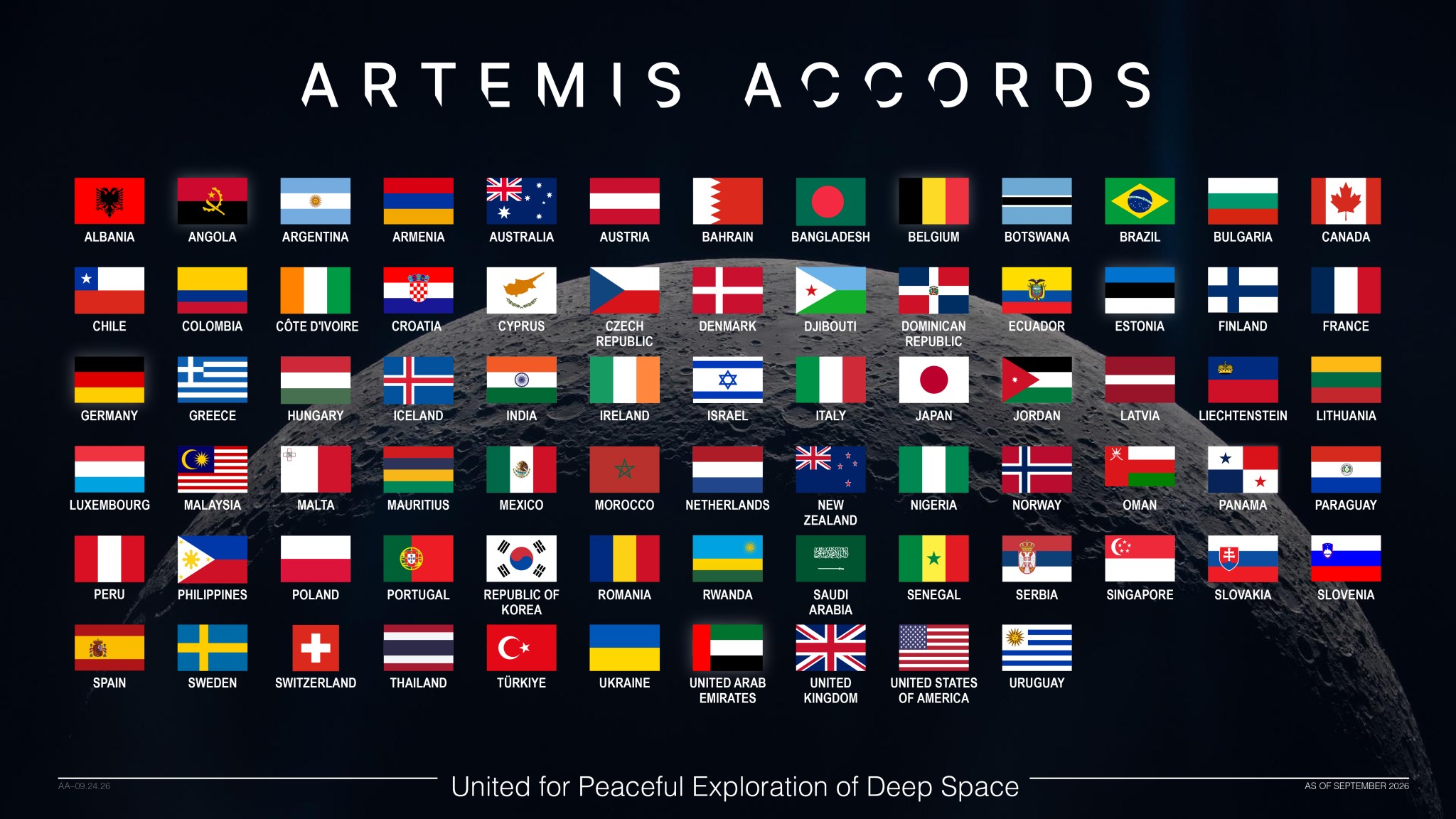
NASA formally welcomed Côte d'Ivoire as the 75th signatory to the Artemis Accords on Thursday in Abidjan, marking a significant milestone for the international coalition focused on peaceful and responsible space exploration. The United States and Côte d'Ivoire have a history of cooperation on Earth, according to NASA's Deputy Administrator Matt Anderson, who emphasized that expanding their partnership through the Artemis Accords opens new opportunities for collaboration.
The ceremony took place during Africa Space Expo ASPEX 2026, with Côte d'Ivoire's Minister of Higher Education and Scientific Research Adama Diawara representing the nation. Chargé d'affaires Junaid Munir from the U.S. Department of State also attended the event. Côte d'Ivoire has been actively involved in space science and technology since 2019, collaborating with NASA on Earth observation and geodesy.
The country established its Space Agency in 2025 to coordinate efforts in various space-related fields. The Artemis Accords, established in 2020 by the U.S. and seven other nations, set practical principles for transparency, safety, and coordination in lunar and Mars exploration, aiming to enhance international cooperation in space activities.
Written by urgent.news from NASA's reporting — not their text. Machine-written — may contain errors; check the original before relying on it.
This story
This is one outlet's version. Read the fullest account.