More AI and less screen time: How UAE schools are introducing the latest technology to pupils
Schools in the UAE are introducing artificial intelligence into lessons while also trying to avoid increasing pupils’ screen time after an AI curriculum was approved this month. The curriculum will apply to public and private schools with lessons set to cover data, algorithms, applications, risks and the ethical use of technology. The government also plans to train 22,000 teachers and educators…
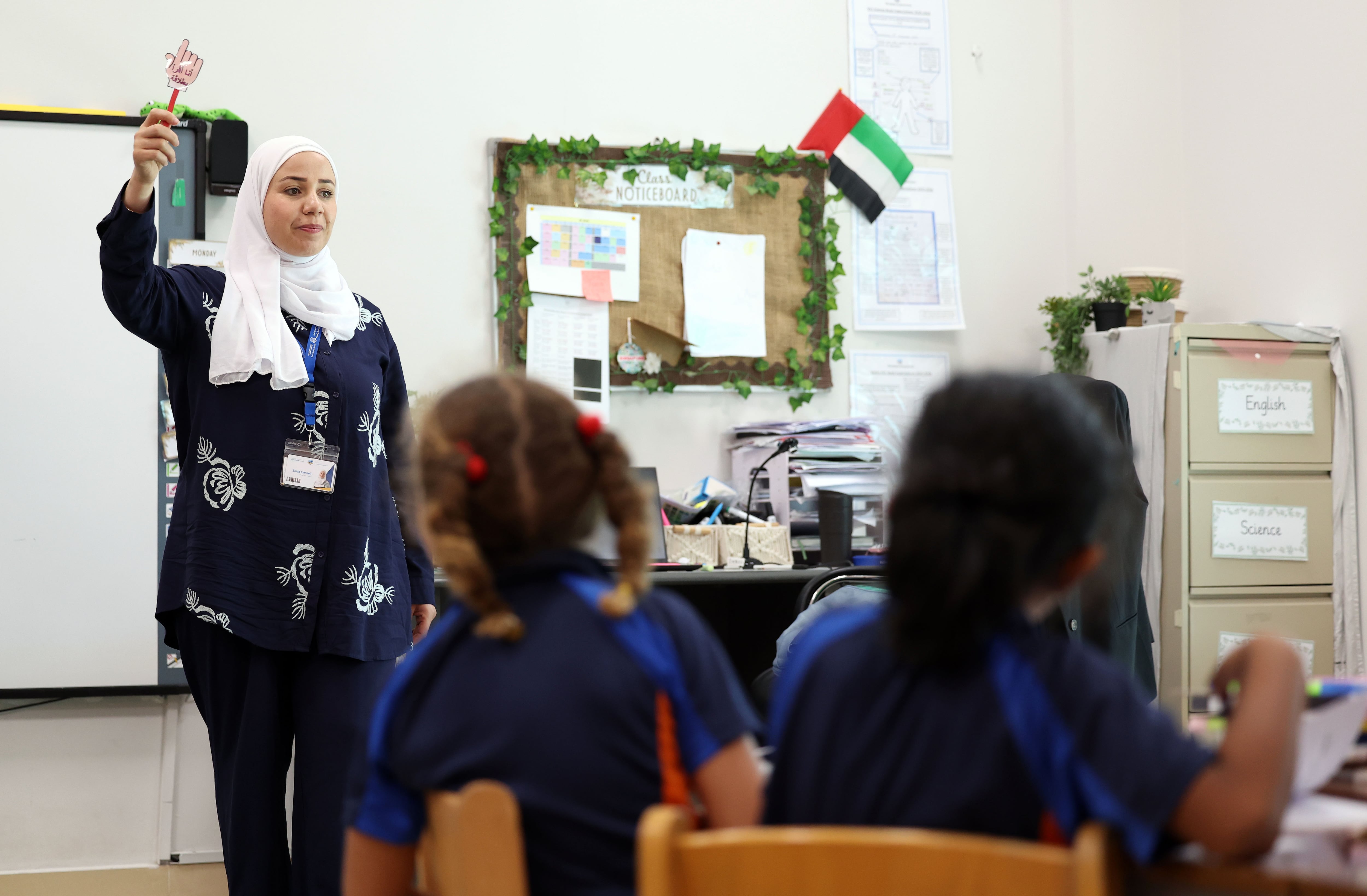
UAE schools are incorporating artificial intelligence into their curriculum while limiting students' screen time, following the approval of an AI curriculum this month. The curriculum, which applies to both public and private schools, covers data, algorithms, applications, risks, and ethical use of technology. The government plans to train 22,000 teachers and educators in using AI for teaching, assessment, and lesson planning.
However, school leaders have emphasized that introducing AI should not involve younger children using computers or generative AI tools.
At Nord Anglia International School Abu Dhabi, early-years pupils learn about AI through an "unplugged" program, focusing on play, critical thinking, and basic ideas like the difference between humans and machines. There is no screen time involved in these lessons, as they aim to build students' conceptual understanding of AI. Jamie Efford, elementary principal and cluster AI lead at Dubai Schools Al Khawaneej, explained that AI literacy can begin as early as kindergarten, with learning taking place through stories, play, sorting, discussion, and basic ideas about AI creation and instruction.
As students progress, lessons can move into areas such as data, algorithms, bias, privacy, and ethics. Dubai Schools had already developed a kindergarten-to-Year-9 AI literacy program before the cabinet announcement and has since aligned it with the Ministry of Education's guidance. The ultimate goal is to teach students how to question AI, understand its workings, recognize data's influence on outputs, and apply it responsibly.
Gems Education, another UAE education group, takes a cautious approach with younger children. Their chief education officer, Lisa Crausby, stated that pupils in the earliest years will learn through stories, pattern recognition, computational thinking, and teacher-led examples. Pupils under 13 will focus on teacher-led awareness and analysis, while those around 13 can begin supervised use of approved tools, subject to platform rules, school approval, and UAE law.
The group aims to ensure students learn about AI without becoming dependent on it, teaching them to think first, use AI with purpose, and verify everything.
One of the main risks, according to school leaders, is that students may begin relying on AI to do the thinking for them—a phenomenon called "cognitive debt." To prevent this, Gems Education plans to use tasks like comparing human-generated and AI-generated work, checking sources, and asking students to explain their thinking. Efford emphasized that AI literacy should be judged by how effectively students can question, evaluate, improve, or reject AI outputs, rather than how quickly they can generate an answer.
Written by urgent.news from The National UAE's reporting — not their text. Machine-written — may contain errors; check the original before relying on it.
This story
This is one outlet's version. Read the fullest account.