Markets mixed as investors eye oil price volatility and US bonds
Shares were trading mixed early on Thursday morning, as investors tried to digest the recent swings in oil prices and the US bond market.
Markets experienced mixed results on Wednesday as investors closely monitored oil price volatility and the fluctuations in US bonds. Japan's benchmark Nikkei 225 rose 1.3% to 65,883.41, buoyed by some chipmakers benefiting from growing interest in artificial intelligence. Conversely, Australia's S&P/ASX 200 dropped 0.7% to 8,700.50, Hong Kong's Hang Seng fell 0.5% to 24,715.95, and the Shanghai Composite declined 0.8% to 3,902.33, as markets closed in South Korea for the Chuseok autumn harvest holiday.
Energy markets saw US crude lose 0.82% to $91.40 a barrel, while Brent crude, the global standard, slipped 0.83% to $102.22 a barrel. The stark contrast in oil prices highlights concerns that Iran's war could lead to prolonged oil shortages in the Middle East. Mediators are actively working with US and Iranian officials, but no substantial progress has been made yet.
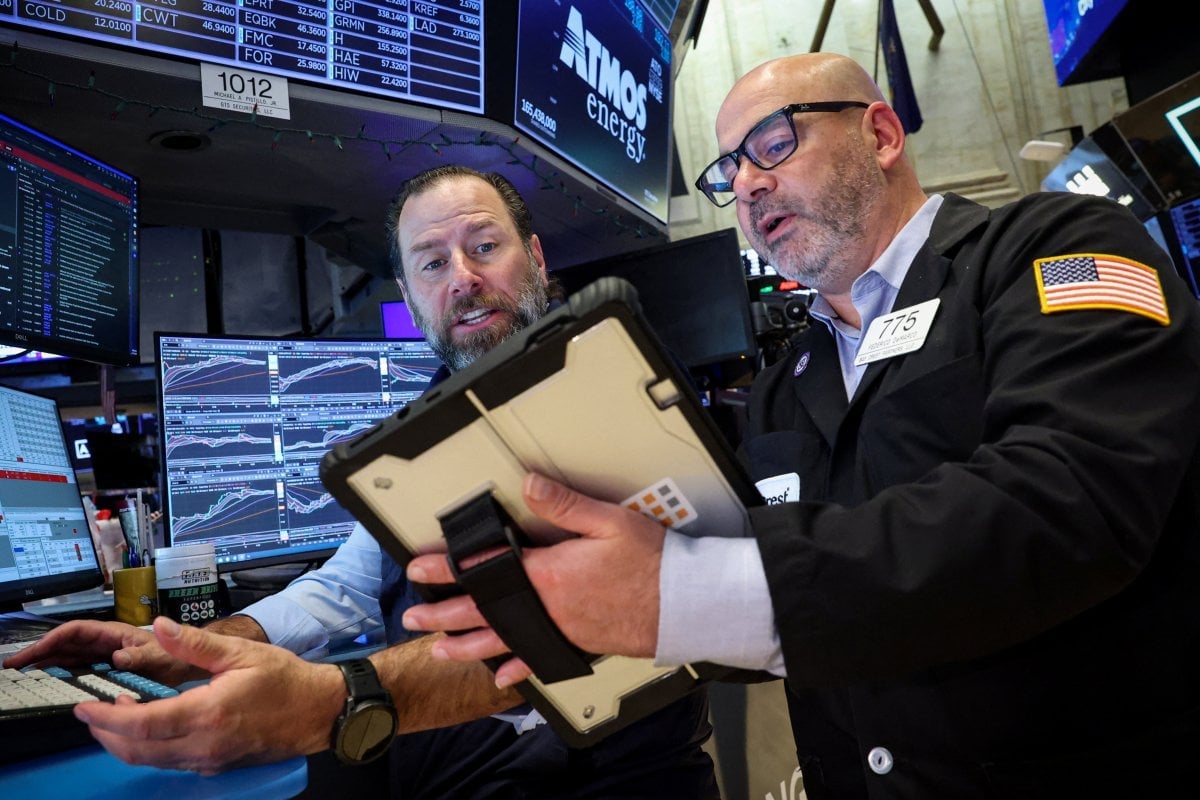
Wall Street faced pressure from the rising US bond market following a surprisingly strong economic report that heightened inflation worries. The S&P 500 experienced a 0.8% decline after finishing the previous day just 0.4% below its recent record. The Dow Jones Industrial Average slipped 352 points (0.7%), while the Nasdaq composite fell 1.1% from its all-time high.
The yield on the 10-year Treasury rose to 5.10% from 4.96%, a significant jump for the bond market, which can lead to lower stock prices and slower economic growth due to increased borrowing costs for everyone.
Recent rises in yields, nearing 5.14%, recall the levels seen before the 2007 global financial crisis. Heightened inflation concerns and the US government's substantial debt have contributed to this surge. Inflation fears were further exacerbated by a preliminary report indicating a surge in US business activity to its strongest pace in over five years.
The Federal Reserve raised its short-term interest rate last week for the first time in three years, with Fed Governor Michael Barr hinting that additional rate hikes could be necessary to curb inflation at the 2% target. Despite Japan's recent interest rate hike to combat the weakening yen, the currency has not rebounded significantly, affecting oil-importing Japan adversely due to soaring oil prices.
In currency trading, the US dollar edged down to 157.94 Japanese yen from 158.30 yen, while the euro remained stable at $1.1382. The S&P 500 closed at 7,706.03, down 58.61 points from the previous session, the Dow Jones Industrial Average fell to 51,511.59, a decrease of 352.10 points, and the Nasdaq composite settled at 26,936.04, a drop of 308.24 points.
Written by urgent.news from Euronews's reporting — not their text. Machine-written — may contain errors; check the original before relying on it.