In Alaska, Wildfires Help Prevent Future Burns. Will That Feedback Loop Hold?
Without the suppressive effects of younger vegetation, Alaskan fire activity would be 5 times higher.
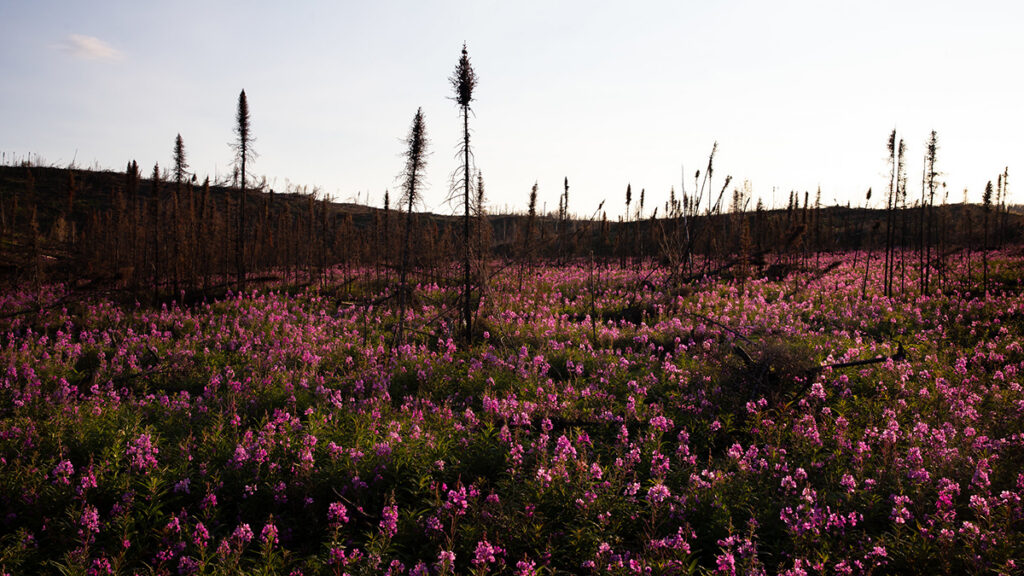
In Alaska's boreal forests, wildfires play a crucial role in regulating fire size and likelihood through a negative feedback loop. When mature forests burn, they are replaced by less flammable young forests, which temporarily suppress future fires. However, the extent to which this relationship holds under climate change is unclear.
A study by Gaglioti et al. analyzed Alaskan wildfires from 1984 to 2020, using satellite data to examine fires that occurred in previously burned areas. The researchers used logistic regression models to determine the extent to which younger vegetation resists wildfire and whether warmer, drier conditions impact this resistance.
They discovered that younger forests have historically experienced reburning rates that are 1-3 orders of magnitude lower than those in older forests, with fire barriers often forming along the burned-area perimeter. A simple model estimates that without this negative feedback loop, Alaska would have experienced 5 times more wildfires over the past 40 years.
However, extreme fire weather can dampen this relationship, particularly in younger forests, suggesting that a changing climate could weaken the suppressive role of younger vegetation. Despite this, the authors found that future climate change, modeled as normal conditions, does not completely negate the suppressive effect of past burning.
The limiting effect of past fires on new fire activity is twice as strong in Alaska as in other regions, due to the prevalence of less flammable deciduous trees and the slower replacement of ladder fuel. These findings could assist fire managers in assessing the likelihood of a burned area suppressing new fire activity based on its age and current fire weather conditions.
Written by urgent.news from Eos's reporting — not their text. Machine-written — may contain errors; check the original before relying on it.