How are road accident claims decided? | Explained
Who can file a motor accident claim? Who is liable to pay? When can an insurer be directed to pay and recover? Who can claim compensation for a deceased person? What are the four heads of compensation in a death case?
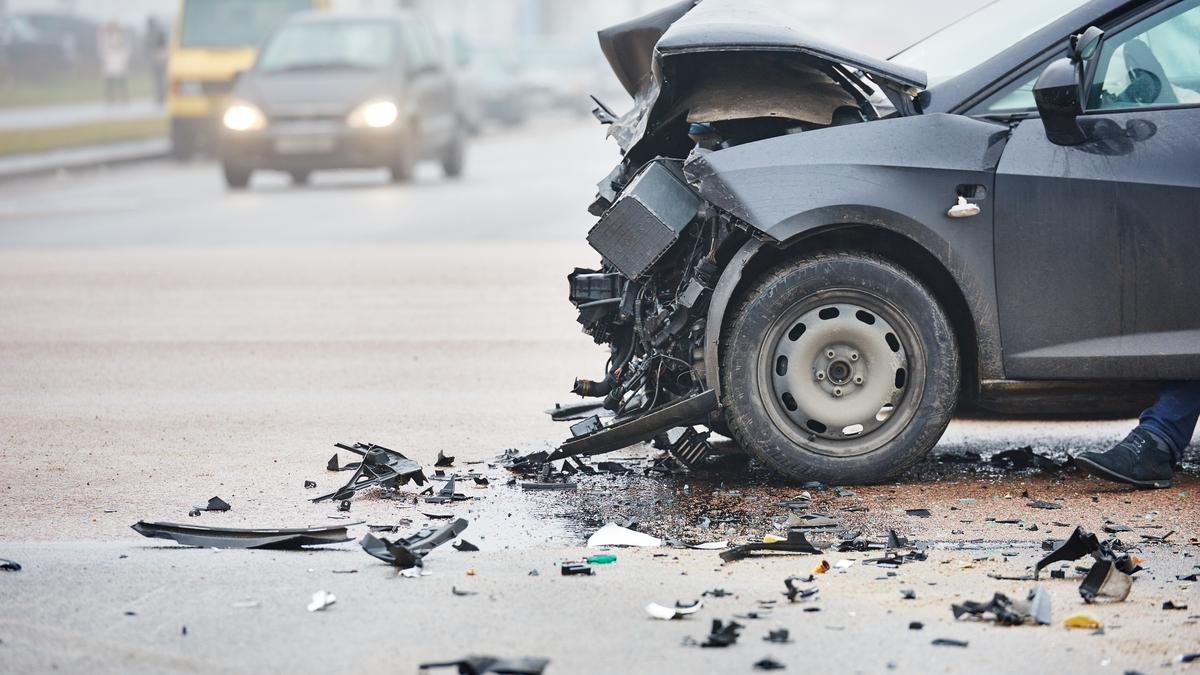
India's expansive road network, exceeding 6.7 million kilometers, ranks as the largest globally, yet it also bears the dubious distinction of recording the highest number of road fatalities. Contributing factors include reckless driving, poor road maintenance, insufficient driver training, and inadequate emergency care. According to the Ministry of Road Transport and Highways' Road Accidents in India 2024 report, 487,707 road accidents in 2024 resulted in 177,175 deaths (around 485 deaths daily, or 20 per hour) and injured 471,441 individuals.
The economic impact of road crashes is estimated at 3.14% of India's GDP, a burden primarily faced by the families of those killed or permanently disabled. However, the intricacies of court decisions and compensation awards often pose challenges for many claimants. The Motor Vehicles Act, 1988 (MV Act) serves as the primary legislation governing motor-accident compensation, encompassing the entire accident chain, from regulatory duties to liability, investigation, and compensation.
Under Section 165, State governments can establish Motor Accidents Claims Tribunals (MACTs) for specific regions to adjudicate claims arising from motor-vehicle accidents. The claimant can be the injured person, the owner of damaged property, or, in the event of death, the deceased's legal representatives. The insurer, owner, and driver are typically parties to the proceedings, as the Tribunal must determine both the compensation amount and the liable party.
Initially, the claim is heard by the MACT, which conducts fact-finding and awards compensation. An appeal under Section 173 can be filed before the High Court within 90 days, requiring a deposit of ₹25,000 or 50% of the awarded amount, whichever is lower. Determining liability involves examining various documents like the FIR, chargesheet, Mechanical Inspection Report, post-mortem report, insurance policy, and eyewitness testimonies.
Importantly, an acquittal in a criminal case does not impact the MACT proceedings, as they operate under different legal standards. Liability initially rests with the negligent driver, and vicariously, with the vehicle owner. Insurers generally fulfill the awarded compensation when the vehicle is insured. Compulsory third-party insurance, mandated by Section 146, is fulfilled by Section 150, which requires insurers to satisfy awards arising from third-party risks, subject to limited defenses under Section 150(2).
Even with a recognized defense, courts may apply the "pay and recover" principle, instructing the insurer to pay the victim/LRs first, followed by recovery from the owner or driver. A "no-fault liability" route allows for compensation of ₹5 lakh for death and ₹2.5 lakh for grievous hurt (post 2019 amendment), payable by the owner or authorized insurer without proving negligence.
While money cannot replace a life lost, motor-accident compensation aims to alleviate the financial strain on the deceased's dependents. Section 168 of the MV Act mandates an award of "just" compensation. Through landmark judgments such as Sarla Verma (2009) and Pranay Sethi (2017), the Supreme Court has established standardized formulas and foundational principles for implementing this requirement.
To determine compensation, the court considers three key facts: the deceased's age at the time of the accident, their annual income (after tax deductions), and the number of dependants. These facts are used to calculate the "loss of income" component, which represents the financial impact on dependants due to the victim's death.
The calculation begins with the deceased's annual income, adjusted for future prospects in light of their age and occupation. For salaried individuals, the income is typically derived from the Income Tax Return (ITR) of the preceding assessment year, while self-employed individuals or business owners use the average income from the previous three years' ITRs.
Where income cannot be substantiated, the State's notified minimum wage for the relevant period is applied. Dependents, including married sons and daughters, are entitled to compensation, regardless of financial dependency on the deceased, as affirmed by the Supreme Court in Jitender Kumar (2025). The second stage involves translating these facts into the four heads of compensation in a death case: loss of income/dependency, loss of estate, funeral expenses, and loss of consortium.
The primary component is "loss of income," which quantifies the financial hardship experienced by dependants due to the victim's untimely demise. For this component, the calculation starts with the deceased's annual income, adjusted for future prospects based on their age and occupation. The third stage aggregates the amounts from these four heads to arrive at the final compensation award.
Written by urgent.news from The Hindu's reporting — not their text. Machine-written — may contain errors; check the original before relying on it.