Houses and apartments: Property prices in Germany no longer rising so sharply
Residential properties are becoming more expensive, but the price increase is weakening. In particularly sought-after cities, apartments even became slightly cheaper. However, affordable housing remains a scarce commodity.
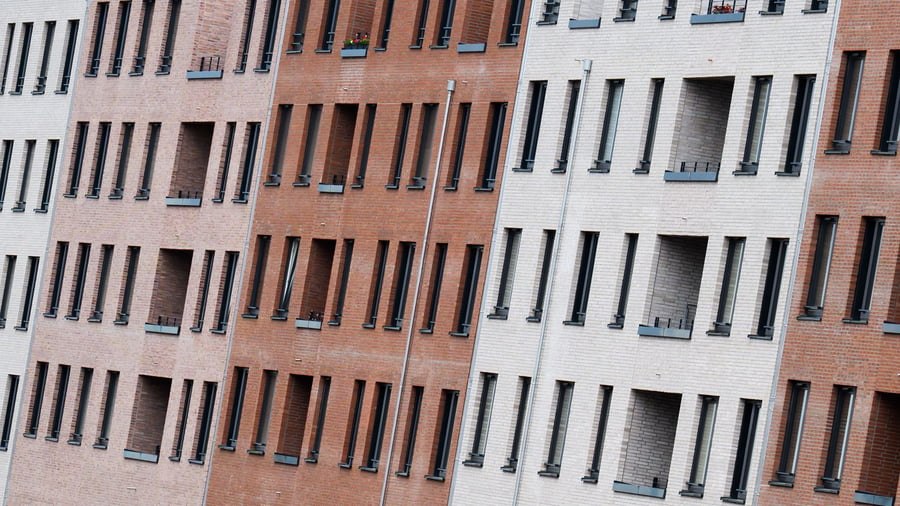
German house and apartment prices in Germany continue to rise at a slower pace. On a year-over-year basis, residential real estate cost 0.6 percent more in the second quarter of the current year, according to the Federal Statistical Office on a provisional basis. This was the seventh consecutive increase, with the rate of growth gradually weakening.
The Wiesbaden statisticians revised the figure for the first quarter down from 1.4 percent to 1.2 percent. Compared to the first quarter of 2026, home ownership in Germany was 0.3 percent more expensive in the spring. Regional development is very diverse. In Germany's seven largest cities (Berlin, Hamburg, Munich, Cologne, Frankfurt, Stuttgart, and Düsseldorf), property prices for owner-occupied apartments fell slightly in the April-June period compared to the previous year (minus 0.4 percent) and the previous quarter (minus 0.5 percent).
However, the price level is relatively high in these urban agglomerations. In non-metropolitan large cities outside the top 7 metropolitan areas, apartments became more expensive by 2.0 percent compared to the previous year's quarter and 0.5 percent compared to the previous quarter. In densely populated rural districts, buyers of owner-occupied apartments paid less on average: prices fell both year-on-year (minus 1.8 percent) and compared to the first three months of the current year (minus 1.3 percent).
With the "construction turbo" to address housing shortages, the coalition government aims to build more homes. The SPD-led predecessor government had promised 400,000 new homes per year, but never achieved this target. Estimates suggest there are about one million fewer homes nationwide. The current federal government plans to speed up housing construction through faster approvals, but private and professional developers are being hampered by rapidly rising construction costs, while mortgage rates have risen to over 4 percent due to the Iran war and inflation concerns.
Written by urgent.news from Handelsblatt's reporting — not their text. Machine-written — may contain errors; check the original before relying on it.
This story
This is one outlet's version. Read the fullest account.