Gesundheit: Nächster Anlauf zu umstrittenen neuen Organspende-Regeln
Tausende Schwerkranke warten auf eine gespendete Niere oder Leber. Um zu mehr Transplantationen zu kommen, wird schon lange über ein ganz anderes Prinzip diskutiert. Im Parlament wird das nun konkret.
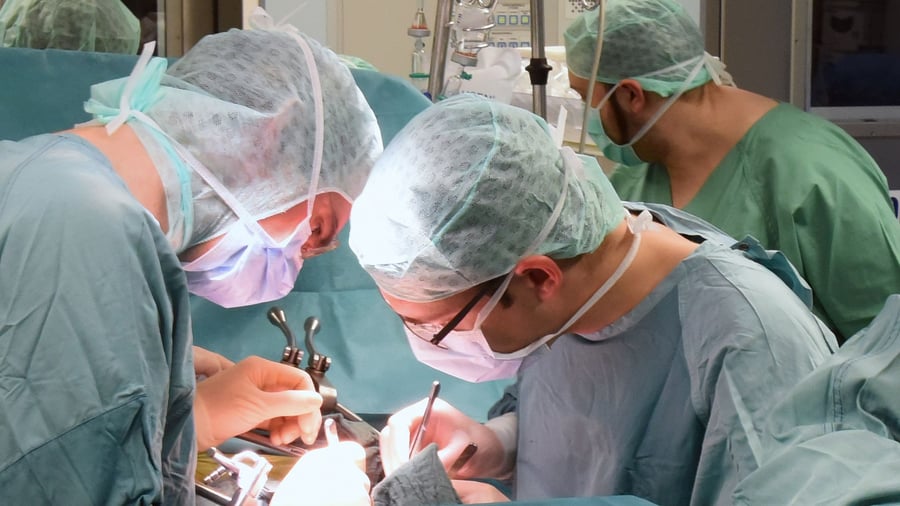
Bundestag sees new push for controversial organ donation rules to boost life-saving transplants. A cross-party group of lawmakers has introduced a bill into the Bundestag proposing a withdrawal mechanism for adults. This would mean that every adult is automatically an organ donor upon death, unless they have previously withdrawn their consent.
Currently, explicit consent is required for transplants. Another group strongly opposes this change, putting forward an alternative proposal. Supporters of the withdrawal mechanism are already on their third attempt, following the failure of a first initiative in 2020 and a second due to the premature election in 2025. What supporters want The SPD lawmaker Sabine Dittmar highlighted the thousands of people on waiting lists and emphasized that organ donation is and remains voluntary.
However, the focus should shift to those who do not wish to donate. The Green lawmaker Michael Kellner recounted the story of a friend who received a liver transplant in 2009, extending her life by 17 years. That year, she passed away. "A second donor liver could have saved her. But we also lack organs in 2026." At the same time, he stressed that no one is forced to be a donor.
The dignity of the individual and the right to self-determination remain intact because one can always say no. The group consisting of CDU, CSU, SPD, Left, and Green members argues that many improvements in recent years have not significantly increased the number of donations. Donation should become the "norm". For this, organ harvesting from adult and capable individuals should be permissible even if they have not withdrawn their consent.
Provisions include increased awareness-raising. In the Bundestag, there is also a bill from the Bundesrat advocating for the introduction of a withdrawal mechanism. North Rhine-Westphalia's Health Minister Karl-Josef Laumann (CDU) said, "The problem is simply that we have far too few organs." Despite new approaches in awareness-raising and documentation, the situation has not improved significantly.
Documenting one's willingness to donate as an adult could be required. The other group advocating for more organ donations also opposes the withdrawal mechanism. Arguing that "silence should not be considered consent," they propose that all citizens be asked upon reaching 18 whether they are willing to donate upon death, including the option of "undecided."
The Green lawmaker Sven Lehmann emphasized the need for more donors, but a sensitive issue like this should "remain a decision that a person actively affirms." The withdrawal mechanism would essentially be "nothing else but a societalization of the body." CDU lawmaker Michael Brand stated that everywhere positive consent is required, even when using websites.
"What do we want to do with organs now that we make them state-controlled?" There are many concrete steps that could save lives. So far, there is a lack of a proper online campaign to inform and convince. The bill for a withdrawal mechanism receives support from 254 lawmakers, while the opposing proposal from 58 lawmakers is the first one.
Whether a majority will ultimately emerge in the Bundestag with its 630 lawmakers still needs to be seen. Next come committee deliberations on the initiatives, followed by a plenary vote - as often happens with ethically complex issues without usual faction lines. As the situation with organ donations is, organs such as kidneys, livers, or hearts are desperately needed for critically ill patients.
Last year, 985 people donated an organ or more upon death, the highest figure since 2012. Meanwhile, by the end of 2025, 8,200 people were on waiting lists. Generally, while many support organ donation, a resolution is often left to the families of the deceased. Where one can document one's stance A principle "yes" or "no" to organ donation upon death can be documented on an organ donation card, in a patient directive, or on paper.
Since March 2024, it is also possible online: At the portal www.organspende-register.de, anyone aged 16 and above can document their stance digitally. Currently, there are just over 633,000 declarations, with 82 percent agreeing to organ harvesting without restrictions and 8.7 percent registering a withdrawal.
Written by urgent.news from Handelsblatt's reporting — not their text. Machine-written — may contain errors; check the original before relying on it.