Five years later, you can finally buy Google Beam
It’s been five years since Google first offered a glimpse of Project Starline, a three-dimensional videoconferencing platform billed at the time as as a “magic window” that enables realistic and immersive calls. On Wednesday, Google announced that Google Beam — as the software element of the product is now called — is generally available for purchase, built into HP’s Dimension video meeting…
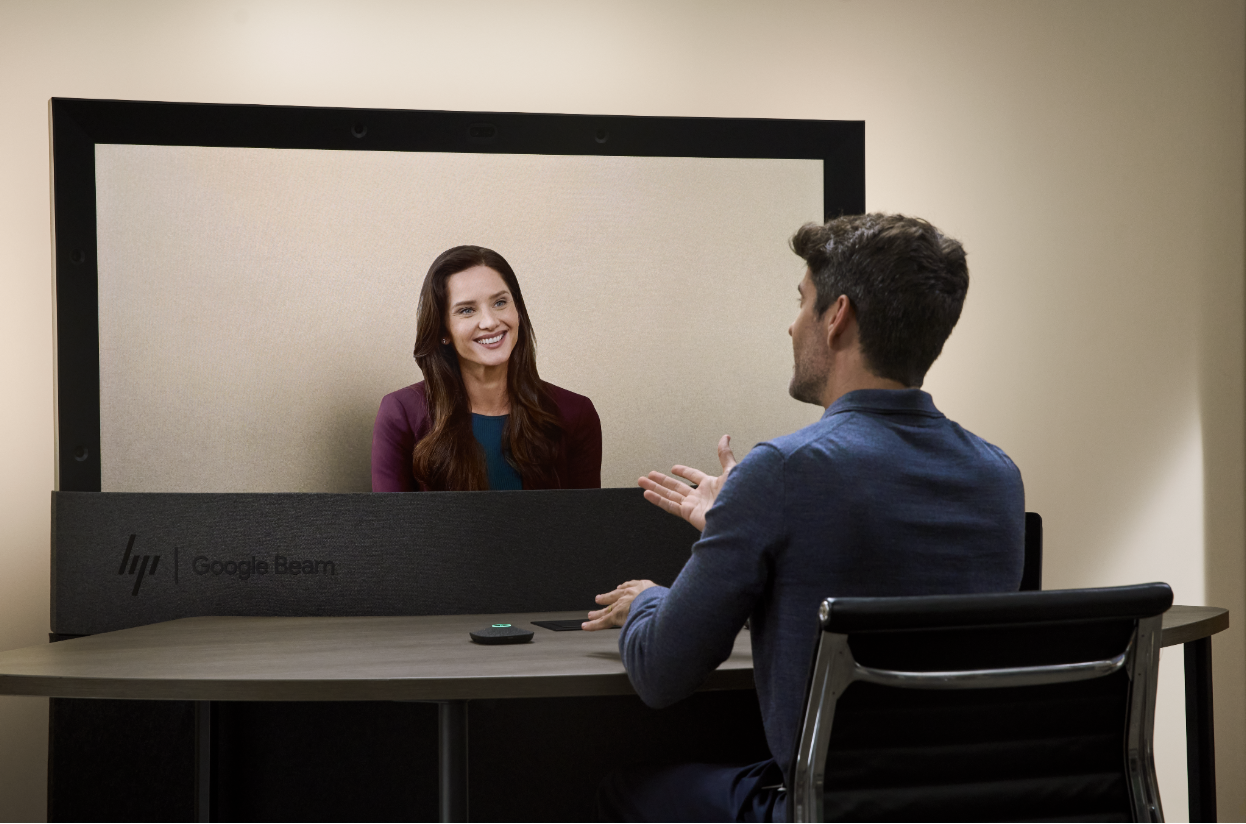
Five years after its initial unveiling, Google has made Project Starline's software, now known as Google Beam, available for purchase and integration into HP's Dimension video meeting hardware. The hardware costs approximately $25,000 per unit, with additional costs for software licenses yet to be disclosed. Google has launched the combined product in six countries, including Canada, France, Germany, Japan, the UK, and the US.
The company has also collaborated with co-working space provider Industrious to allow potential users to test Beam at its US locations in Atlanta, Chicago, New York City, and Palo Alto.
Industry analysts praise Google Beam's ability to provide immersive, 3D engagement without the need for wearables. Irwin Lazar, a principal analyst at Metrigy, notes that Beam "offers the potential for immersive, 3D engagement, without the challenge of wearables," while Avi Greengart, president and founder of Techsponential, describes it as "one of those 'you have to try it' experiences to understand the value proposition."
He emphasizes that the technology allows for "realistic and immersive calls" that preserve micro-expressions and nonverbal cues, potentially saving time and budget while fostering closer collaboration in projects and working relationships.
Initially developed during the COVID-19 pandemic, Beam combines AI-generated 3D images of participants with spatial audio, creating the illusion of being in the same room. The hardware has evolved from a large video booth to a smaller, more conventional videoconferencing setup. The 65-inch Dimension display renders meeting participants in their full size, incorporating cameras, a 12-microphone array, and LED lighting essential for the Beam software.
The system currently supports one-to-one meetings, although Google recently hinted at expanding this to group calls, though this feature is still in the experimental stage.
While currently only available for individual calls, Google has demonstrated efforts to enable group calls, with early internal studies showing that 50% of Google employees who used Beam felt more connected, resulting in a 21% reduction in the need for follow-up meetings. However, the technology's widespread adoption may be limited by its price point, which Google acknowledges as a potential barrier to adoption.
Early adopters are expected to primarily target specific use cases such as executive meetings, hiring interviews, product demos, and high-stakes engagements.
Written by urgent.news from Computerworld's reporting — not their text. Machine-written — may contain errors; check the original before relying on it.