Climate Journal: Há dinheiro para a transição energética. Falta alocar
NOVA YORK – “Enquanto a agenda climática no mundo diminui, ela cresce no Brasil.” A frase de Mário Gouvêa, o Secretário do Tesouro Nacional, sintetiza as discussões ocorridas no encontro organizado pelo Brazil Journal ontem, durante a Climate Week. O evento reuniu membros do governo federal, gestoras e grandes empresas para discutir a transição do […] The post Climate Journal: Há dinheiro para a…
During the Climate Week event in New York, Brazil's Secretary of the Treasury, Mário Gouvêa, emphasized that while global climate agendas are shrinking, Brazil's are expanding. The gathering brought together federal government members, managers, and major companies to discuss the transition of Brazil to a low-carbon economy and the country's next steps for energy transition.
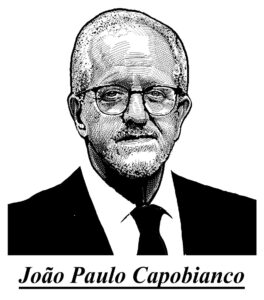
The discussions were opened by the Minister of the Environment and Climate Change, João Paulo Capobianco, who presented an optimistic view of the future of energy transition in Brazil. He noted that the Climate Fund operated an average of R$ 400 million annually between 2009 and 2023, but this was deemed insufficient to bring about real changes.
Capobianco highlighted that with the issuance of sovereign green bonds, the Fund's annual revenue increased to R$ 10 billion in 2024, R$ 14.5 billion in 2025, and R$ 27 billion in 2026. He expressed confidence in the current favorable scenario, attributing it to Brazil's readiness to lead by example. Despite the government's actions, there was a consensus among the attendees on the need for increased involvement of the private sector in this process.
Gouvêa acknowledged that the government has improved its use of public funds, highlighting that these resources can be a lever for private sector capital. However, he stressed that the private sector is the key player and that if capital is not flowing, it is the government's responsibility to understand why. Gouvêa, who coordinates the Eco Invest program, revealed that over R$ 14 billion is committed to investments for the coming years, with investment stability expected for the next decade, regardless of political shifts.
However, he posed a challenge: "Where is the pipeline of projects?" COP30 President Ana Toni emphasized that without projects, diplomacy alone is insufficient, and Brazil will continue to be seen as the "country of the future." She noted that hosting international events like the G20 summit, BRICS meeting, and COP30 has brought a breath of fresh air to Brazil's climate agenda.
However, she warned that the country is "masterful at timing" and that now is the time to act and not lose momentum. Toni also advocated for "private sector diplomacy" through public-private dialogue spaces like Eco Invest, emphasizing the importance of finding projects to utilize the resources. Lina Lisbona, a partner at Vox Capital, pointed out the difficulty in developing projects with real impact, emphasizing that climate transition is not about attaching something to a decision.
It requires a complete rethink of how we produce, distribute, and consume. Lisbona stressed that this change can only occur with different types of capital. Sergio Suchodolski, CEO of Fama Re.Capital, stated that the environment for private investments aimed at transitioning towards a low-carbon economy in Brazil has matured in recent years.
"The financial managers focused on this sector have grown significantly over the last four years. We are witnessing a consistent maturation of the ecosystem," he said. However, Suchodolski added that there are execution issues outside the traditional Rio-São Paulo axis. From the corporate perspective, the argument for investing in a low-carbon energy transition is that the account balances.
"Decarbonization is a business strategy. It is a bit more expensive now, but it will become cheaper when there is scale," said Grazielle Parenti, Vale's VP of Sustainability. "We need to focus on the business case, the numbers, the financial language, take it out of the paper, and stop doing diagnostics." Paulo Skaf Filho, CEO of ComBio, agreed and stated that it is possible to reconcile cost reduction and emissions.
He believes the current moment is favorable to regulate the carbon market in a "pragmatic and balanced" way, looking long-term for the country. Roberto Waack, president of MBRF's sustainability committee, concluded the event by extolling Brazil's "natural capital," which is often underestimated but could become a crucial asset for the country to lead the global transition to a low-carbon economy.
"We need to acknowledge the value of Brazil's natural capital from a business perspective. Recognizing all those elements nature provides is something that is demanding some steps, there are many methodologies to evaluate this, we need institutional recognition and regulation. We have the largest natural capital on the planet, which is not economically recognized and is seen as a liability by the private sector."
Written by urgent.news from Brazil Journal's reporting — not their text. Machine-written — may contain errors; check the original before relying on it.