Chinese archaeologists find 2,200-year-old ancestor of Dragon Boat Festival treat
When the weather turns warm around June, people all across China gather for the annual Dragon Boat Festival, and one of the most famous dishes from the celebration is the zongzi. Zongzi is a rice dumpling with a delicious filling, wrapped in bamboo leaves before being cooked. The leaves add aroma and flavour to the rice. In mid-August, a group of scientists from China announced they had…
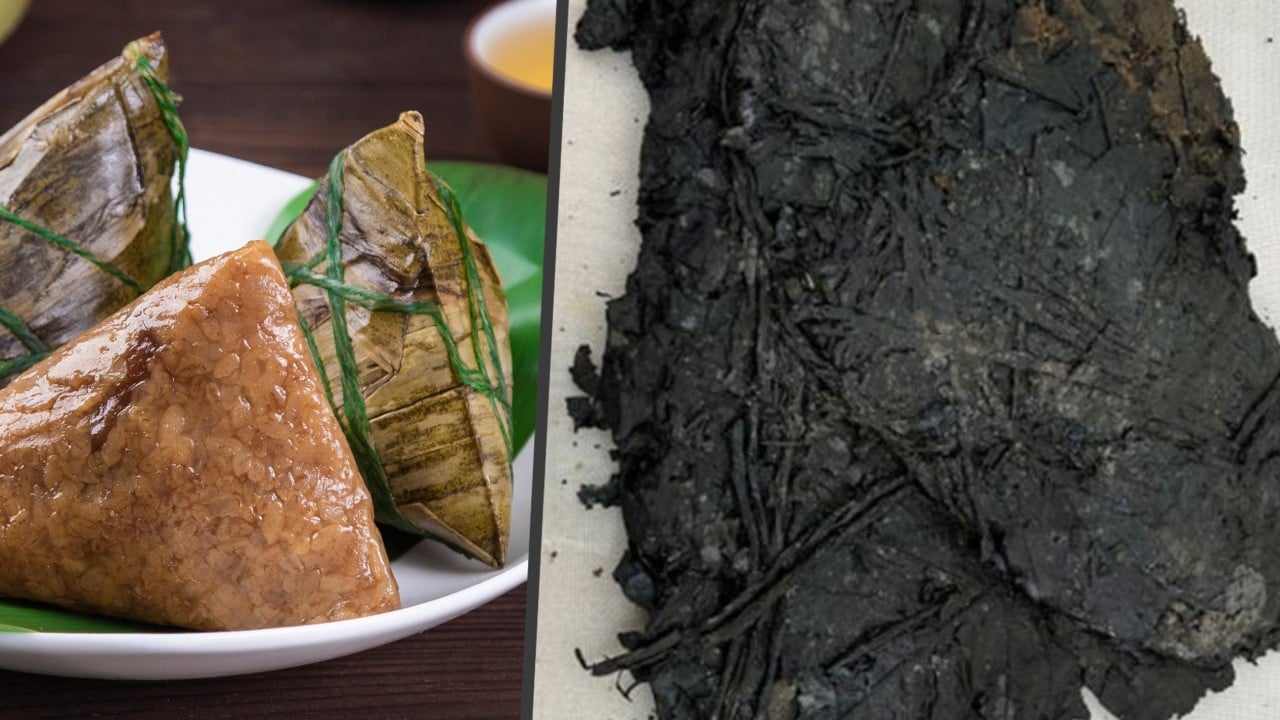
Chinese archaeologists have unearthed an ancient ancestor of the Dragon Boat Festival treat, a zongzi rice dumpling, that dates back 2,200 years. The discovery was made in eastern China's Anhui province, where scientists found well-preserved plant bundles tied with a cord. Inside, they discovered brown residue, plant seeds, including a blend of rice, broomcorn millet, and foxtail millet.
Unlike today's zongzi, which typically uses sticky rice and bamboo leaves, the ancient version was wrapped in Quercus dentata tree leaves and a grass cord made from Poaceae plants. The rice treat was found in a tomb, suggesting it was prepared for a funerary ritual, making it challenging to determine whether it was a special occasion treat or a more common part of the people's diet.
The discovery provides strong archaeological evidence for the existence of the zongzi tradition during the Zhou dynasty (1046 BC–256 BC). The rice wrapping technique has remained almost the same throughout the millennia, with the only significant change being the shift from bamboo leaves to Quercus dentata tree leaves.
Written by urgent.news from South China Morning Post's reporting — not their text. Machine-written — may contain errors; check the original before relying on it.