Cerebionics wants to turn human intent into commands for machines
Sometimes you hear about a startup doing something just so completely out of left field that you have to find out more. For me, that startup is Cerebionics. What started as Norwegian founder Agnessa P...
Cerebionics aims to turn human thoughts into commands for machines, a startup founded by Norwegian Agnessa Pedersen. Pedersen's journey began with building drawing robots as a teenager, evolving into her current work on brain-computer interfaces (BCI) for real-world applications. Her interest in BCI stems from her desire to bridge the gap between humans and machines, removing the need for physical control.
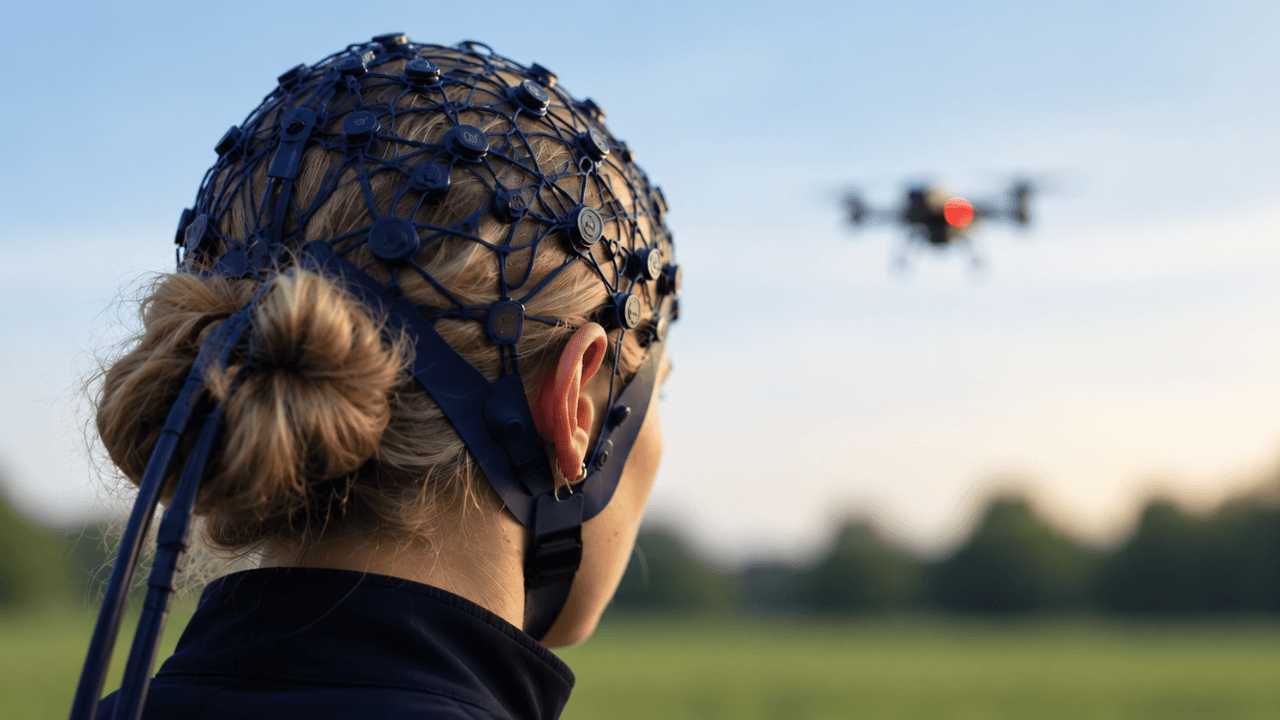
Pedersen studied cybernetics and robotics, eventually focusing on BCI in 2024 after completing her integrated Master’s degree. Her team at Cerebionics is developing a modular, non-invasive BCI platform that connects with various systems, such as drones, unmanned ground vehicles, or C2 APIs. Using EEG electrodes, Cerebionics is designed to be portable and lightweight, capturing broader patterns of brain activity associated with intended actions and translating them into higher-level commands for machines.
Unlike Neuralink, which focuses on patients with severe conditions, Cerebionics pursues a different technical approach and set of use cases, capturing higher-level commands like movement directions and expanding its command dictionary. BCI is seen as the final interface that is still relatively untapped, offering a more direct way to communicate intent compared to other control methods like muscle sensors, voice commands, or eye tracking.
Written by urgent.news from Tech.eu's reporting — not their text. Machine-written — may contain errors; check the original before relying on it.