4 local refineries sign $5bn upgradation deals with govt to improve quality, production
ISLAMABAD: Four of five local refineries on Thursday finally entered into formal agreements with the government to upgrade their refining technologies for cleaner product quality and increased production, with an estimated investment of about $5 billion in five years. The upgradation agreements were signed under the Brownfield Petroleum Refining Policy 2026 , which was approved in the last week…
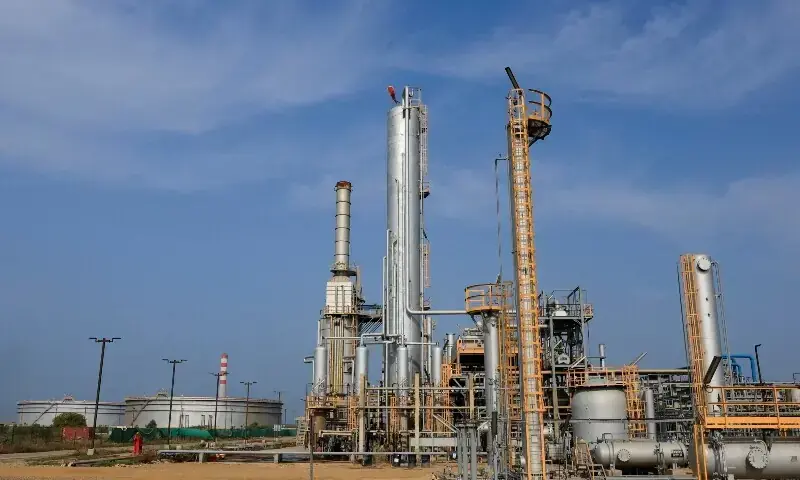
Four of the five local refineries in Pakistan have signed agreements with the government to upgrade their refining technologies, investing approximately $5 billion over the next five years. The formal agreements were signed under the Brownfield Petroleum Refining Policy 2026, which was approved in late July following a seven-year deadlock.
The management of four refineries - Attock Refinery, National Refinery, Pakistan Refinery, and Cnergyico Petroleum - signed the agreements, along with the Inter State Gas Company (ISGC), a designated entity to oversee the implementation process. The fifth refinery, Pak Arab Refinery (Parco), is not yet ready for the upgrade as it believes its technology is modern. However, if it signs the agreements, the total investment could reach $6 billion.
Adil Khattak, chairman of the Energy Committee of the Overseas Investors Chamber of Commerce and Industry (OICCI) and CEO of Attock Refinery, hailed the signing of the agreements as a historic milestone for Pakistan's refining industry. He highlighted that these projects would modernize the country's refining infrastructure, enable production of cleaner fuels, reduce imported petroleum products, and strengthen energy security.
Khattak noted that the journey began in December 2019, with the first draft of the Refining Policy, and has taken almost seven years to reach implementation due to various delays. He emphasized that the refining industry had long argued that domestic refining capacity was not just a commercial concern but a strategic national asset.
The new policy, approved by the Cabinet Committee on Energy led by Prime Minister Shehbaz Sharif, requires refineries to improve product quality, quantity, and product mix through upgradation. This will result in increased production of motor spirit (petrol) and high-speed diesel (HSD), while reducing furnace oil production. Total petrol production will rise by 72 percent to 18,400 tonnes per day (TPD) from 10,700 TPD, HSD output will increase by 39 percent to 29,520 TPD from the current 21,240 TPD, and furnace oil production will decrease by 63 percent to 5,714 TPD from 15,417 TPD.
All refineries will upgrade, modernize, and expand their facilities to produce environmentally friendly fuels as per Euro-V specifications, which allow no more than 10 parts per million (ppm) of sulphur in gasoline and diesel.
In exchange for these upgrades, refineries will be entitled to policy incentives. A minimum customs duty of 10 percent will be imposed on imported motor gasoline and diesel for seven years, with any additional customs duty over 10 percent being deposited in the Inland Freight Equalisation Margin (IFEM) pool. Customs duty on crude oil will be reimbursed to refineries through the IFEM.
Refineries will also receive 10 percent tariff protection or deemed duty on motor gasoline and diesel's ex-refinery price for seven years, and a 2.5 percent incremental incentive on diesel and a 10 percent incremental incentive on motor gasoline will be deposited in the Escrow Account maintained by the Oil and Gas Regulatory Authority (Ogra) and the respective refinery.
Written by urgent.news from Dawn's reporting — not their text. Machine-written — may contain errors; check the original before relying on it.