When facing danger, mice turn to their friends
New research begins to reveal how the brain turns a warning signal into a drive to seek familiar company.
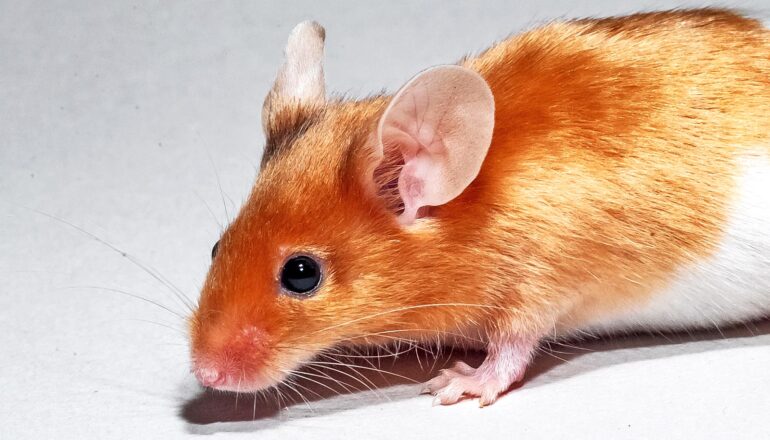
When confronted with perceived danger, laboratory mice adjusted their behavior based on the companions they shared a space with, according to research led by Dr. Alexei Morozov at Virginia Tech’s Fralin Biomedical Research Institute. The study, published in Neuropsychopharmacology, explored how learned warning signals may prompt mice to seek companionship while also examining the underlying biological mechanisms involved.
The researchers first conditioned individual mice to associate a specific tone with a brief, mild foot shock. Subsequently, they paired these mice with either familiar or unfamiliar counterparts and played the previously conditioned tone. Mice that had previously been housed together moved closer to one another upon hearing the tone, while mice paired with strangers exhibited no consistent change in proximity.
This closer proximity was not associated with freezing—a typical fear response characterized by immobility. Instead, it appeared as a decrease in the distance between the animals' snouts, indicating that the familiar mice drew nearer and oriented toward each other. The researchers did not observe overt comforting behaviors, such as grooming or huddling, but instead quantified the reduced snout-to-snout distance as evidence of social bonding.
Dr. Morozov noted that mice are territorial creatures, so an unfamiliar mouse of the same sex may be perceived as a threat rather than a source of security. He further suggested that shared experiences among individuals may facilitate cooperation and diminish the barrier to collaboration in stressful situations, a phenomenon that mirrors interactions among humans.
To understand the neurological basis of this social response, the team temporarily inhibited the communication between the basolateral amygdala and the ventral hippocampus. These brain regions are involved in processing threatening cues and social memory, respectively. By disrupting this connection, the mice were unable to approach one another in response to the warning signal, while their freezing behavior remained unchanged.
Additionally, blocking oxytocin receptors—chemical messengers crucial for social recognition and behavior—also eliminated the proximity response.
The findings indicate that the amygdala, which identifies threats, collaborates with the hippocampus, a brain area responsible for storing social memories, to coordinate a social reaction to danger. However, the hippocampus serves as a gatekeeper, permitting this coordination only among familiar animals. Further investigations into hippocampal activity will help elucidate the mechanisms governing this selective social response.
Dr. Friedlander, Virginia Tech’s vice president for health sciences and technology, emphasized the significance of this research in shedding light on the brain circuits and biological processes that underlie social behaviors. He highlighted the potential implications for developing targeted therapies to address neuropsychiatric disorders characterized by impaired social interactions in humans.
The study was funded by the National Institutes of Health and the Seale Innovation Fund.
Written by urgent.news from Futurity's reporting — not their text. Machine-written — may contain errors; check the original before relying on it.