Typhoon Dujuan death toll rises to nine in Japan, four still missing
CHIBA: The death toll from Typhoon Dujuan, which struck eastern Japan earlier this week, rose to nine on Wednesday after a woman was confirmed dead in Kanagawa Prefecture and a man was found in a submerged vehicle in Chiba prefecture, east of Tokyo.
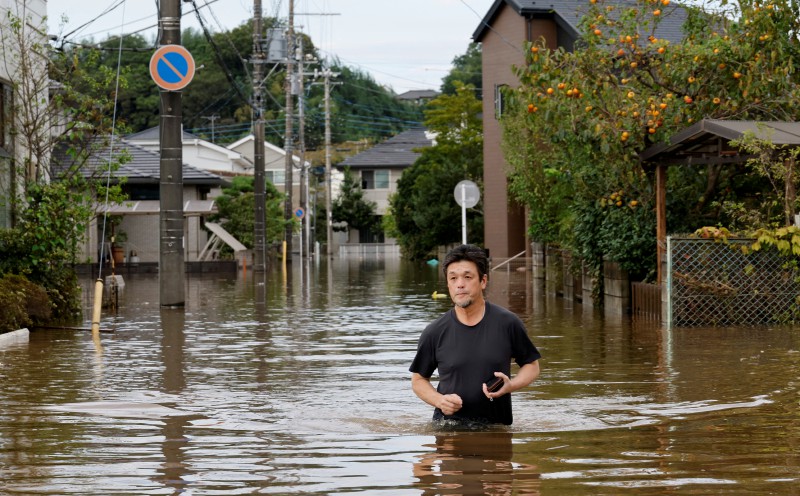
Typhoon Dujuan claimed seven lives and left five others missing in Japan on Tuesday, following landslides and flooding in the greater Tokyo area, according to Kyodo News, citing authorities. The storm affected around 58,000 households in Chiba prefecture, east of Tokyo, by temporarily cutting off electricity, reported Kyodo. The typhoon, which struck amid the "Silver Week" holidays, prompted the early closure of one of the world's largest video game trade fairs in Tokyo.
By Tuesday morning, Dujuan had moved out of the Pacific and was downgraded, according to the Japanese weather agency. Japan frequently encounters powerful typhoons in late summer and early autumn, with other storms this season disrupting events at the Asian Games held in the country. Five fatalities were reported in Chiba prefecture and two in Kanagawa, south of Tokyo, as search operations continued for the missing.
About 45,000 households remain without electricity in the region, as per Tokyo Electric Power Co. Richard Yonamine, a 37-year-old resident of Chiba city, described the flooding of his home in Sakura after a river overflowed due to the heavy rains. He expressed fear for the future, fearing that heavy rain could lead to significant problems.
The typhoon also caused widespread flooding last month in Chiba, stranding passengers at Narita airport, with media reporting that over 10,000 cars were damaged beyond repair. Dujuan brought record rainfall to parts of the region, with Oshima island, about 120 kilometers south of central Tokyo, recording 832 millimeters of rain over 48 hours, more than double its annual average for September, reported public broadcaster NHK.
Tokyo's Edogawa Ward saw a record 282.5 millimeters of rain over 24 hours. Climate scientists attribute the intensification of heavy rain risks to human-driven climate change, as warmer air holds more water.
Written by urgent.news from The Jakarta Post's reporting — not their text. Machine-written — may contain errors; check the original before relying on it.
This story
This is one outlet's version. Read the fullest account.