The “Shmoogle Scenario,” and why denial is a fatal threat to your company
In most organizations, preparing for disruption when everything is working smoothly almost never happens. Enjoying success, complacent CEOs focus on greeting happy investors, speaking at business conferences about their extraordinary skills, winning awards, receiving enormous paychecks and dividend packages, and teaching enraptured students at business schools. Managing a successful business is a…
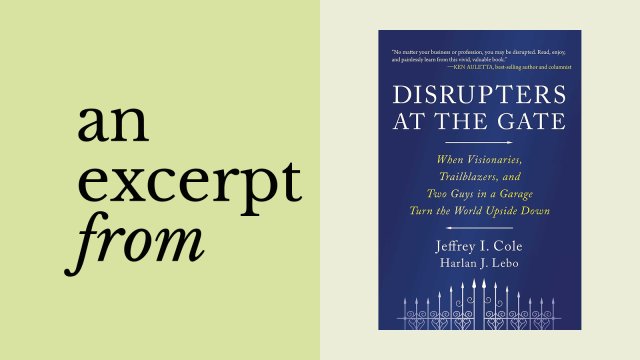
Organizations often fail to prepare for disruption while everything remains stable. Contented CEOs concentrate on happy investors, conference appearances, awards, hefty paychecks, and dividend packages, rather than contemplating the possibility of business collapse. However, this is precisely what they should be doing. A successful CEO must focus on competition, understand the impact of government regulation, trade policies, and customer sentiment, and be prepared for disruption from day one.
Google serves as a prime example. Despite being established in a market already dominated by search engines, Google outperformed the competition by tracking the number of times a search item was linked to a specific site. Users found Google's results to be superior, often anticipating their needs before they even typed their queries.
Early users remember the moment they first used Google because the search engine seemed to intuitively understand their intentions. From humble beginnings in a garage, Google anticipated a potential disruptor called "Shmoogle," a hypothetical search engine that could outperform Google. Despite pouring over $100 billion into Bing, which matched Google's performance in some areas, it was not enough to lure users away.
Only with the introduction of artificial intelligence did Bing begin to see success. However, if Shmoogle emerged as a better search engine, users would quickly adopt it, and Google could become obsolete within months. This nightmare scenario seemed unlikely to become a reality for more than two decades. Yet, in 2022, Google faced a sudden disruption in the form of ChatGPT, a search engine enhanced with artificial intelligence.
ChatGPT attracted 100 million users within two months, outperforming Google's search engine. Initially, Google denied the threat posed by ChatGPT, but eventually, the company issued a "Code Red" alert, mobilizing its team to develop an AI app to counter ChatGPT's influence. Although Google has made progress with Bard (now Gemini), the company still faces significant challenges in maintaining its dominance in the face of emerging AI technologies.
Companies must thoroughly assess potential threats by recognizing the risk of denial and denial's fatal consequences. The nature of the threat should be determined—whether it originates from a new entrant, a long-time competitor, or a transformation that renders the business unrecognizable. The exposure to the threat must be identified, focusing on product quality, relevance, and customer loyalty.
Vulnerabilities can arise from stagnant product development, ineffective marketing, or a lack of communication regarding the company's values and commitments to quality and corporate citizenship. By proactively identifying and addressing potential threats, companies like Apple, whose product releases often fall short of expectations, can safeguard against the devastating consequences of denial.
Written by urgent.news from Big Think's reporting — not their text. Machine-written — may contain errors; check the original before relying on it.