The Next Four Years Will Decide the Ocean’s Future
I led Seychelles’ effort to designate 30% of its waters for protection. The world must follow, writes former president Danny Faure.
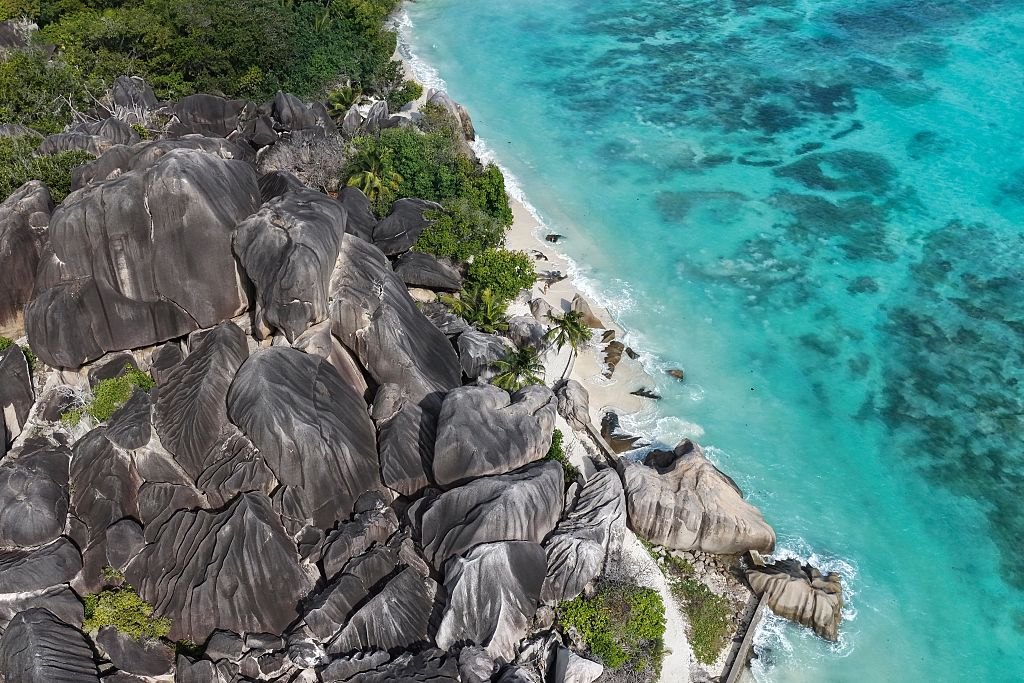
The ocean issued a stark warning this summer, with global sea-surface temperatures hitting a record high in August. A comprehensive assessment of coral reefs revealed that frequent marine heatwaves leave reefs with insufficient time to recover between bleaching events, resulting in a 9.5% decline in global hard coral cover since the 1980s, primarily driven by human-induced climate change.
As a leader from Seychelles, an archipelago of 115 islands dependent on the ocean for food, livelihoods, and economic resilience, I find this deeply concerning. However, it also underscores the urgency of action.
During my presidency, Seychelles set aside 30% of its waters for protection, years before the global goal of protecting 30% of land and ocean by 2030. This experience demonstrated that ambitious conservation is achievable when political commitment aligns with action. With less than four years remaining until the 2030 deadline, the international community must now match that determination to safeguard the global ocean.
While significant progress has been made—nearly 20% of land and inland waters are now protected or conserved, and existing commitments could raise terrestrial protection to around 27% by 2030—the situation at sea is markedly different. Currently, only around 10% of the global ocean is designated as protected or conserved, and current commitments would only increase this to approximately 12% by 2030. Therefore, the next phase of global effort must place a greater emphasis on the ocean.
Governments must establish more marine protected areas, strengthen national commitments where ambition remains insufficient, and swiftly transition from targets to protection in practice. The recent coral findings highlight the consequences of delay: marine heatwaves are becoming more frequent, leaving reefs with less recovery time. However, recovery remains possible if ecosystems are given the time and right conditions.
A protected area is ineffective without proper management, enforcement, and long-term financial support. In Seychelles, we are facing this challenge by converting our designated protected areas into legally binding, no-take zones where extractive activities are prohibited. Yet, effective protection requires more than just drawing boundaries on a map.
The 2026 Ocean Protection Gap Report reveals that while about 10% of the global ocean is designated as protected or conserved, only 3.5% is assessed as effectively protected. In Seychelles, we are currently undertaking the arduous task of translating protections into tangible results in the water through our Marine Spatial Plan Initiative.
The next four years, through the end of 2030, must focus on both expanding and enhancing the effectiveness of ocean protection. Success must be measured not only by the area on a map but also by whether biodiversity recovers and communities benefit from healthy ecosystems. National action alone is insufficient, as the high seas account for roughly two-thirds of the global ocean, and only a small fraction is protected.
The newly ratified High Seas Treaty provides a legal framework for establishing marine protected areas beyond national jurisdiction. Seychelles, as an island state, ratified the treaty to ensure that protecting our waters is not enough; we must also safeguard the shared ocean we depend on.
Turning this legal breakthrough into action requires robust science, effective governance, robust monitoring, and adequate funding. Governments must now convert this legal framework into tangible protection in the high seas, supported by strong scientific guidance, effective management, and sufficient financial resources. Ambition must be matched by resources—approximately $16 billion per year is needed for marine protection under the 30% target, compared to the current $1.8 billion. Without resources, protected areas risk being mere paper targets.
As leaders convene at the United Nations General Assembly in New York, ocean protection should be a focal point in discussions on climate resilience, food security, and economic stability. The upcoming COP17 in Armenia will provide another critical opportunity for governments to address the areas where progress is lagging. In 2019, I warned from beneath the Indian Ocean that we could not leave environmental issues for future generations to resolve.
Today, that warning is even more urgent. However, there are reasons for hope. Countries have demonstrated that ambitious conservation is possible. Recently, French Polynesia expanded its protected areas to cover 30% of its waters, a significant step forward.
Written by urgent.news from Time's reporting — not their text. Machine-written — may contain errors; check the original before relying on it.