Sustainability must move from awareness to measurable impact: CPCL
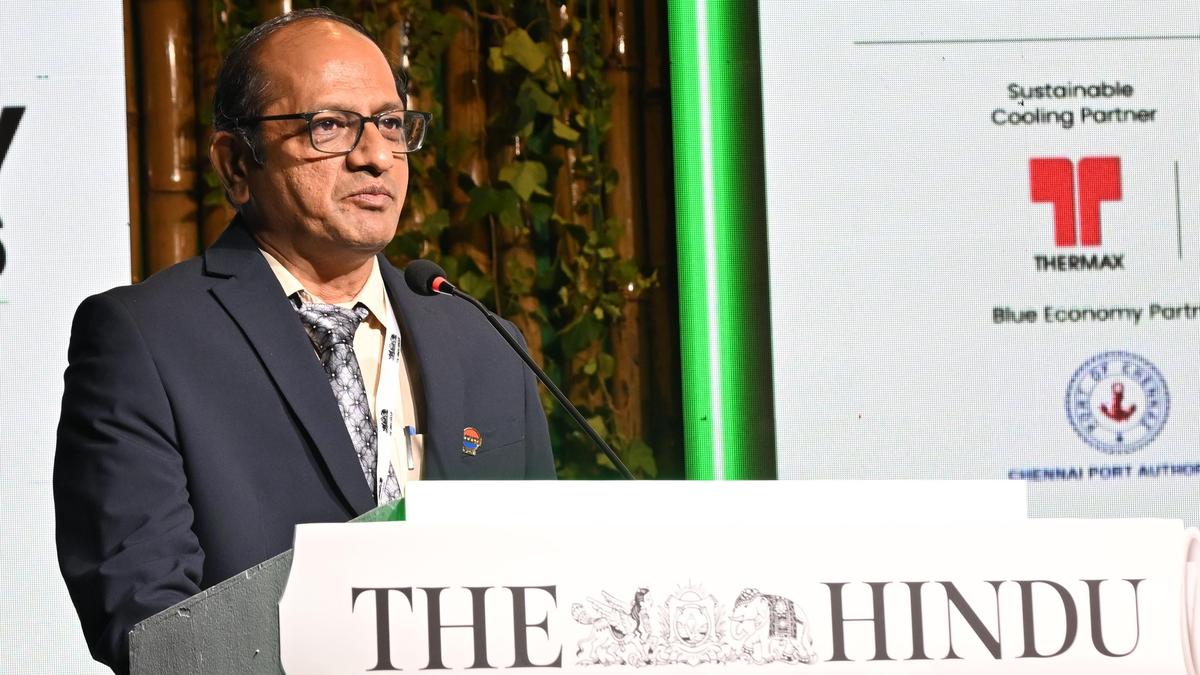
At the The Hindu Sustainability Summit 2026 in Chennai, industry leaders discussed the need for the Indian refining and energy sector to balance energy demand, security and the transition to net-zero emissions. S.G. Venkatesh, Director (Technical) at CPCL, stated that achieving net-zero for a refinery involves reducing energy required to produce finished products and shifting to cleaner energy sources and technologies.
CPCL has reduced energy consumption, increased crude throughput and improved energy efficiency benchmarks while aiming for net-zero Scope 1 and Scope 2 emissions by 2046. Nandakumar Velayudhan Pillai, Director (Refinery) at MRPL, emphasized that fossil fuels would remain prevalent for the next two decades, and transition should be viewed as a shift from a high-carbon to a low-carbon system rather than an immediate replacement of fossil fuels.
Santosh K. Singh, Chief Sustainability Officer at L&T, pointed out that green hydrogen had moved from policy stage to implementation, but cost remained a major barrier. He emphasized the need for scaling up electrolyser manufacturing, reducing renewable energy costs and creating demand to make green hydrogen commercially viable.
Pillai highlighted the challenge of intermittent renewable energy for refineries, which require stable and continuous energy supply. The panellists also discussed geopolitical conflicts and disruptions to crude supplies, stressing the importance of diversifying crude sources and strengthening supply resilience for an import-dependent country like India.
D. Senthil Kumar, Managing Director of Tamil Nadu Petroproducts Limited, explained that the Carbon Credit Trading Scheme would shift energy efficiency from a voluntary exercise to a compliance-driven mechanism for refineries and petrochemical industries. Kumar mentioned that industries could earn certificates for achieving additional efficiency, while those failing to meet targets would have to purchase certificates.
He added that similar mechanisms existed in other industries and that trading activity could significantly increase with the expansion of the carbon market to include refineries and petrochemicals. The panellists stressed that energy efficiency should precede more expensive decarbonisation technologies.
Written by urgent.news from The Hindu's reporting — not their text. Machine-written — may contain errors; check the original before relying on it.
This story
This is one outlet's version. Read the fullest account.