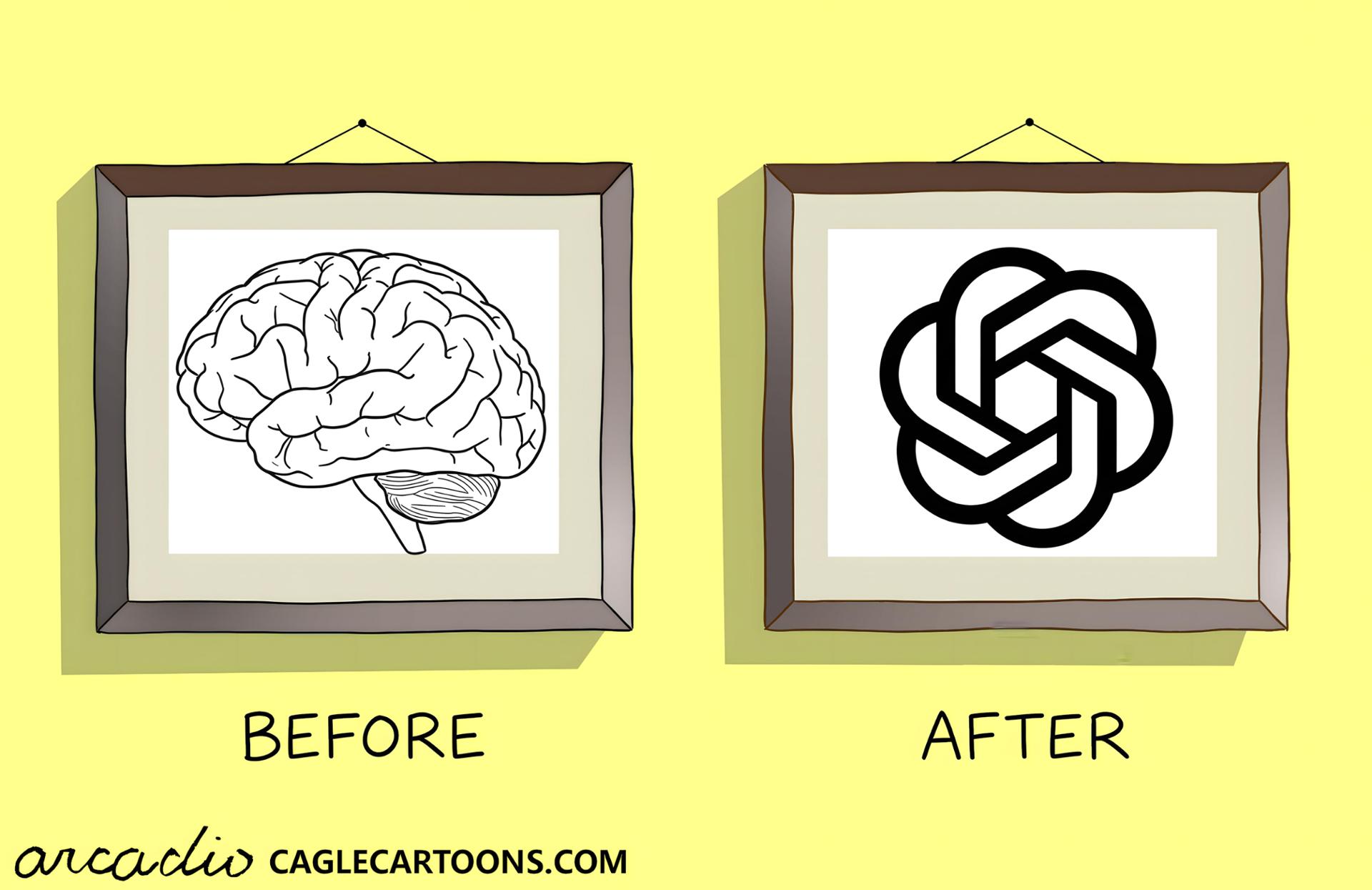
Stop asking AI to be creative. Ask it to be correct
Since ChatGPT launched in 2022, most of us have accidentally fallen into a trap where we ask AI to do the parts of our work that are arguably the most human. We ask artificial intelligence to write our emails for us, to brainstorm new ideas, and to turn scattered ideas into clear plans and strategies. We humans have outsourced the fun, challenging stuff that requires we use our brains, but are…
Since the launch of ChatGPT in 2022, many of us have inadvertently placed our most human tasks into the hands of artificial intelligence. We've asked AI to compose our emails, generate fresh ideas and transform scattered thoughts into clear plans. While AI can handle such work, we're still spending a significant portion of our time on tedious, low-value tasks.
A study by Slack found that the average employee dedicates about a third of their workweek to such activities, which could include reconciling spreadsheets or verifying contract details. Despite the potential of humanoid robots, self-driving vehicles and superintelligence, why are these mundane duties still reserved for humans? A 2026 survey by Boston Consulting Group revealed that 42% of routine AI users save at least a full workday each week, but over half admit they're not reallocating that time to more strategic work.
These "boring" tasks are precisely where AI excels due to their clear right or wrong answers. The best use for AI at the moment is in tasks that can be easily verified. This realization hit me personally when I was still managing our company's billing and collections, despite raising multiple rounds of funding. Companies often get this division of labor wrong, but the reason is understandable.
The advent of generative AI has made creativity the most obvious starting point for employees experimenting with AI. A blank ChatGPT prompt feels like an open invitation to write copy, brainstorm ideas or generate concepts. It's no surprise that workers have turned to AI for these tasks first. OpenAI's workplace data confirms that writing is one of the most common ways people use ChatGPT in their jobs.
Some of that writing is beneficial, such as brainstorming multiple examples for an article. However, a significant amount of it is subpar, at least in my opinion. The issue lies in the subjective nature of creative quality. There's no objectively correct marketing slogan or flawless strategy memo that won't provoke debate. Two knowledgeable individuals can read the same AI-generated paragraph and disagree on its insightfulness or quality.
Creative work is an unsuitable place to ask AI to provide authoritative answers. When evaluating AI use cases, companies often start by asking, "Can AI accomplish this?" A more pertinent question is, "If AI performs this task, how will we know if it did it correctly?" While AI can serve as a useful assistant, it's unlikely to replace critical business processes where there's no clear answer.
Executives should be skeptical of the notion that AI's main role is to replicate the highest-level thinking of their employees. Currently, such a scenario is improbable and may not be feasible for some time. Strategic decisions, those that are context-dependent or reliant on personal taste, remain uniquely human. Fortunately, these are also the aspects of work many people desire to spend more time on.
Companies that capitalize on AI in the coming years will be those that restructure mundane workflows around verifiability, allowing AI to tackle tasks that can be checked, freeing humans to focus on work uniquely suited to their capabilities.
Written by urgent.news from Fast Company's reporting — not their text. Machine-written — may contain errors; check the original before relying on it.