Standort teilen übers Handy: Alle Freunde wissen, wo ich bin - immer eine gute Idee?
Manche Leute teilen ganz selbstverständlich übers Handy ihren Standort mit Familie und Freuden. Das kann praktisch sein. Doch es gibt auch einiges zu bedenken.
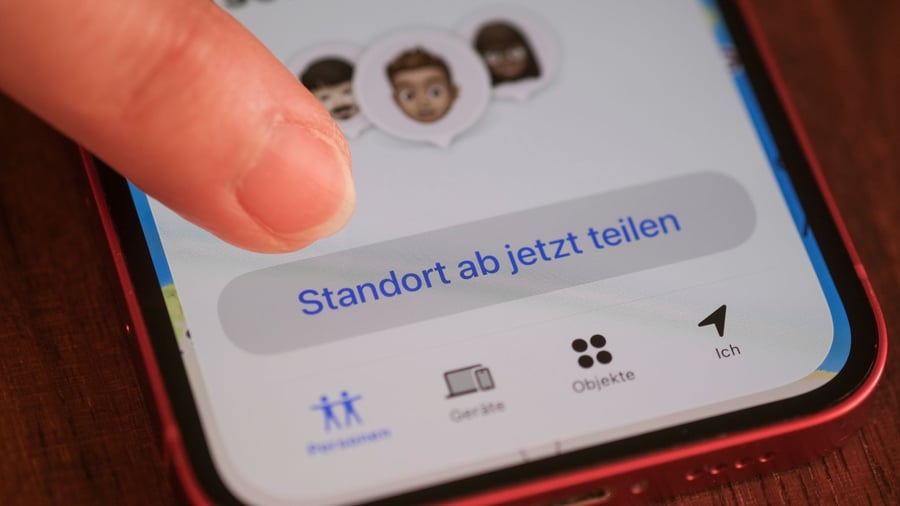
Ever send a message to parents after a long drive to reassure them you've arrived safely? Seems unnecessary - they can see it themselves. Want to tell a friend you were at a concert yesterday? Not needed, they already know. Calling your partner after work asking if they need anything on the way home? Superfluous, they would have called already.
Many people share their real-time location with family and friends via smartphones. A glance at the screen lets them know where their loved ones are. While this provides benefits, experts say it also poses risks. Here's how the situation breaks down:
1. The practice of sharing one's location and why. For many couples, it's become second nature. According to a representative survey commissioned by the Digital Association Bitkom, 14% of over 1,400 respondents already share their location permanently in a relationship. Among 16- to 29-year-olds, nearly a quarter do so. Reasons mainly cited were a sense of security and practicality.
However, 54% of respondents said they wouldn't do it. Parents also use smartphone location services to track their children's whereabouts. A U.S. study suggests not only parents of younger kids use tracking, with about half of parents monitoring their children aged 18 to 25 via smartphone or other tech device - many permanently.
Many feel reassured and know what to do in emergencies. Some say tracking helps them gauge when it's a good time to call or respect their child's autonomy.
2. The benefits of sharing one's live location. It can be practical, like meeting friends at a music festival or demonstration without shouting over loud crowds. It can also increase safety, like on a treacherous hike or first meeting an online acquaintance. Trusted people can act quickly if you behave oddly or are in trouble. Tracking can also help you assess when it's a good moment to call or know what your loved one is up to.
3. The drawbacks of sharing a location with others. It may suggest closeness, but can also lead to feelings of isolation. Just because parents know you've arrived safely doesn't mean they don't miss the personal touch of a phone call or message. There's also a risk of misunderstandings, mistrust, and pressure to justify your whereabouts.
Two scenarios: Two friends go to the movies; the third sees the location and feels left out. Or a woman wants something specific for her husband's birthday. She sees he's at a certain store. Surprise! "If everyone is comfortable with the situation and feels fine with it, there's nothing wrong with sharing your location," says Christian Schicha, a professor of media ethics at the University of Erlangen. "The question is, what happens if people feel mistrustful or offended?"
4. What experts criticize about private monitoring. Markus Reuter from Netzpolitik.org warns that state surveillance could exploit private tracking. "My new car knows where I am and how I'm buckled up. My phone constantly shares my location with 30 apps that sell the data. Even facial recognition can identify me in public spaces." While state surveillance would need a legal reason, there's always the potential for misuse. "This means I create options that state surveillance can use without building infrastructure."
5. Privacy concerns associated with location data. Professor Stefan Katzenbeisser from the University of Passau explains that location data reveals where you've been, where you went, who you may have met. This information is valuable for advertising. While major players like Apple and Google likely don't share this data, smaller apps may operate differently. Reuter, however, remains concerned about the broader implications.
Written by urgent.news from Handelsblatt's reporting — not their text. Machine-written — may contain errors; check the original before relying on it.