Spritpreise: Kritik an Spritpreisregel – Bleibt die 12-Uhr-Grenze?
Seit April dürfen nur um 12 Uhr die Spritpreise an den Tankstellen erhöht werden. Die Regel ist seit ihrer Einführung umstritten - nun werden die Forderungen nach ihrer Abschaffung lauter.
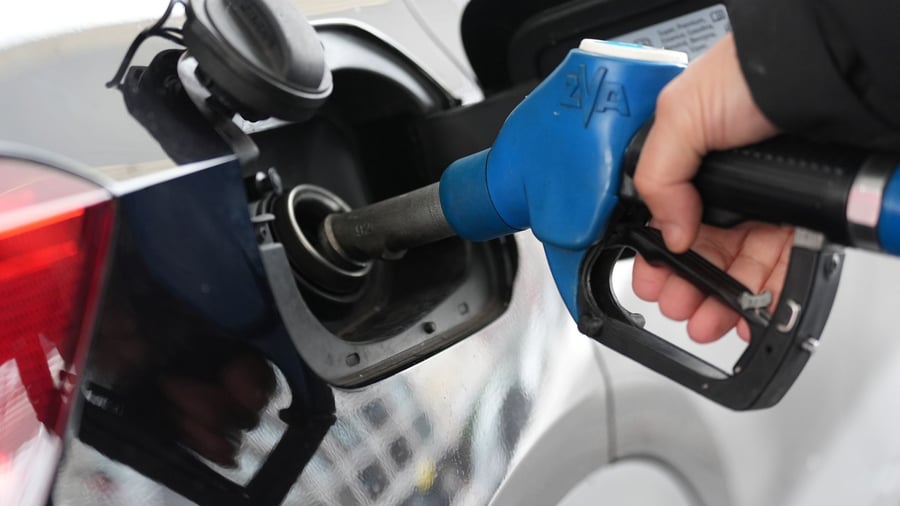
The controversial 12 o'clock rule regulating fuel prices in Germany has been drawing increasing criticism from various quarters. The Federal Council is currently considering scrapping the hourly pricing regulation, which has been in place since April 1st. According to Verkehrsminister Claus Ruhe Madsen, the rule has failed to provide any noticeable relief to consumers when filling up their tanks.
The ADAC, meanwhile, has called for the complete abolition of the rule, arguing that it has not contributed to greater reliability or comparability of fuel prices. In practice, stations have used the rule to create a buffer by making significant price jumps, according to Ruhe. The ADAC's own expert, Stefan Gerwens, noted that the price difference between the highest and lowest daily rates for diesel in September was 17 cents per liter, indicating a higher price spectrum than before the 12 o'clock rule.
Tankstelle operators have been changing prices on average eight times a day since the rule's implementation, compared to an average of 22 times before. However, this does not necessarily mean lower prices are being offered, as it depends on the time of day and the volume of fuel purchased. Justus Haucap, Director of the Düsseldorf Institute for Competition Economics, observed that the number of times stations change prices has increased since the 12 o'clock rule's introduction, but this does not guarantee lower prices.
The rule has also attracted the attention of academics, with the Leibniz Center for European Economic Research finding that the rule added extra profits to the mineral oil industry. Diesel saw a 6 cents per liter higher average profit margin in the first two weeks after the rule's introduction compared to the two weeks prior. The single price increase per day also leads to higher average prices during the lunchtime to evening hours, while morning prices tend to fall below the daily average.
Prior to the 12 o'clock rule, consumers had numerous opportunities to fill up at lower prices throughout the day. The Fraunhofer Institute for System and Innovation Research also assessed the measure negatively. The Bundeskartellamt (Federal Cartel Authority) reported numerous violations of the 12 o'clock rule since its implementation.
In the first weeks after the rule's introduction, there were "significant deviations," including a few technical errors and price increases just minutes after 12.00. Stations are responsible for reporting price increases within five minutes to a federal database, and violations are subject to sanctions by the respective federal states.
Consumer advocates have also criticized the rule, particularly because the cheapest prices are often only found in the late morning, which is inconvenient for most working people. The "Law for Adjusting Fuel Prices" states that the Federal Ministry of Economics will evaluate the impact of the 12 o'clock rule and report back to the Bundestag a year after its introduction.
After record highs in the previous week, fuel prices have slightly dropped again, according to data from the ADAC. Both diesel and super gasoline (E10) were cheaper in the federal average on Tuesday compared to Monday, while prices fell further on Wednesday morning, especially for diesel. A key driver of the price drop is believed to be the recent drop in crude oil prices.
Written by urgent.news from Handelsblatt's reporting — not their text. Machine-written — may contain errors; check the original before relying on it.