Silver Price Forecast: Fed hawks knock XAG/USD toward $64 support
Silver (XAG/USD) price tumbles over 3.67% on Wednesday as investors increase Federal Reserve (Fed)-hawkish bets, following remarks by several officials supporting last week’s rate hike and penciling in further tightening. XAG/USD trades at $64.59, after reaching a high of $67.52.
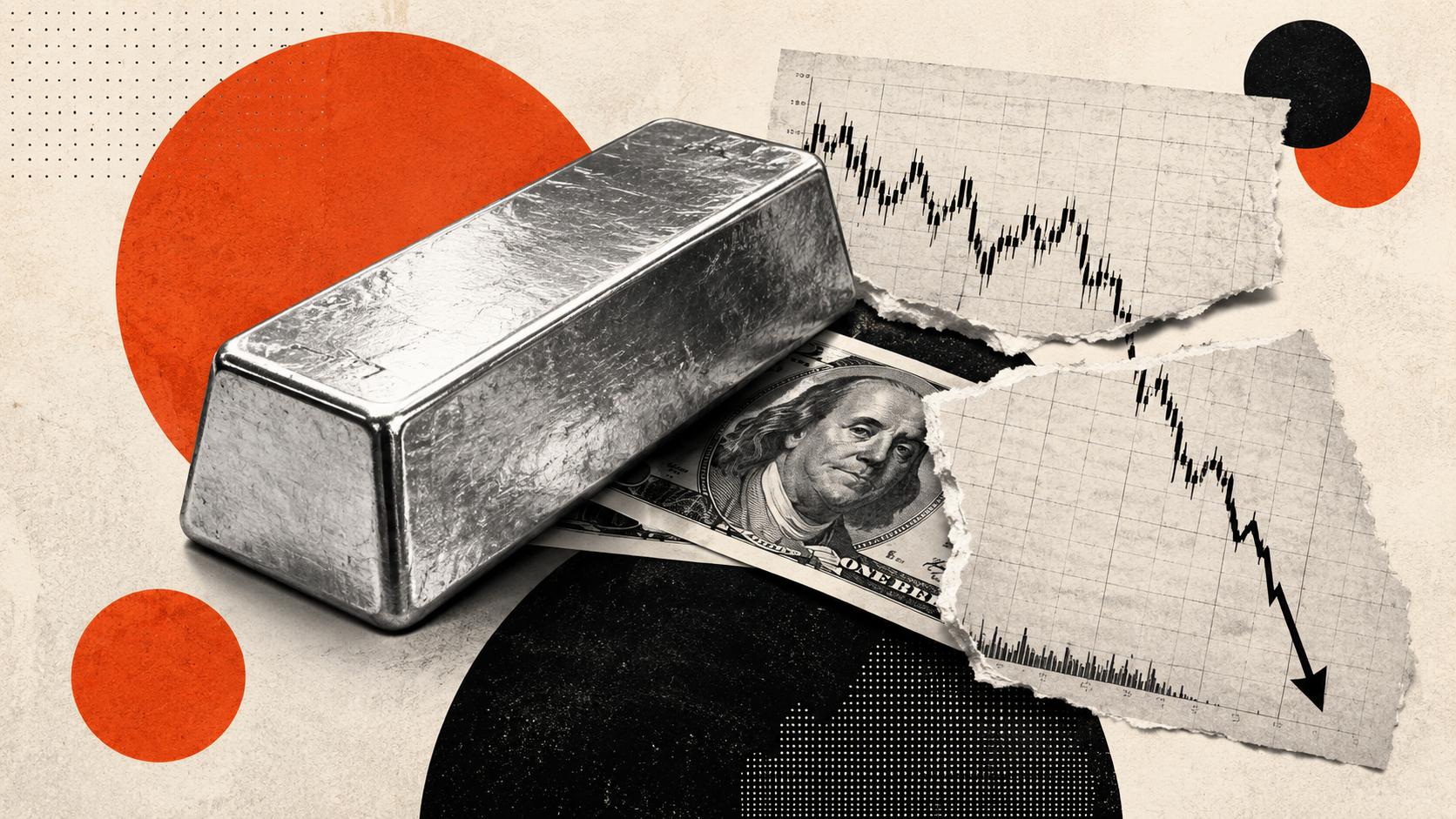
Silver (XAG/USD) prices dropped over 3.67% on Wednesday as investors grew more confident in Federal Reserve hawkish predictions following several officials' comments supporting the recent rate hike and anticipating additional tightening. The commodity traded at $64.59, after peaking at $67.52. A 'head and shoulders' chart pattern was formed, only to be later dismissed, suggesting that Silver may consolidate within the $63.45-$67.50 range in the near term.
The first major resistance is the 100-day Simple Moving Average (SMA) at $66.20, followed by $67.00. Conversely, the 50-day SMA at $63.45 marks the initial support, trailing behind the $60.00 level. The Relative Strength Index (RSI) suggests bearish momentum, as the index lies below its neutral level and displays a nearly vertical decline.
Consequently, in the short-term, XAG/USD is expected to trend downwards. Silver's initial support is the $64.00 mark, and a break of this level could expose the 50-day SMA at $63.45, followed by the September 16 low of $62.30. Should further weakness persist, the next key support levels would be the March 23 low of $61.01 and the $60.00 milestone.
Conversely, if XAG/USD changes direction and moves upwards, the initial resistance is the September 22 high of the day (HOD) at $67.55. A clear breakout would expose the $70.00 mark, followed by the August 28 swing high of $71.12. Silver is a valuable metal that has been widely utilized as a store of value and medium of exchange throughout history, although it is less popular than gold.
Despite its lower popularity, investors may opt for Silver to diversify their portfolios due to its intrinsic value or as a potential hedge during high-inflation periods. Investors can acquire physical Silver in the form of coins or bars, or trade it using instruments such as Exchange Traded Funds, which track the metal's price on international markets.
Silver prices are influenced by numerous factors, including geopolitical tensions, recession fears, and the safe-haven status of the metal, which may cause its price to rise, albeit to a lesser extent than gold. The value of Silver also depends on interest rates, as it is a yieldless asset that typically rises when interest rates are low.
Additionally, Silver's movements are influenced by the US Dollar, as the asset is priced in dollars (XAG/USD). A robust dollar tends to suppress Silver prices, while a weaker dollar is likely to drive prices higher. Other factors, such as investment demand, mining supply, and recycling rates, can also affect Silver prices. Silver finds extensive use in various industries, particularly in electronics and solar energy, due to its exceptional electric conductivity.
A surge in demand can lead to price increases, while a decline in demand may cause prices to drop. Silver prices often follow the movements of gold, as both are considered safe-haven assets. The Gold/Silver ratio, which indicates the number of ounces of Silver required to equal the value of one ounce of gold, can be used to assess the relative valuation of the two metals.
Some investors may perceive a high ratio as an indicator that Silver is undervalued or that gold is overvalued, while a low ratio may suggest that gold is undervalued relative to Silver. Analysts, news editors, and trading instructors with extensive experience across various markets provide insights into the factors affecting Silver prices.
Written by urgent.news from FXStreet's reporting — not their text. Machine-written — may contain errors; check the original before relying on it.