President puts multilateralism at center of diplomacy on North Korea, Hormuz issue
President Lee Jae Myung has placed multilateralism at the center of his foreign policy at a time when North Korea refuses to engage South Korea and his government faces pressure to join a U.S.-led military mission in the Strait of Hormuz. His emphasis on multinational engagement with Pyongyang, including Beijing, has come as the reclusive regime continues to refuse to communicate with Seoul and…
President Lee Jae Myung has made multilateralism a key focus in his foreign policy, particularly in dealing with North Korea and the Hormuz Strait issue. The North Korean regime has consistently declined to engage with South Korea, leaving the South Korean government under pressure to participate in a U.S.-led military mission in the Strait of Hormuz.
In response, Lee has emphasized the importance of multinational cooperation with Pyongyang, including China, even though the dialogue between Washington and Pyongyang remains stalled.
Furthermore, Lee's call for an alliance with other nations regarding the Hormuz issue coincides with U.S. President Donald Trump's demand for Seoul to contribute militarily to secure the crucial waterway, amidst a month-long confrontation with Iran. Other U.S. allies have shown reluctance to deploy troops, prompting Lee to explore alternative ways for Korea to contribute without participating in the conflict.
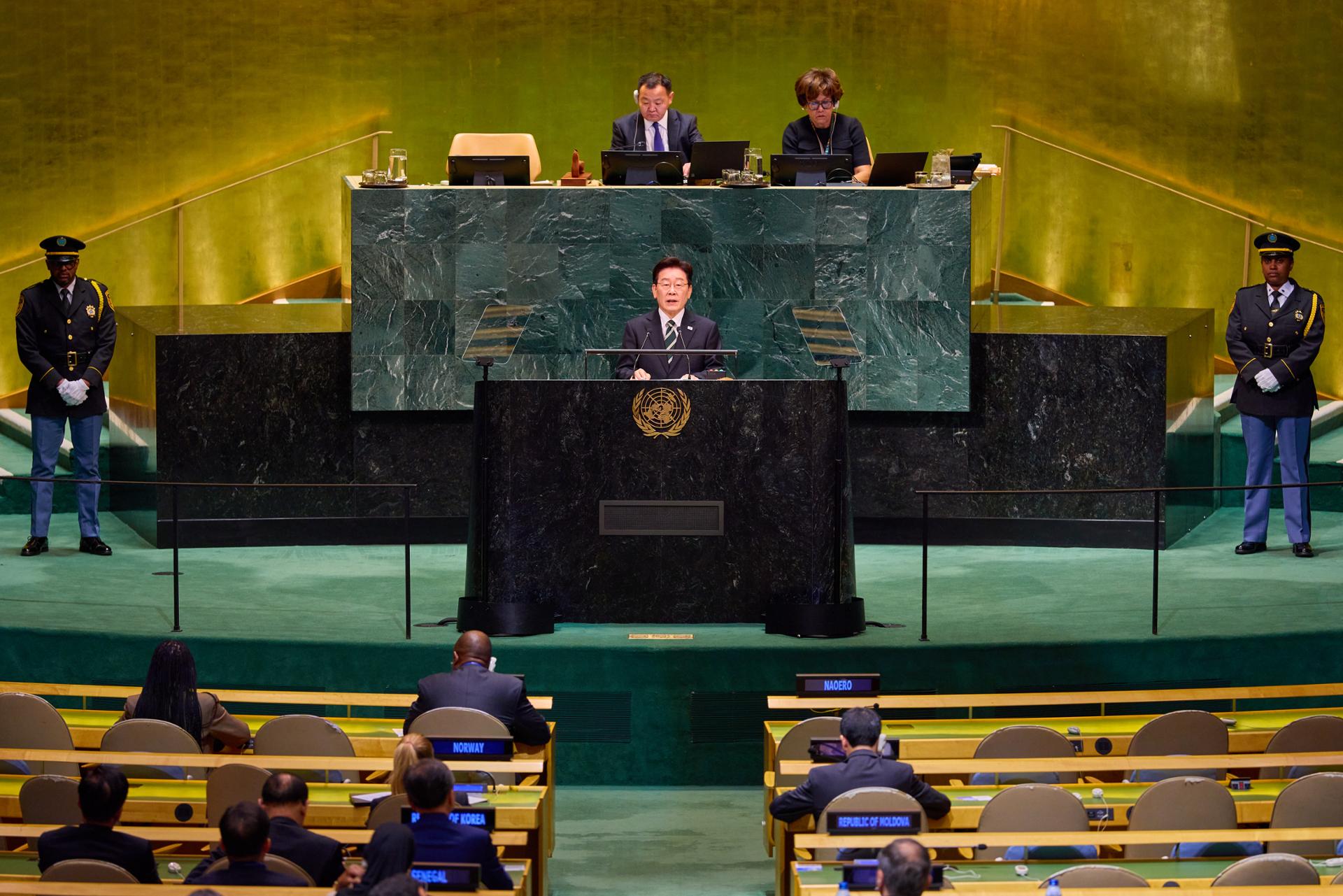
During his address at the U.N. General Assembly in New York, Lee advocated for expanding the North Korea issue beyond the U.S.-North Korea talks to encompass discussions involving all parties concerned with concluding the Korean War and establishing a lasting peace.
Written by urgent.news from The Korea Times's reporting — not their text. Machine-written — may contain errors; check the original before relying on it.
This story
This is one outlet's version. Read the fullest account.