Physical moves by online financial firms unlikely to pump up property market: analysts
Digital financial service providers, including online brokerages and digital banks that used to trumpet their “zero-branch, fully online” models, have been opening physical stores across Hong Kong recently. Analysts described it as a strategic trend aimed at enhancing brand image and service quality to capture market share, but added that the impact on the city’s retail property market would be…
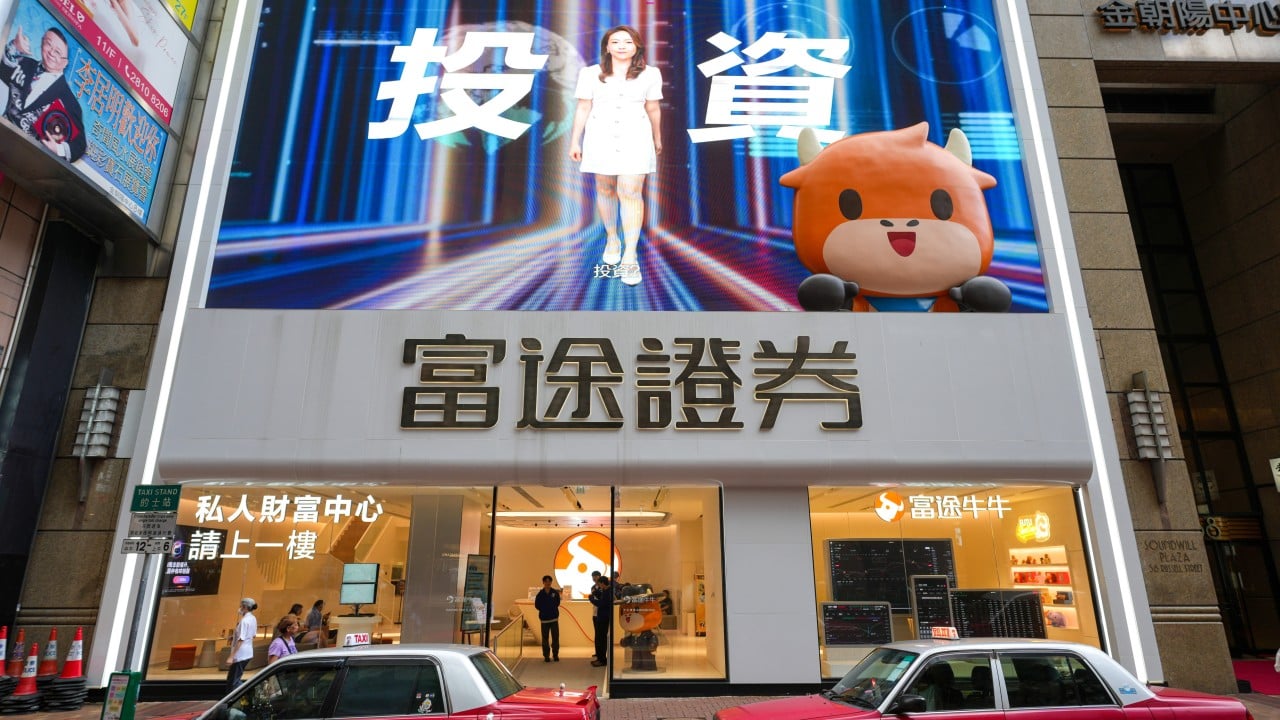
Online financial firms in Hong Kong have been opening physical stores to bolster their brand image and service quality, but analysts believe the impact on the city’s retail property market will be limited. Futu Securities International (Hong Kong) recently opened a new global headquarters at Pacific Place in Admiralty, which includes a private wealth centre for high-net-worth and institutional clients.
Longbridge Securities and Ele Bank have also opened flagship stores in Tsim Sha Tsui and Causeway Bay, respectively, to provide more traditional financial services.
However, Professor Terence Chong Tai-leung, executive director of Lau Chor Tak Institute of Global Economics and Finance at the Chinese University of Hong Kong, argues that the lack of physical branches is a major obstacle for digital financial service providers. He points out that depositors and borrowers are often hesitant to trust online-only banks without the assurance of physical locations.
Simon Lee Siu-po, a financial commentator and academic, notes that most users of digital financial service providers are young individuals with relatively few assets. As the luxury retail sector has declined and shop rents have dropped significantly, these online firms have been able to acquire prime locations for their physical branches.
Despite the opening of physical outlets, financial services industry leader David Wu from Deloitte China suggests that this trend is not a mainstream shift in the retail leasing market. He explains that most brokerage firms previously rented upper-floor spaces, taking advantage of the weak luxury retail market and reduced shop rents. Wu also emphasizes that the demand for physical branches is primarily driven by affluent clients who require face-to-face interactions and personalized advisory services.
Written by urgent.news from SCMP Business's reporting — not their text. Machine-written — may contain errors; check the original before relying on it.