Pezeshkian says Iran won't surrender, after Trump's annihilation threat
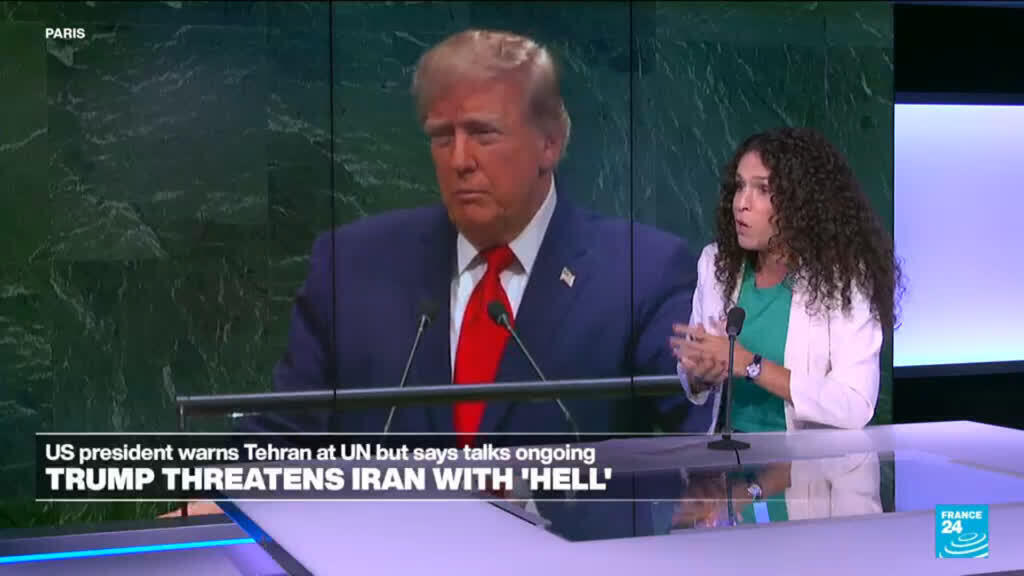
By Parisa Hafezi, Humeyra Pamuk and Jana Choukeir UNITED NATIONS/DUBAI, Sept 23 (Reuters) - Iranian President Masoud Pezeshkian said in a speech at the UN on Wednesday that Tehran would never surrender to the US but still believes in diplomacy, a day after President Donald Trump used the same forum to threaten to "annihilate" Iran.
Tehran will not submit to the United States, President Masoud Pezeshkian declared at the UN on Wednesday, despite a day earlier, US President Donald Trump warning Iran would be "annihilated". This marked the end of initial shuttle talks between the two nations in months, which had produced no mutual concessions to end the conflict in the Middle East.
Pezeshkian stated that Iran's military actions were defensive and that the country did not seek nuclear weapons. Iran also warned it would target neighboring countries if they complied with new US sanctions aimed at grounding Iranian civilian aircraft globally. Moheen Rezaei, from Iran's Supreme National Security Council, told state TV that Iran would ensure these airports could not operate if they stopped Iranian flights.
President Trump called for complete isolation of Iran and expected a deal to be reached after the election. Following his speech, the US envoys Steve Witkoff and Jared Kushner held indirect talks with Iran through mediators. Tehran had engaged with Washington via a Qatari mediator and made demands, including the end of the war and an end to US aggression.
Some Iranian state media initially reported a meeting between Araqchi and Witkoff, but later clarified it was not a face-to-face discussion. Iran's resistance to diplomatic efforts was noted, with one opinion piece in the semi-official Tasnim news agency stating Araqchi's contacts with Witkoff and Kushner were beneficial to Trump.
Despite these diplomatic moves, oil prices remained close to a two-week low, with Brent crude hovering around $100 a barrel. The ongoing war, initiated by Trump in February alongside Israel, had caused significant disruption to global energy supplies and spilled over into other countries, particularly Lebanon and Yemen. An interim agreement reached in June would have provided Iran with its main demands, including lifting financial sanctions and unfreezing assets in exchange for talks on limiting its nuclear program.
However, the deal fell apart due to disagreements over the Strait of Hormuz, a critical waterway for global oil and liquefied natural gas shipments. Iran sought control and fees from ships passing through the strait, which Washington rejected.
Written by urgent.news from Business Recorder's reporting — not their text. Machine-written — may contain errors; check the original before relying on it.
This story
This is one outlet's version. Read the fullest account.