New Fossil Discovery Challenges Timeline of Tanzania’s Oldest Dinosaur Fossils
A newly identified fossil species from Tanzania is challenging assumptions about the age of rocks containing some of the world’s oldest dinosaur fossils. Researchers led by the University of Bristol identified a plant-eating mammal relative called Dinodontosaurus isiyavamanda, which lived roughly 240 million years ago during the Triassic period. Its remains come from the same […]
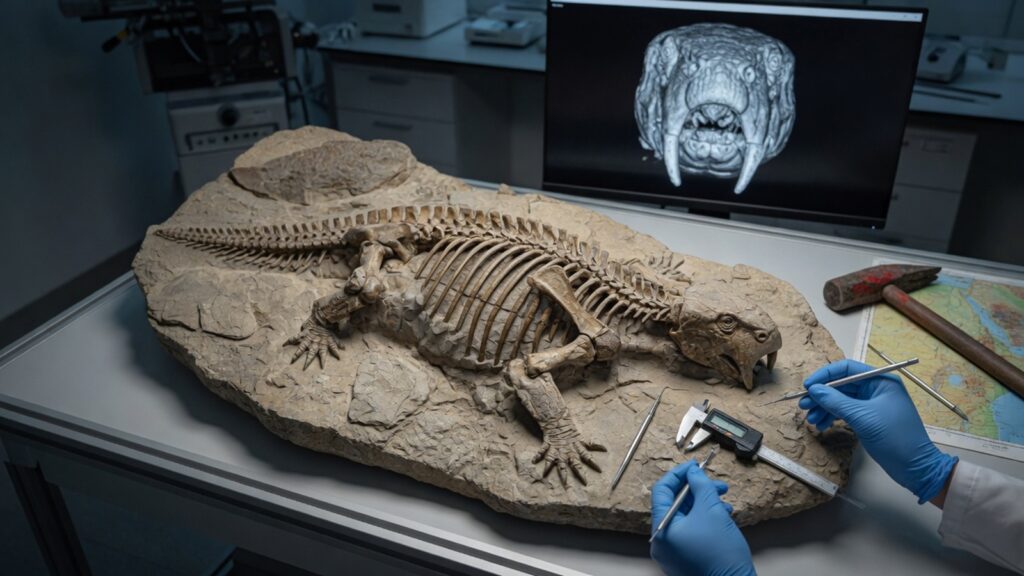
A fossil unearthed in Tanzania is rewriting scientific theories about the age of the world's earliest dinosaur fossils. A dicynodont species named Dinodontosaurus isiyavamanda, dating back approximately 240 million years to the Triassic period, was discovered. Previously, this genus was found only in South America. The discovery creates a geological connection between Africa and South America, which were once part of the supercontinent Pangaea.
The fossil was identified among specimens from a 1963 British expedition to Tanganyika, now Tanzania. The material was collected during an expedition and stored in London's Natural History Museum for decades before being re-examined. Using modern techniques, researchers determined the fossils belonged to the Dinodontosaurus genus.
This discovery challenges previous assumptions about the age of Tanzania's fossil-bearing rocks. Earlier estimates were based on comparisons with South African rock layers, but the new finding suggests these rocks may be younger than previously thought. Consequently, this could weaken the claim that Tanzania contains the world's oldest known early dinosaur fossils. However, the new fossil does not establish a new age for the Tanzanian rocks.
Written by urgent.news from Colombia One's reporting — not their text. Machine-written — may contain errors; check the original before relying on it.