NASA’s Hubble Telescope Reaches Milestone, Looks for Elusive Supernova
NASA’s Hubble Space Telescope captured this image of massive galaxy cluster MACS J0417 (left of center) on Sept. 19, 2026. This galaxy cluster acts as a gravitational lens, bending and magnifying light from objects far behind it. Supernova Athena, discovered by NASA’s James Webb Space Telescope in 2025, is predicted to reappear between now and […]
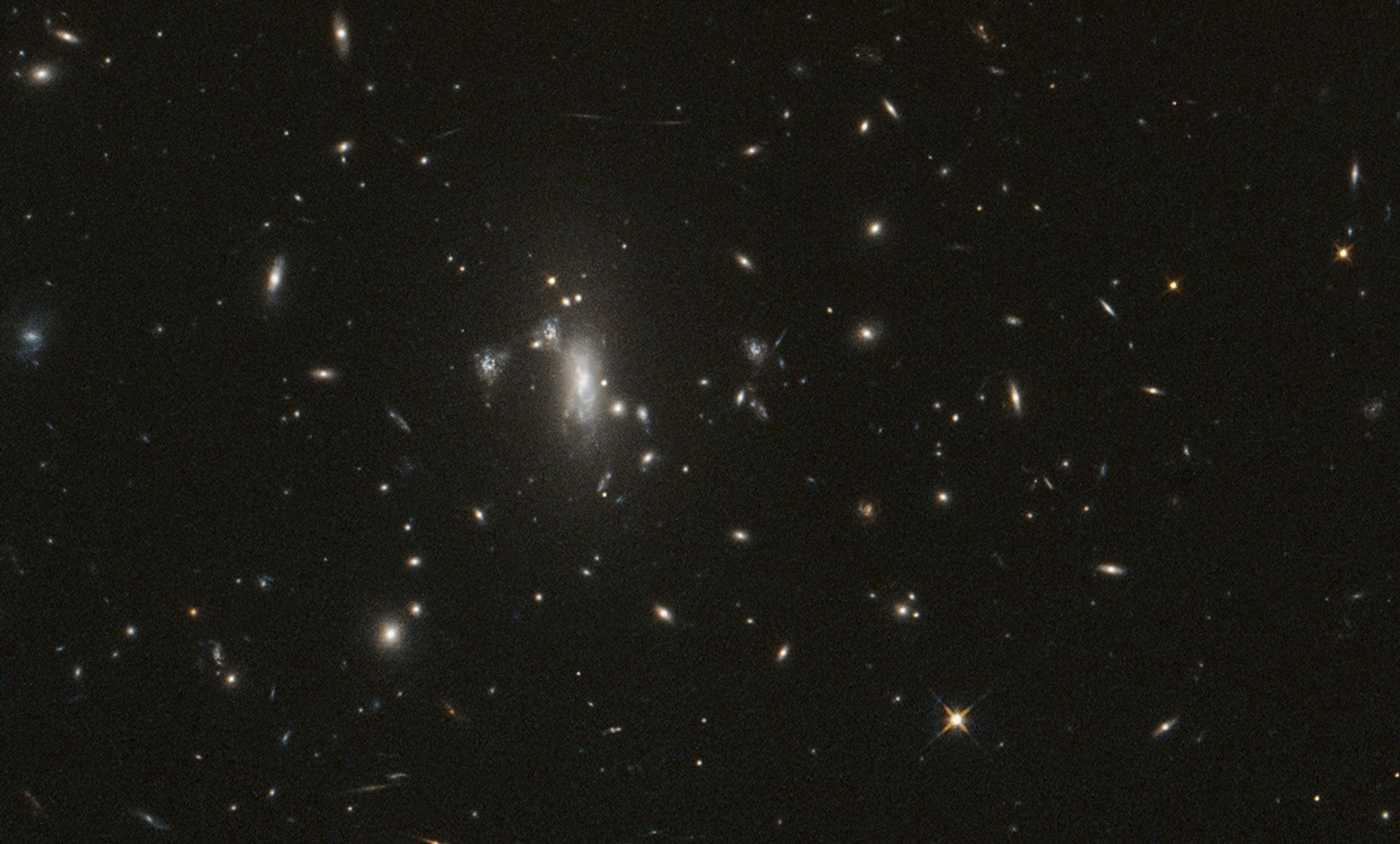
NASA's Hubble Space Telescope has reached a significant milestone while simultaneously seeking out an elusive supernova. The telescope captured an image of the massive galaxy cluster MACS J0417 on September 19, 2026. This cluster serves as a gravitational lens, bending and magnifying light from objects located far behind it. Supposedly, the supernova Athena, initially discovered by NASA's James Webb Space Telescope in 2025, is expected to reappear between now and early March 2027.
By measuring the timing of Athena's reappearance, astronomers aim to map the mass of MACS J0417 and refine our comprehension of the universe's expansion rate. On the same day as the supernova hunt, Hubble also completed its 200,000th orbit around Earth, marking yet another milestone for this observatory that continues to reshape our understanding of the cosmos.
Written by urgent.news from NASA's reporting — not their text. Machine-written — may contain errors; check the original before relying on it.
This story
This is one outlet's version. Read the fullest account.