NASA Aircraft to Make Low-Altitude Research Flights Over Colorado
Agricultural emissions represent an important and understudied part of Earth’s land and atmosphere systems. The FarmFlux mission will deploy more than a dozen sensors to measure ozone, methane, ammonia, particulates, and other pollutants rising from agricultural lands and animal farms and the interaction with the Earth’s atmosphere. The mission is jointly led by NASA’s Goddard Space Flight Center…
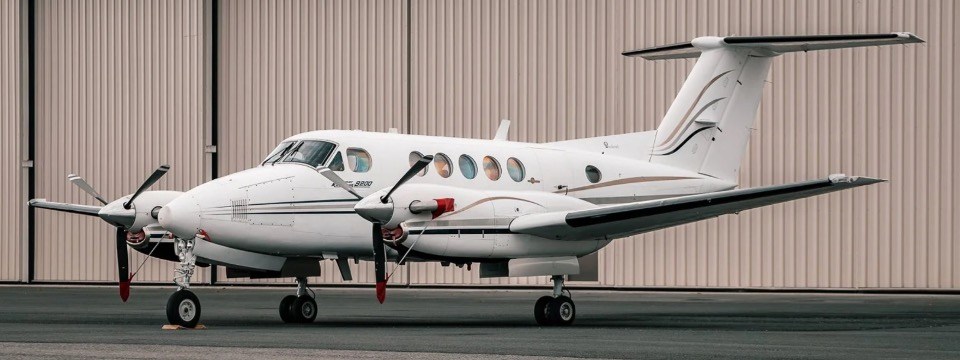
NASA has announced plans for a series of low-altitude research flights over agricultural lands in Colorado to study emissions. The Dynamic Aviation A200 aircraft will conduct these flights in October 2026 to measure pollutants such as ozone, methane, and ammonia, as well as particulates and other airborne substances. This mission, called FarmFlux, is a collaborative effort between NASA’s Goddard Space Flight Center, Colorado State University, and Boston University.
The Colorado deployment marks the initial phase of the FarmFlux mission, with further low-altitude research flights scheduled to take place over farmland in Amarillo, Texas, from late October to early November. In addition, research flights using a NASA P-3 Orion aircraft are planned for the Midwest and California’s Central Valley between March and July 2027, with a focus on croplands.
Agricultural emissions are an important yet underexplored aspect of Earth's land and atmospheric systems. By deploying over a dozen sensors, the FarmFlux mission aims to measure the release of pollutants from agricultural lands and animal farms, as well as their interaction with the Earth's atmosphere. For more information about the mission, visit the NASA website at https://espo.nasa.gov/farmflux.
Written by urgent.news from NASA's reporting — not their text. Machine-written — may contain errors; check the original before relying on it.