Mahama unveils 3 pillars to advance global reparatory justice agenda
President John Dramani Mahama has outlined three key pillars that Ghana is proposing to advance the global reparatory justice agenda and move from recognition of historical injustices to concrete action.
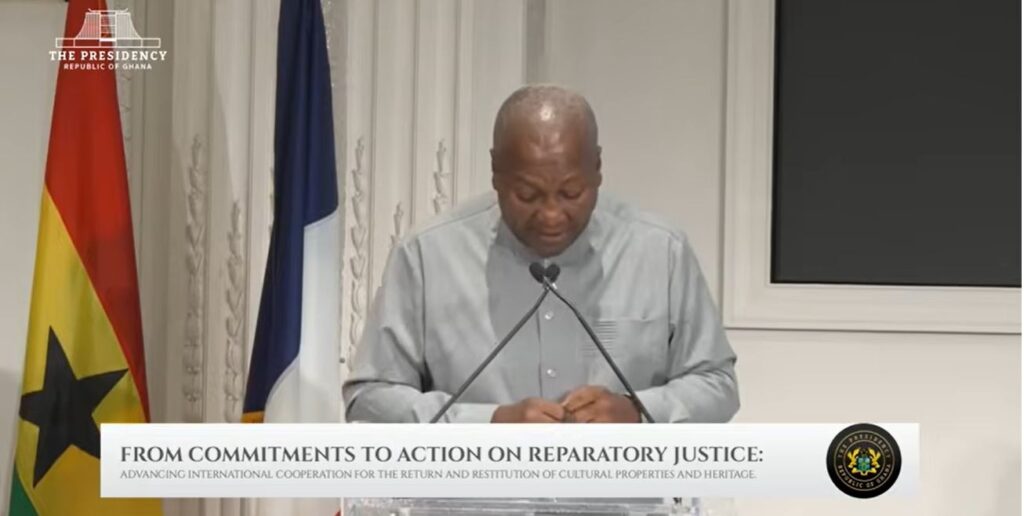
President John Dramani Mahama has detailed three key pillars aimed at advancing Ghana's global reparatory justice agenda, moving beyond acknowledgment of historical injustices to practical actions. During a High-Level Side Event preceding the 81st United Nations General Assembly in New York, Mahama emphasized the need to transition from recognition to concrete implementation of the Accra Next Steps Commitments on Reparatory Justice.
These commitments provide a roadmap for translating the United Nations' acknowledgment of injustices related to the trafficking and enslavement of Africans into tangible measures. Mahama stressed that the first critical step is establishing a permanent, institutionalized global system for restitution. He urged the United Nations and countries holding African cultural property to create transparent and standardized legal and diplomatic mechanisms to facilitate provenance research, enhance access to archives, and alleviate legal obstacles to restitution. Immediate actions, he argued, should include the unconditional return of human remains.
The second pillar centers on equipping Africa with the necessary capacity to receive, preserve, and manage its repatriated cultural heritage. Mahama disputed the notion that restitution should be postponed until Africa develops sufficient facilities for artifact preservation. He maintained that capacity constraints should not serve as an excuse for retaining cultural property but should instead act as a catalyst to develop such infrastructure.
He highlighted existing initiatives such as the African Union's Great African Museum and the AU-EU Museum Partnership as steps toward this goal. Finally, the third pillar aims to leverage cultural heritage as a catalyst for economic and social development in Africa. Mahama called on multilateral development banks, international financial institutions, foundations, and private-sector partners to invest in Africa's cultural infrastructure, including regional archives, conservation labs, digitization projects, and professional training programs.
He argued that properly preserved and exhibited cultural heritage could enhance education, foster national identity, boost tourism, and stimulate the creative economy. Mahama's proposals come in the wake of the UN General Assembly's adoption of Resolution 80/250 on March 25, which Ghana views as a significant stride in advancing the global reparatory justice agenda.
Written by urgent.news from MyJoyOnline Ghana's reporting — not their text. Machine-written — may contain errors; check the original before relying on it.
This story
This is one outlet's version. Read the fullest account.